

Complete Guide To Mesa Excavation Permits: Costs, Timeline & Requirements
You want to dig up your Mesa property, but the permit process feels like solving a puzzle with missing pieces.
Maybe you’re planning a pool installation, foundation repair, or major landscaping project.
The City of Mesa requires excavation permits for most digging projects, and skipping this step can lead to hefty fines, project delays, and serious safety issues.
Mesa’s Building Department processes thousands of excavation permits each year, with approval times ranging from a few days to several weeks depending on project complexity.
The permit system protects underground utilities, complies with environmental laws such as the Clean Water Act, and keeps construction projects safe for everyone involved.
This guide breaks down every step of the Mesa excavation permit process, from initial research through final approval, including exact costs, required documents, and realistic timelines for different project types.
Key Takeaways
- Mesa requires excavation permits for digging deeper than 18 inches, with permit fees ranging from $50-$200 plus additional inspection costs.
- Permit approval typically takes 10-15 business days for simple residential projects, but complex excavations can require 30+ days for review.
- Required documents include detailed site plans, environmental impact assessments, utility location records, and complete permit application forms with fees.
- Missing documentation or incomplete applications can add weeks to approval timelines, making thorough preparation essential for faster processing.
- Additional costs include plan review fees ($75-$300), inspection fees ($100-$250 per visit), and re-inspection charges ($125 per visit).
Mesa Excavation Permit Basics

Getting a Mesa excavation permit isn’t rocket science, but you need to know the rules before breaking ground.
The city of mesa has specific requirements that protect underground utilities, water quality, and your neighbors from potential hazards during your residential construction project.
When do I need a Mesa excavation permit?
You need a Mesa excavation permit before digging deeper than 18 inches on your property.
The City of Mesa requires permits for most residential construction projects that disturb soil.
Projects like installing pools, septic systems, or building foundations trigger permit requirements.
Utility work, landscaping changes, and driveway installations often need permits too.
Research local regulations before starting any digging project, as requirements vary by location within Mesa.
The city follows strict building regulations to protect underground utilities and water quality.
Major excavation work near storm drains or sewer systems always requires permits.
Even smaller projects might need permits if they affect stormwater management or could impact the environment.
Digging without a permit is like driving without a license; it might seem fine until you get caught, and then the consequences can be expensive and time-consuming.
What documents are required for a Mesa excavation permit?

Getting your Mesa excavation permit requires specific paperwork that the City of Mesa reviews carefully.
Missing documents can delay your project and cost you valuable time.
- Detailed site plan – Your plan must show the exact excavation area, property boundaries, and nearby structures. Include measurements, depths, and any utilities in the work zone.
- Environmental impact assessment – This document outlines how your project affects local water quality standards and stormwater controls. Address any potential impacts on endangered species or wetlands.
- Project timeline estimate – Specify start dates, completion dates, and major milestones for your excavation work. Include weather delays and inspection periods in your schedule.
- Equipment specifications – List all machinery you plan to use, including excavators, dump trucks, and compactors. Include noise levels and operating hours for each piece of equipment.
- Utility location records – Provide documentation from utility companies showing gas, water, and electrical lines. Call 811 before digging to get official utility markings.
- Soil management plan – Describe how you will handle excavated dirt, including storage locations and disposal methods. Include erosion control measures and dust suppression techniques.
- Traffic control plan – Show how you will manage vehicle and pedestrian traffic around your work site. Include signage, barriers, and alternate routes if needed.
- Permit application form – Complete the official City of Mesa excavation permit application with all required signatures. Double-check that all fields are filled out correctly.
- Permit processing fees – Submit payment for all necessary fees along with your application documents. Fees vary based on project size and complexity.
Costs of Mesa Excavation Permits
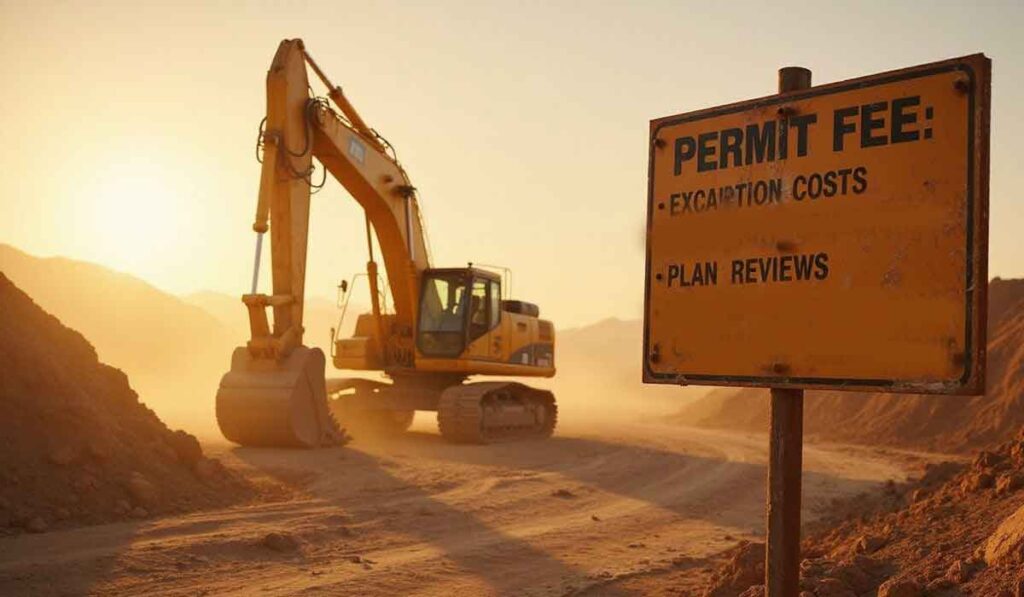
Mesa excavation permit fees vary based on your project size, with basic permits starting around $50 for small residential work.
The city of Mesa also charges inspection fees, plan review costs, and potential environmental assessment charges that can add hundreds more to your total bill.
What are the permit fees and related costs?
Mesa’s excavation permit costs depend on your project’s total value and scope.
City officials calculate fees during the application submission process, which means you won’t know exact amounts until you submit your paperwork.

| Fee Category | Cost Range | Description |
|---|---|---|
| Base Permit Fee | $50 – $200 | Initial application processing fee |
| Project Value Assessment | 0.5% – 2% of total project cost | Calculated based on excavation scope and materials |
| Plan Review Fee | $75 – $300 | Engineering review of submitted plans |
| Inspection Fees | $100 – $250 per visit | Required site inspections during construction |
| Rush Processing | 50% surcharge | Expedited review for urgent projects |
| Re-inspection Fee | $125 per visit | Additional inspections for failed reviews |
Your final cost gets determined when the Building Department processes your complete application.
You’ll need to pay all fees to accompany your permit submission, no exceptions.
Smaller residential excavations typically fall on the lower end of these ranges.
Commercial projects and complex residential work push costs higher due to increased review requirements and inspection needs.
Plan review fees cover the city’s engineering assessment of your excavation drawings and specifications.
These costs vary based on project complexity and the time engineers spend reviewing your plans.
Site inspections happen at multiple project phases, adding to your total investment.
Understanding inspection-related expenses helps you budget more accurately for the complete permit process.
Are there extra fees for inspections and reviews?

Beyond the basic permit fees, you’ll want to know about additional charges that might come your way.
| Service Type | Potential Additional Cost | When It Applies |
|---|---|---|
| Plan Review Services | Varies by project complexity | All excavation permit applications require review |
| Site Inspections | Information not specified in local regulations | During active excavation work phases |
| Re-inspection Fees | Charges apply for failed inspections | When work doesn’t meet code requirements |
| Engineering Review | Based on project value or size | Complex excavation projects requiring structural analysis |
| Environmental Assessment Review | Tied to project scope | Projects requiring environmental impact documentation |
| After-Hours Inspections | Premium rates typically apply | Emergency or rush inspection requests |
City regulations don’t specify exact inspection and review fees upfront.
Costs typically relate to your project’s value or size, just as with the base permit fees.
Plan review services happen automatically with every application you submit to the Building Department.
Failed inspections cost extra money.
Re-inspection fees kick in when work doesn’t pass the first time around.
Environmental impact assessments require separate review processes, which can increase your total expenses.
Complex projects face higher review costs.
Engineering analysis requires specialized staff time, which translates to bigger bills.
After-hours inspection requests incur a premium.
Research local excavation permit regulations before budgeting your project.
Fee structures can vary between different types of excavation work.
Contact the city’s Building Department directly for current fee schedules and specific cost breakdowns.
Timeline for Permit Approval
Getting your Mesa excavation permit approved isn’t like waiting for paint to dry, but it’s not exactly lightning fast either.
The City of Mesa’s review process typically takes 2 to 6 weeks, depending on your project’s complexity and whether you’ve crossed all your t’s and dotted all your i’s on the application.
What factors affect the approval time?

Several key factors shape how quickly the City of Mesa processes your excavation permit application.
Project complexity plays the biggest role in determining approval time.
Simple residential construction projects, such as fence installations, move through the review process faster than complex commercial developments.
Your application’s completeness makes a huge difference too. Missing documents, incomplete site plans, or unclear environmental assessments can add weeks to your timeline.
The method you choose for submitting your application affects processing speed.
Online submissions through Mesa’s digital portal often move faster than paper applications delivered in person.
Project size and value also influence approval duration, as larger excavations require more thorough reviews by city staff.
Storm sewer connections, proximity to flood zones, or potential impacts on waters of the United States trigger additional review requirements.
The city processing applications varies based on current workload and staff availability.
Now let’s look at typical timeframes you can expect for common excavation projects.
How long does approval usually take for common projects?

Most residential construction projects in Mesa take 10 to 15 business days for permit approval.
Simple excavation jobs like pool installations or utility line work typically fall within this timeframe.
The city of mesa review process moves faster when you submit complete applications with all required documents upfront.
Complex projects involving environmental considerations can stretch approval times to 30 days or more. Jobs near waterways trigger additional reviews under the clean water act and may require input from the u.s.
army corps of engineers. Commercial excavation permits often need extra time for the feedback period, especially when projects affect stormwater systems or require environmental impact assessments.
Steps to Obtain an Excavation Permit

Getting your excavation permit in the City of Mesa doesn’t have to feel like pulling teeth.
You’ll need to follow specific steps, gather the right paperwork, and work through the review process to get your project approved.
How do I research local excavation permit regulations?
Start by visiting the City of Mesa’s official website to find their specific excavation permit requirements.
Municipal laws differ from one city to another, so Mesa’s rules might not match what you’ve seen elsewhere.
The city’s building code section contains detailed information about when permits are needed and what documents you must submit.
Contact the community planning department directly if the website doesn’t answer all your questions.
State regulations also play a role in excavation work, especially for larger projects.
Arizona has specific laws about digging near utilities and environmental protection.
Check for zoning regulations that could impact your excavation plans, as residential construction projects often face different rules than commercial ones.
Local excavation associations provide valuable insights about best practices and common permit issues.
Your next step involves gathering all the required documents for your application.
How do I submit the application and required documents?

Submitting your Mesa excavation permit application involves several key steps that the city of mesa requires.
You can complete this process through the Building Department either online or at their physical office location.
- Visit the Building Department office in person or access their online portal – The city of mesa accepts applications through both methods, giving you flexibility in how you submit your paperwork and fees.
- Prepare a detailed site plan showing your excavation area – Your drawing must clearly mark boundaries, dimensions, and the exact location where digging will occur on your property.
- Include an environmental impact assessment with your application – This document outlines potential effects your project might have on surrounding areas, including water pollution concerns and soil displacement.
- Specify your estimated project timeline for completion – The review process requires knowing when you plan to begin and finish your excavation work.
- List all types of equipment you will use during excavation – Include details about bulldozers, backhoes, dump trucks, and any other machinery planned for your residential construction project.
- Submit your notice of intent along with all required documents – This formal notification tells the city about your planned work and triggers the official review process.
- Pay all permit fees at the time of application submission – The Building Department will not begin processing your request until you settle all required payments.
- Wait for the feedback period to begin once your application is complete – City staff will review your submission and may request additional information during this phase.
Conclusion

Getting your Mesa excavation permit doesn’t have to feel like climbing Mount Everest.
You now know the key steps: research local regulations, prepare detailed documentation, submit your application with proper fees, and wait for the city of mesa approval process.
The costs depend on your project size, while timelines vary based on complexity and the review process duration.
Ready to break ground on your residential construction project? Start by contacting Mesa’s Building Department to confirm current utility rates and permit requirements for your specific dig.
Remember that proper planning today saves you headaches tomorrow, so don’t skip the environmental impact assessment or rush through your notice of intent.
Your excavation dreams are just one permit away from becoming reality.
FAQs
1. What permits does the City of Mesa require for excavation projects?
Mesa requires excavation permits for most digging projects, especially those involving residential construction or utility work. The review process includes checking compliance with the Clean Water Act and other federal regulations. You’ll need to submit a notice of intent before starting any major excavation work.
2. How much do Mesa excavation permits typically cost?
Permit costs vary based on project size and complexity, but utility rates and inspection fees add up quickly. The City of Mesa sets different pricing tiers for residential construction versus commercial projects. Don’t forget to factor in potential environmental assessment costs if your site has special requirements.
3. What’s the timeline for getting an excavation permit approved?
The feedback period usually takes 2-4 weeks after you submit your application. Mesa City Council may need additional time if your project affects endangered species habitat or requires compliance with the National Environmental Policy Act. Complex projects involving hazardous waste management can take several months.
4. Do I need environmental reviews for my excavation project?
Most projects need some level of environmental review, especially if they’re near water sources or protected areas. The National Pollutant Discharge Elimination System may apply to your work. Projects affecting navigable waters or essential fish habitat require extra scrutiny from NOAA Fisheries and the U.S. Fish and Wildlife Service.
5. What happens if my excavation site has contaminated soil?
Sites with hazardous materials fall under the Resource Conservation and Recovery Act, which means stricter oversight. You’ll need proper waste management protocols for any contaminated soil or medical waste discovered during digging. The city works with you to address climate change concerns while keeping projects moving forward.
6. Can weather delays affect my excavation permit requirements?
Weather impacts are part of the game, but your permit stays valid during reasonable delays. Stormwater pollution controls become more critical during rainy seasons, so plan accordingly. The National Flood Insurance Program requirements might affect your timeline if flooding risks increase.