How To Break Through Caliche For Excavation In Mesa, AZ
You grab your shovel and hit solid rock.
Your backyard project stops cold.
The hard soil beneath Mesa’s surface isn’t regular dirt.
It’s caliche, a concrete-like layer of calcium carbonate that forms in arid regions like Arizona’s East Valley.
This stubborn clay mixture laughs at regular digging tools.
Water pipes, irrigation systems, and French drains all need to pass through this barrier.
Breaking caliche requires the right equipment and smart methods.
Manual tools work for small jobs, but heavy machinery saves time on bigger projects.
This guide shows the best tools and techniques for caliche excavation.
Safety tips keep projects on track.
The right approach turns an impossible dig into manageable work.
Key Takeaways
- Caliche is a concrete-like calcium carbonate layer in Mesa’s arid soil that requires specialized tools to break through effectively.
- Manual tools like caliche bars work for small jobs, while jackhammers and hydraulic breakers handle thicker caliche layers efficiently.
- Heavy machinery becomes necessary for caliche thicker than 36 inches or large commercial excavation projects requiring professional equipment.
- Always call 811 before digging to mark underground utilities and wear proper safety gear including hard hats and steel-toed boots.
- Mechanical breaking methods consistently outperform pre-soaking techniques for removing Mesa’s hard calcium carbonate soil formations.
Tools and Equipment for Breaking Through Caliche
Breaking through caliche requires the right tools, and you’ll need equipment that can handle this cement-like hard soil found throughout Mesa’s arid regions.
Your success depends on choosing tools that match the soil density and calcium carbonate content you’re facing.
What is a caliche bar and pickaxe used for in excavation?
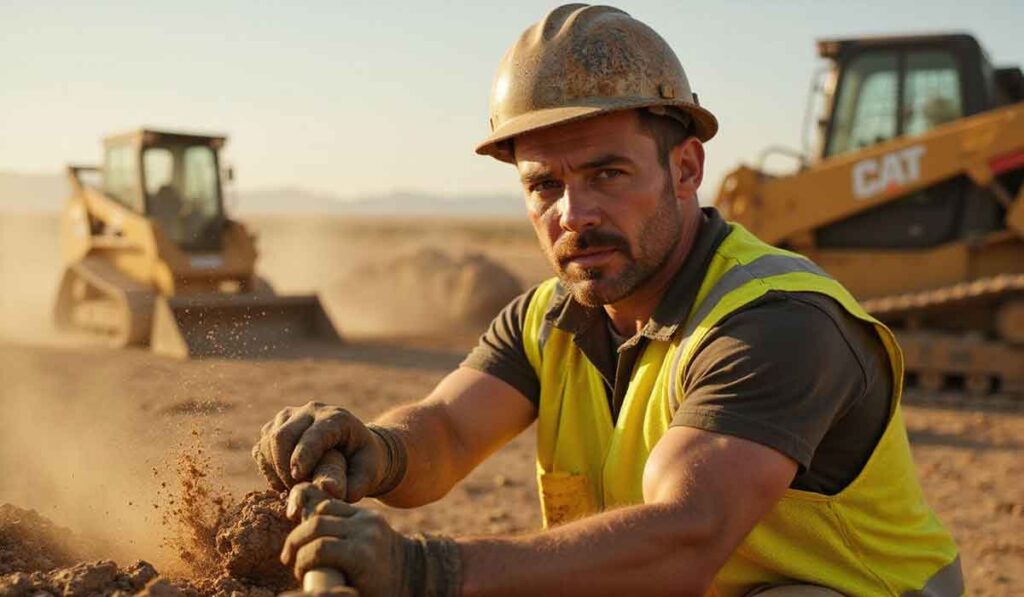
A caliche bar serves as your primary weapon against hard soil layers in arid regions like Mesa.
This heavy, 6-foot steel rod features a chisel end designed specifically for prying and breaking through tough calcium carbonate deposits.
You’ll find this tool indispensable when dealing with moderate caliche thickness in residential projects.
The steel construction gives you the leverage needed to crack through dense soil conditions that regular shovels can’t handle.
Pickaxes and mattocks work best for chipping away at caliche in smaller excavation jobs.
These manual tools excel in DIY projects where soil density isn’t extreme.
You can use them effectively for hardscaping projects, installing electrical conduit, or preparing areas for pavers.
The process demands physical strength and patience, but homeowners often prefer this approach for limited excavation tasks.
Safety gear becomes critical here, so wear gloves, eye protection, and steel-toed boots.
These tools lose effectiveness when caliche extends beyond 36 inches deep or covers extensive areas requiring soil stabilization work.
How does a jackhammer or demolition hammer help break caliche?
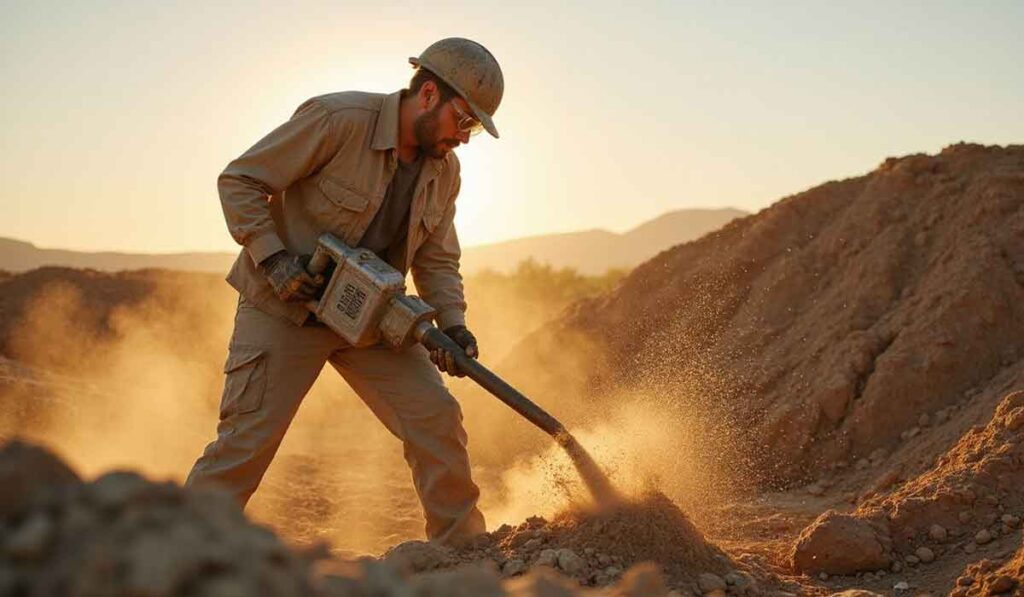
Jackhammers deliver powerful percussive force that fractures caliche’s cement-like structure, which hand tools simply cannot penetrate.
These machines work by delivering rapid, concentrated impacts that break the calcium carbonate bonds that hold this hard soil together.
Electric and pneumatic jackhammers prove effective for breaking up caliche in small to mid-size residential excavation projects across Mesa’s arid regions.
Pneumatic models deliver greater power and efficiency than electric models when dealing with thicker caliche layers that resist standard digging methods.
Equipment suppliers in Mesa rent these demolition hammers, often fitted with spade blades for more efficient caliche removal from your excavation site.
The tool’s hammering action creates cracks that spread through the compacted soil composition, making removal much easier than trying to chip away with manual tools.
Safety requirements include hearing protection, eye protection, and proper training before operating these powerful machines.
Jackhammers work best when manual tools cannot keep up with the hardness or volume of caliche you’re facing, though they have limitations for large-scale or deep excavation tasks requiring heavy machinery.
What skid steer attachments are best for breaking caliche?
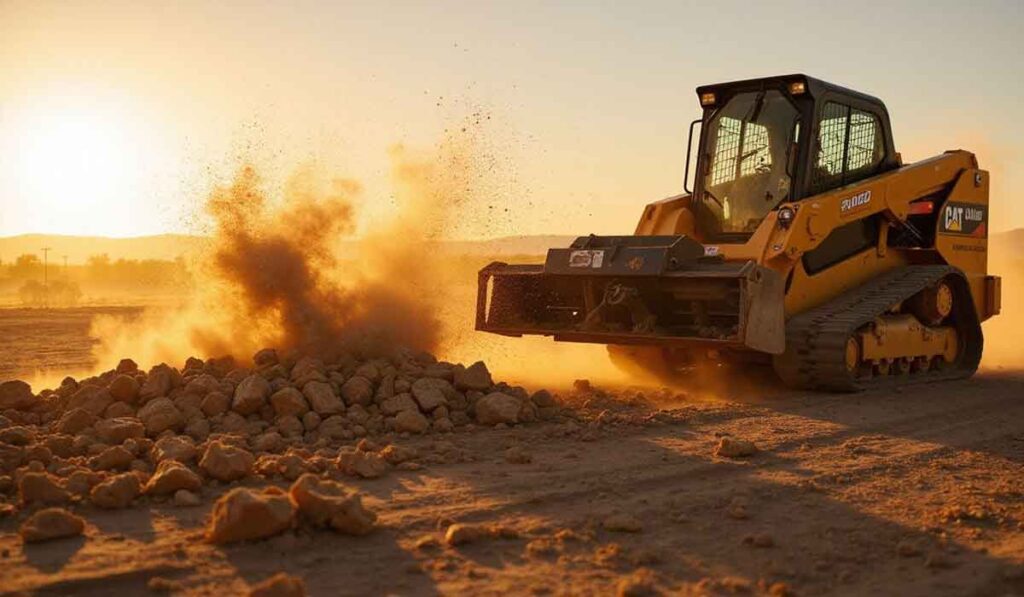
Hydraulic breaker attachments work best for breaking through caliche on your mid-size excavation sites.
These powerful tools mount directly onto your skid steer, delivering concentrated force that cracks through the calcium carbonate layers found in Mesa’s hard soil.
Professional contractors rely on these attachments for foundation prep and utility installation projects.
Your hydraulic breaker must match your skid steer’s hydraulic flow and pressure for maximum effectiveness.
Rock-drilling auger bits offer another excellent option for boring through caliche when installing posts or footings.
These specialized attachments significantly speed up excavation compared to manual tools or standalone equipment.
The combination works well for moderate caliche thickness, though extremely thick or widespread deposits may require larger excavators with industrial-grade hydraulic hammers.
These skid steer-mounted tools handle most residential and commercial projects in arid regions like Mesa’s high desert environment.
Mechanical breaking methods provide the foundation for successful caliche removal.
Methods for Effective Excavation
Breaking through caliche requires smart techniques that save you time and money.
You can choose from mechanical methods, pre-soaking strategies, or heavy machinery depending on your project’s scope and the hard soil conditions you face.
How can mechanical breaking simplify caliche excavation?
Mechanical breaking cuts through caliche like a hot knife through butter, making your excavation project move faster than traditional methods.
Hydraulic breakers and jackhammers power through calcium carbonate layers that would stop manual labor cold.
These machines handle caliche thicknesses that pickaxes simply can’t touch, saving hours of backbreaking work.
Professional equipment minimizes project delays and slashes labor costs across Mesa’s challenging soil conditions.
Mechanical tools can handle caliche thicknesses that would stop manual labor entirely.
Contractors in Mesa rely on mechanical methods because local caliche formations have predictable hardness levels.
Equipment selection scales with project size: jackhammers tackle small jobs, skid steers handle medium areas, and excavators demolish large sections.
Mechanical removal consistently outperforms chemical treatments or pre-soaking methods in arid regions.
These powerful tools give precise control over excavation depth, preventing costly over-digging mistakes.
Machine operation reduces worker injury risks from overexertion and dangerous tool kickback incidents.
Why should you pre-soak the area before excavation?
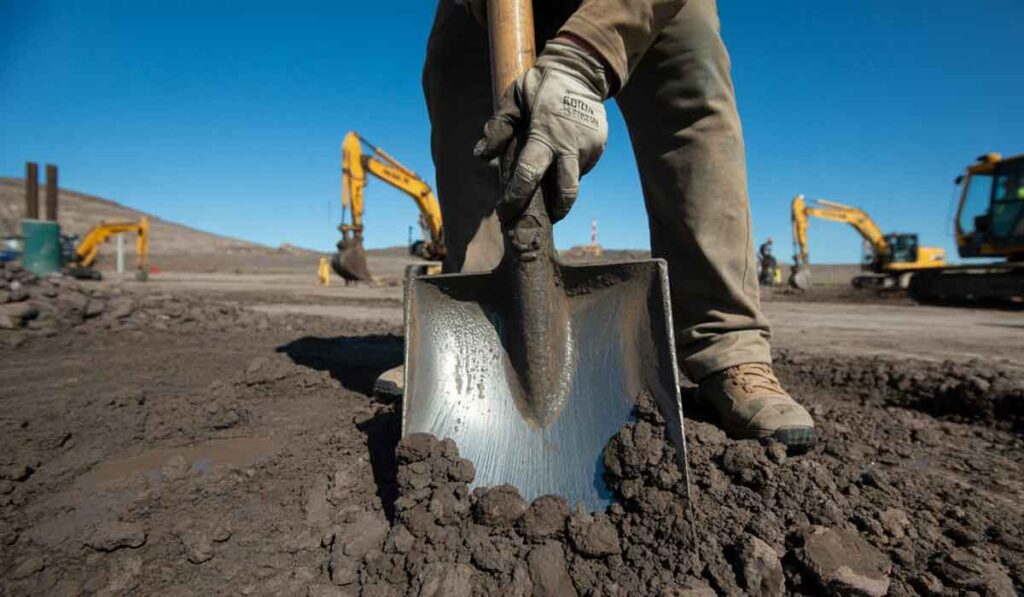
While mechanical breaking tackles the caliche directly, pre-soaking the excavation area serves a different purpose in your project.
Water soaking can help distinguish caliche from hardpan soil by softening surrounding dirt, but does not dissolve caliche itself.
Pre-soaking the excavation area for several days may make adjacent soil easier to remove, allowing faster access to the caliche layer.
This method proves ineffective for breaking through caliche, but can reduce dust and improve tool performance in the topsoil.
Contractors use this method more for dust suppression than for actual caliche removal.
Pre-soaking is only considered helpful for shallow layers or when manual tools are being used.
Over-watering can create muddy conditions, complicating the use of machinery or hand tools.
Water pre-treatment may be recommended as a preparatory step, but not as a primary excavation solution for hard soil conditions in arid regions like Mesa.
When is it necessary to use heavy machinery for caliche?
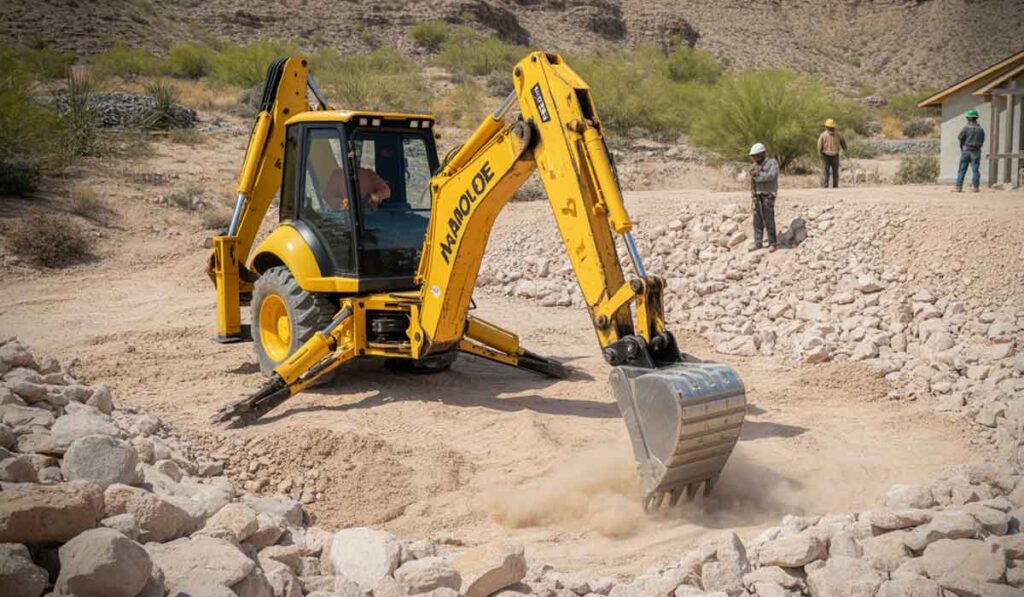
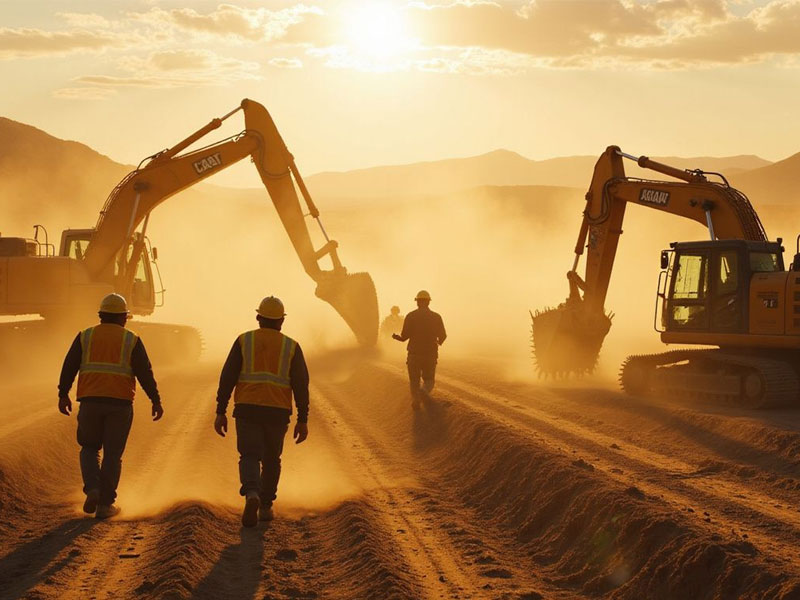
Caliche thicker than 36 inches demands bulldozers with rippers and excavators with hydraulic hammers.
Standard excavation equipment comes to a dead stop when it hits this hard, calcium-carbonate-rich soil layer.
Large commercial sites in Mesa often require bulldozers equipped with rippers to break up extensive caliche beds covering large areas.
Your project scope determines equipment needs, especially for swimming pool demolition, new construction foundation prep, or underground utility installations that require industrial-grade machinery.
Professional excavation services become mandatory when thick caliche creates safety hazards and equipment damage risks.
Attempting to break through dense calcium carbonate formations with underpowered tools puts workers at serious risk of injury.
Contractor fees reflect the increased complexity and specialized equipment costs needed for heavy caliche removal in these arid regions.
Regulatory concerns and liability issues may force professional intervention when deep or widespread caliche threatens project timelines and worker safety.
Now let’s explore the specific methods that make caliche excavation more effective and manageable.
Safety Tips for Excavation Projects
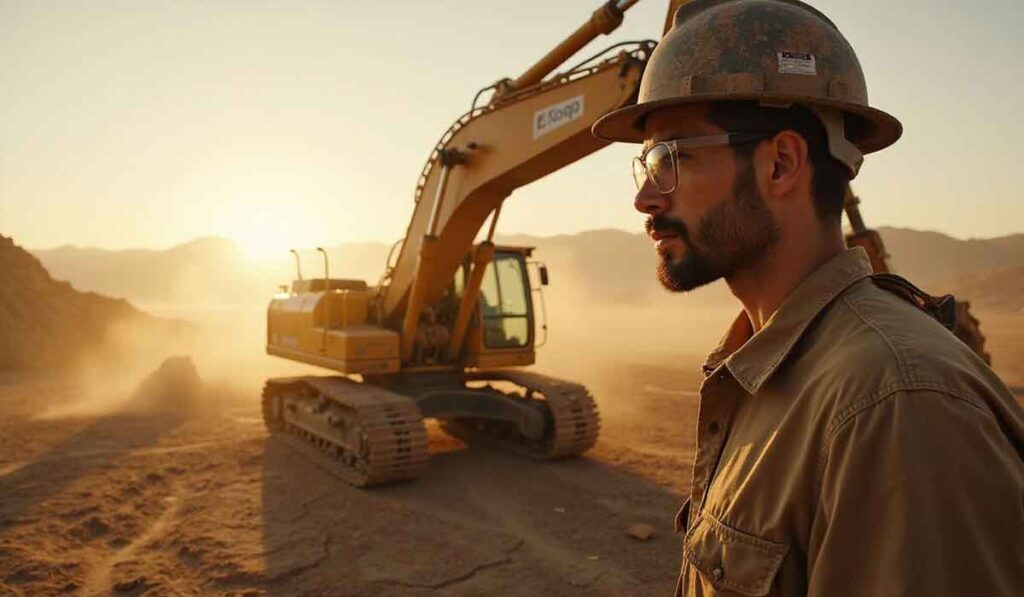
Safety on excavation sites protects you, your crew, and your property from serious accidents that can happen when breaking through Mesa’s tough caliche layers.
You need to call 811 before you start any digging project.
This free service marks underground utilities like plumbing systems, gas lines, and electrical cables.
Wait for the marking crew to finish their work before you begin.
Breaking into a gas line or hitting electrical wires can kill you.
Wear proper safety gear every time you work. Hard hats protect your head from falling rocks and debris.
Safety glasses keep dust and small particles out of your eyes. Steel-toed boots guard your feet from heavy tools and equipment.
Work gloves give you better grip and protect your hands from cuts.
Check your equipment before each use. Look for cracks in jackhammer handles and loose bolts on skid steer attachments.
Test hydraulic lifts and trenchers to make sure they work.
How do you use excavation equipment safely?
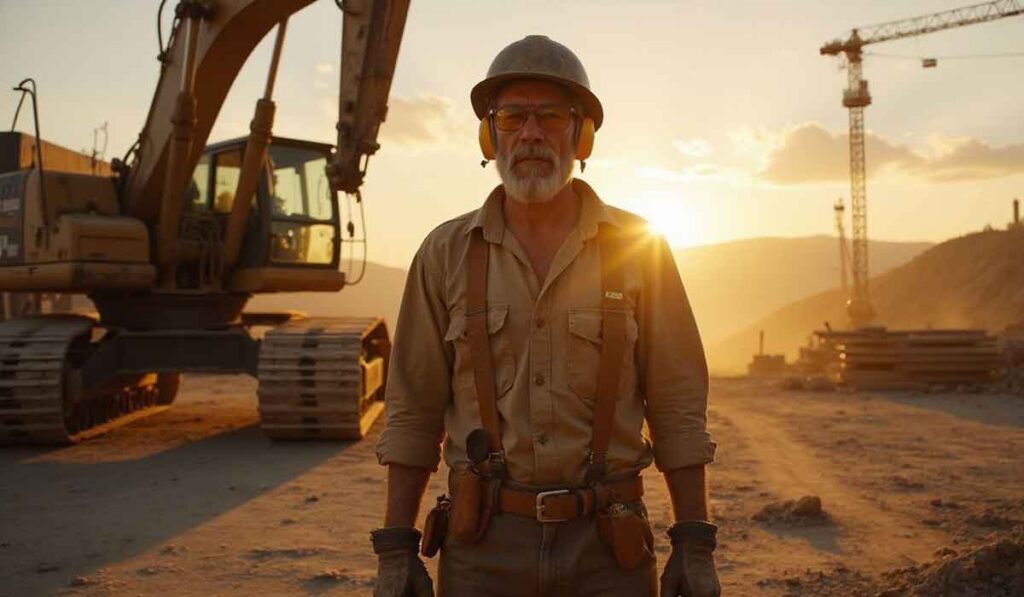
You need proper personal protective equipment before touching any excavation tools.
Gloves protect your hands from sharp edges and vibrations.
Steel-toed boots shield your feet from falling debris and heavy machinery.
Safety glasses keep dust storms and flying particles away from your eyes.
Hearing protection becomes critical when operating jackhammers or trenchers in hard soil conditions.
Inspect all equipment before starting work on any excavation project.
Check jackhammers for cracked handles or loose connections. Examine trenchers for worn cutting teeth or damaged hydraulic lines.
Look over skid steer attachments for bent components or missing bolts.
Never operate machinery that shows signs of damage or defects.
Train all operators on specific equipment before they begin breaking through calcium carbonate layers.
Follow manufacturer guidelines exactly to prevent equipment failure and personal injury.
Keep work areas clear of unnecessary people during active digging operations.
Maintain clear communication among crew members, especially on noisy sites where jackhammers produce high noise levels.
Before you start any digging project, you must locate underground utilities to avoid dangerous accidents.
How can you check for underground utilities before digging?
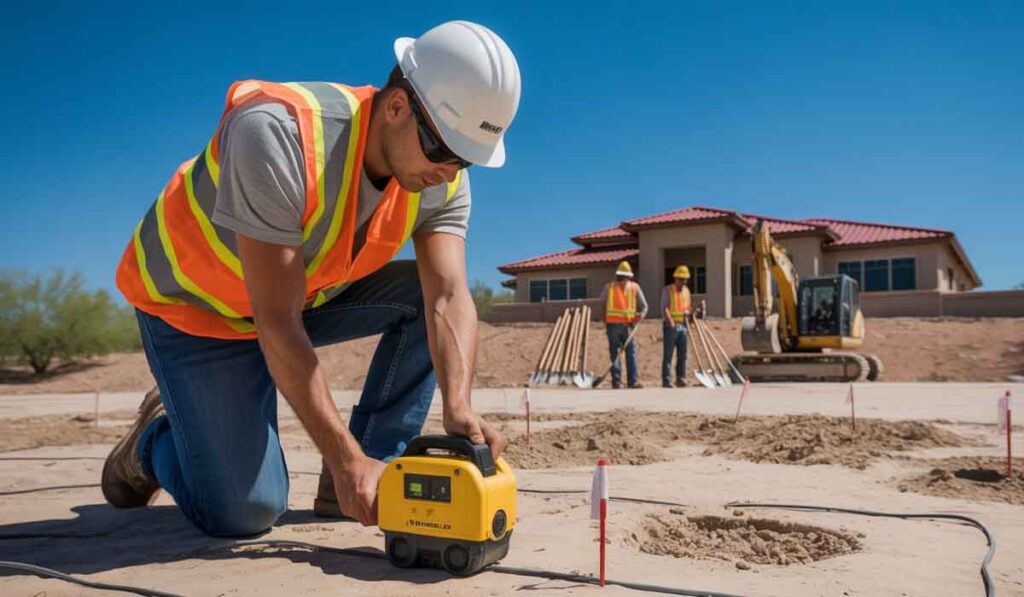
Arizona law requires calling 811 before any digging project to have underground utilities marked.
This free service protects you from hitting gas, water, electric, and telecommunication lines buried beneath the hard soil.
Utility location services help prevent accidental strikes that can cause service outages, severe injury, or legal penalties.
Striking a buried line while breaking through caliche can turn a simple excavation into a costly nightmare.
Utility lines in Mesa may be buried as shallow as 6 to 24 inches, overlapping with typical caliche depths where calcium carbonate creates rock-hard soil conditions.
Always wait for utility marking confirmation before beginning mechanical excavation with jackhammers or skid steer attachments.
Use hand tools when digging within 24 inches of marked utility lines to avoid accidental damage.
Marked utilities must remain clearly visible and protected throughoutthe excavation project.
Failure to check for utilities can result in expensive repairs and project delays that no arborist or hardscape contractor wants to face.
Safety inspection protocols become even more critical when working around sprinkler systems and other infrastructure in arid regions.
Now let’s explore the specific methods that make caliche excavation more effective and manageable.
Conclusion
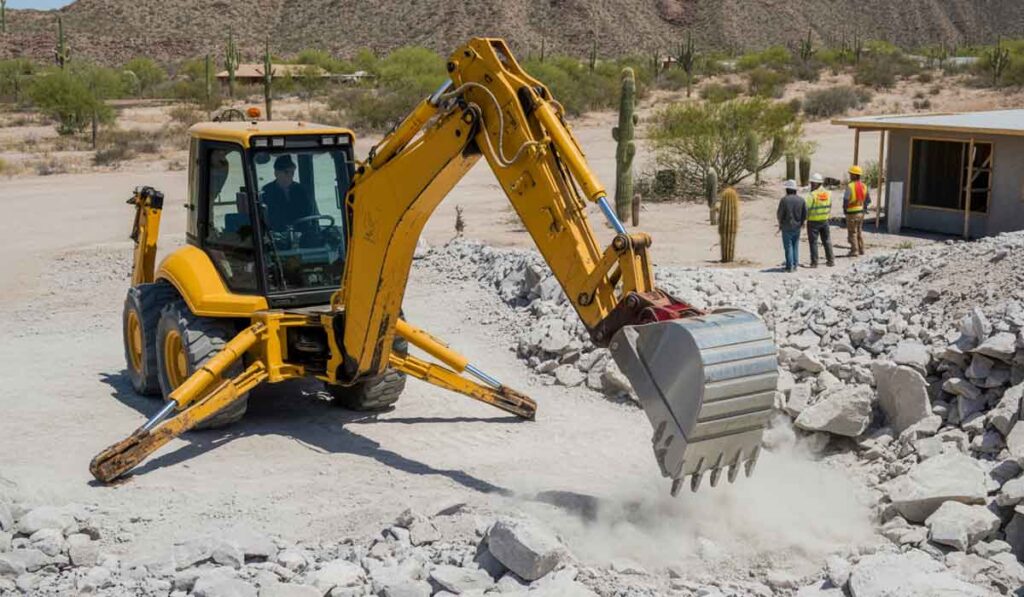
Breaking through caliche in Mesa’s arid regions doesn’t have to feel like hitting a brick wall.
Armed with the right tools, from caliche bars to hydraulic hammers, you can tackle even the toughest calcium carbonate layers that plague soil conditions across Arizona.
Remember to call 811 before you dig, soak hard soil when possible, and choose mechanical methods that match your project size.
Professional excavation services often prove most cost-effective for large-scale jobs, especially when dealing with groundwater issues or complex drainage requirements.
Smart planning and proper equipment turn this challenging task into a manageable project.
Take action today, because every successful excavation starts with breaking through that first stubborn layer of desert concrete.
FAQs
1. What exactly is caliche and why is it so tough to dig through in Mesa?
Caliche is basically concrete made by Mother Nature herself. This hard soil forms when calcium carbonate acts like glue, cementing dirt and rocks together in arid regions like Arizona. You’ll hit this stuff about 2-3 feet down, and it’s harder than a two-dollar steak.
2. How do soil conditions in Mesa affect excavation work?
Mesa’s soil conditions are like a layered cake, but not the good kind. The top layer drains well, but underneath lurks that notorious caliche layer that’ll stop your shovel dead in its tracks. This creates a real headache for any digging project.
3. What’s the best way to break through caliche without damaging nearby pavement?
Start with a jackhammer or pneumatic breaker, working in small sections. Keep water handy for dust control, since you don’t want to create a dust storm that’ll tick off the neighbors.
4. Does breaking caliche affect groundwater or cause soil erosion problems?
Breaking caliche actually helps with water conservation by allowing rainfall to soak in better. The hard layer normally blocks water from reaching groundwater below, so cracking it open helps the local ecosystem.
5. Should I use a nuclear density gauge to test soil before starting excavation?
A nuclear density gauge helps you map exactly where the caliche sits and how thick it runs. This saves you from playing guessing games with your paving project.