
Land Clearing and Site Prep
Paradise Valley AZ
We handle native plant salvage, the disturbance rules, washes, and grading the right way.
ROC: 358362 & 355605
Serving the Paradise Valley area since 2014
Getting Your Paradise Valley Lot Ready to Build
Let’s take a look at what it really takes to clear and prep a lot in Paradise Valley, the way a friend in the business would explain it to you over coffee. Because this is a town with some rules that surprise people, and knowing them ahead of time saves you money, time, and a few headaches.
Whether you just bought a lot with an old home and overgrown desert on it, or you are eyeing a steep parcel near the mountain and wondering what you can actually build there, the first real step is getting the ground ready.
That means clearing what needs to go, protecting what has to stay, and shaping the site so your builder can start. On a flat lot it is fairly straightforward. On a hillside lot, it is a different world, and we will get into why.
DirtFX handles land clearing and site prep across Paradise Valley, from flat valley-floor lots in the Ranchos to steep rock lots on the flanks of Camelback Mountain and Mummy Mountain.
The cost of land clearing work is driven entirely by what is under your specific lot, and the only honest way to scope it is to visit the property, review the soils report and grading plan, and discuss the conditions. We go over all of it at the estimate.
What Clearing and Site Prep Actually Covers
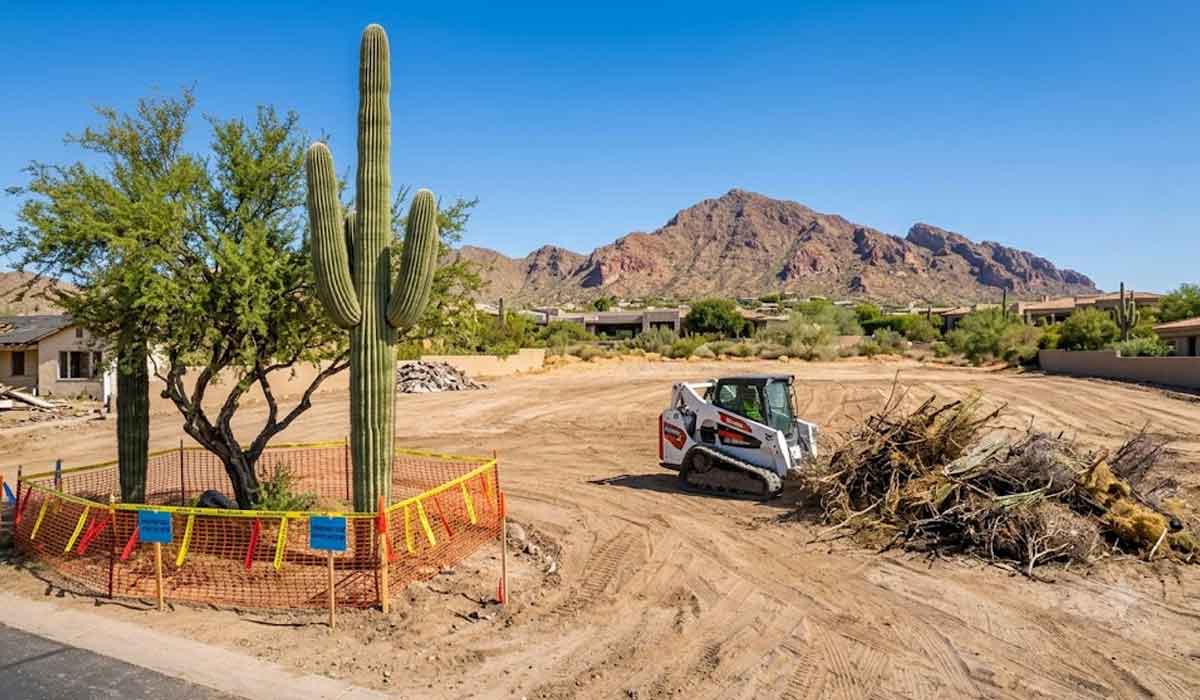
People use a few different words for this, so here is what it all adds up to. Land clearing is the removal of what is in the way: overgrown brush, dead or invasive vegetation, old landscaping, leftover debris, fence lines, small slabs, and the general mess a neglected or post-teardown lot accumulates.
Site prep is what comes next: rough grading the lot, shaping it to drain properly, establishing the building envelope, and getting access in so the build can begin.
On many Paradise Valley projects, these run together and often follow demolition. We take down the old structures, abandon any septic or well, clear the lot, and rough it in so it is ready for the pad and the build: one crew, one continuous scope, no handoffs.
The part that catches newcomers off guard is that you cannot simply scrape a Paradise Valley lot clean. The Town protects its desert character carefully, and a good clearing job here is as much about what you keep and protect as what you remove. That is where the local knowledge earns its keep.
Flat Estate Lot Clearing and Cleanup
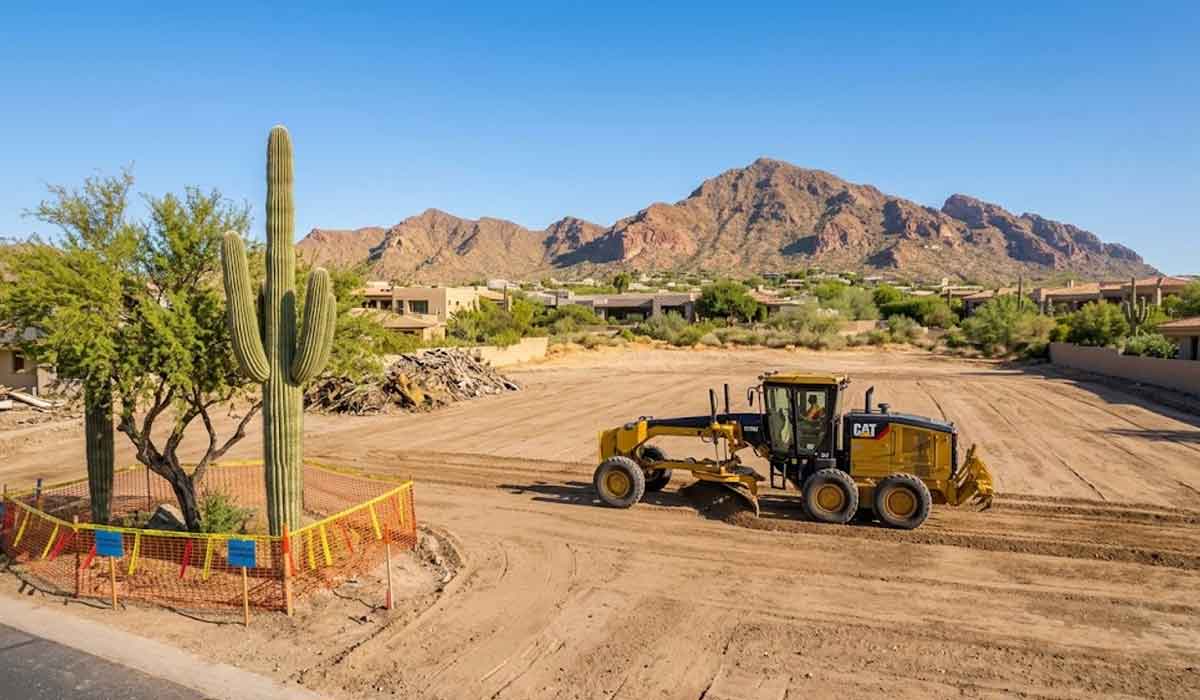
If your lot is on the flatter valley floor, the clearing and prep is the more relaxed version, and most of the work is about doing it cleanly and to code.
We clear the overgrown and dead vegetation, remove old landscaping and irrigation, haul off debris and any leftover slabs or footings, and grub out roots where the new build requires clean ground. Then we rough-grade the lot so water moves where it should and the site is ready for the pad.
The soil here is deep alluvium, often with caliche a few feet down, so clearing rarely fights bedrock the way a hillside lot does. The bigger considerations on a flat lot are protecting the native plants that have to stay, keeping the dust down, and grading so that drainage works for you and your neighbors.
Even on a flat lot, two Town rules always apply: protected native plants must be handled properly before anything is cleared, and the natural washes that cross the lot must remain undisturbed. More on both of those below, because they matter on every lot in town.
Hillside Site Prep Is a Whole Different World
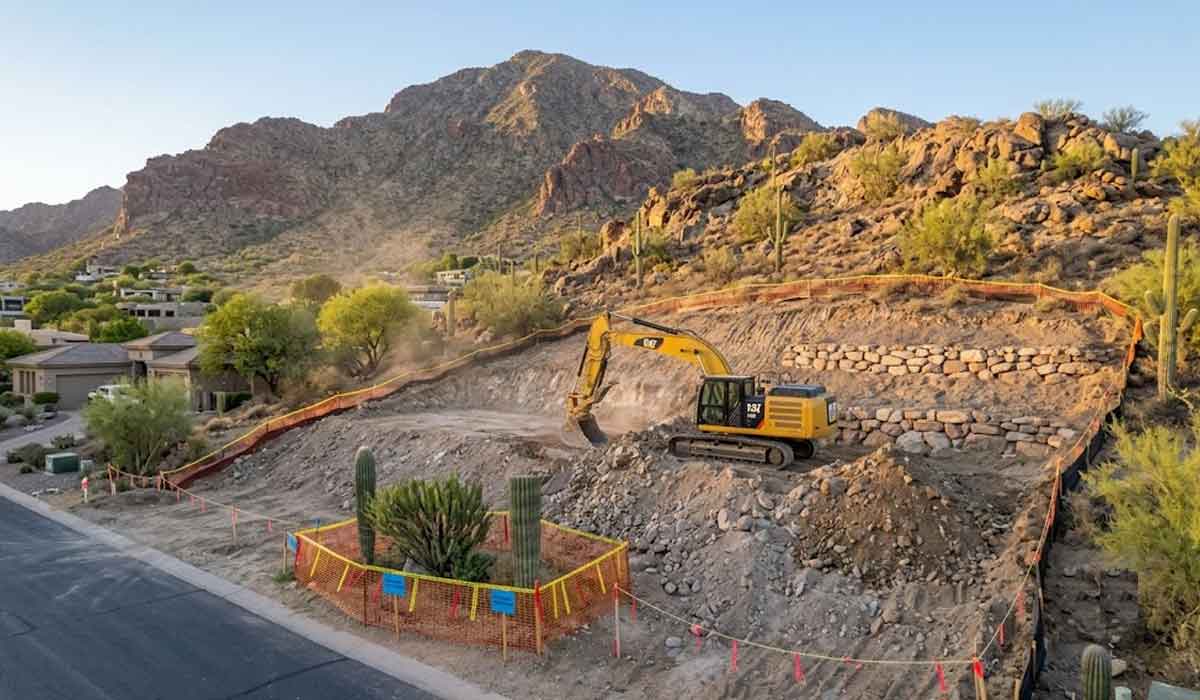
On a hillside lot near Camelback or Mummy Mountain, you do not get to disturb the whole lot. The Town’s Hillside Development Regulations limit how much of a sloped lot you are allowed to clear and grade at all, and the steeper the lot, the less you can touch.
Everything you do, the grading, the cuts and fills, the driveway, the vegetation you remove, gets reviewed by the Hillside Building Committee before the Town will issue a grading permit. This is not a rubber stamp. It is a real design review focused on keeping the mountain looking like the mountain.
A few of the standards that shape what is possible up there. Driveways are held to limits such as a maximum slope of around 30 percent, a minimum width of about 12 feet, and a deep driveway cut cannot run on and on. Retaining walls are kept low and short, generally no taller than about 8 feet, capped in a continuous length, and limited in how much wall is visible from any one viewpoint, which is why you see terraced walls stepped into the slope instead of one big face.
Excess dirt is hauled off rather than spilled down the hill, and any cut or fill face must be restored so it blends back into the desert. We will confirm the exact figures for your lot with your civil engineer and the Town, as hillside reviews require scrutiny of the specifics.
The short version: a hillside lot can be a stunning place to build, but what you can do with it is bounded by rules, and the smart move is to understand those bounds before you fall in love with a design. Which brings us to the part everyone finds confusing.
Will Your Build Fit?
Understanding Your Disturbance Budget
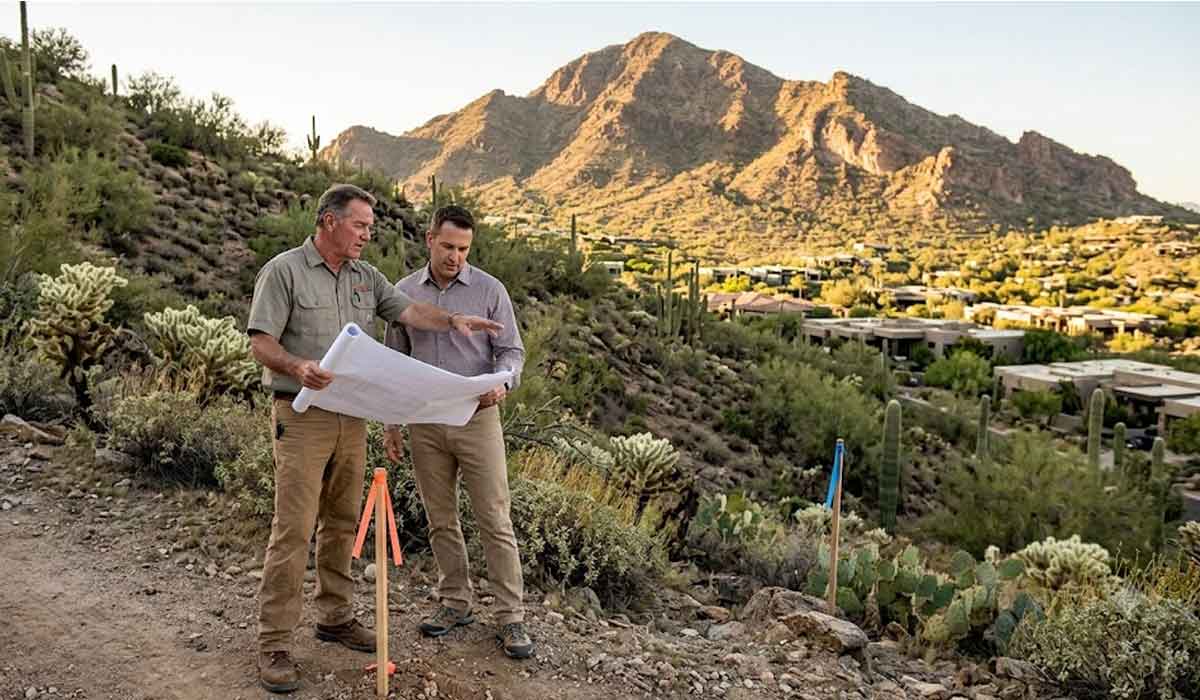
This is the thing that confuses even very sophisticated buyers, so let us make it simple.
Every hillside lot in Paradise Valley comes with a disturbance budget. The Town only lets you disturb a set amount of a sloped lot, and that allowance shrinks as the lot gets steeper. Your civil engineer calculates the exact number for your specific lot, so we will not throw a percentage at you here, because the honest answer is that it depends on your slope and your engineer runs the math.
But the idea is what matters: you have a budget, and almost everything you do spends it. Grading, cuts and fills, clearing native plants, trenching, and the driveway all contribute to it.
Now the part that helps you win the math. The Town gives you credits that reduce what counts against the budget:
- Your home’s footprint, the livable area and attached garage, does not count against the disturbance allowance.
- A driveway that hugs the natural slope instead of cutting deep into it earns a credit. Follow the land and you are rewarded. Carve a deep gash and you pay for it.
- Part of a required stormwater retention basin is credited back.
- Anything you grade and then fully restore to natural contours and native plants can be credited as restored rather than disturbed.
Subtract those credits from everything you propose, and what is left is your net disturbed area, which is the number that has to fit under your lot’s cap.
Why should you care before you even buy? Because on a steep lot, that budget is small, and it quietly limits how big a footprint you can build, how much flat usable yard you can carve out, and how long and dramatic a driveway you can run. A buyer dreaming of a sprawling home with big flat lawns and a sweeping drive can run out of budget on a steep parcel before the design is half done. It’s best to find that out before you buy the lot, not after.
So here is our honest offer. If you are looking at a hillside lot and wondering whether your vision will actually fit, call us, and we will walk the parcel with you.
Your engineer runs the official calculation, but we can give you a real, on-the-ground read on what that lot will and will not allow before you write the check. That walkthrough is free, and it’s the most useful hour you can spend on a hillside lot.
Native Plants: What You Keep, What You Can Move
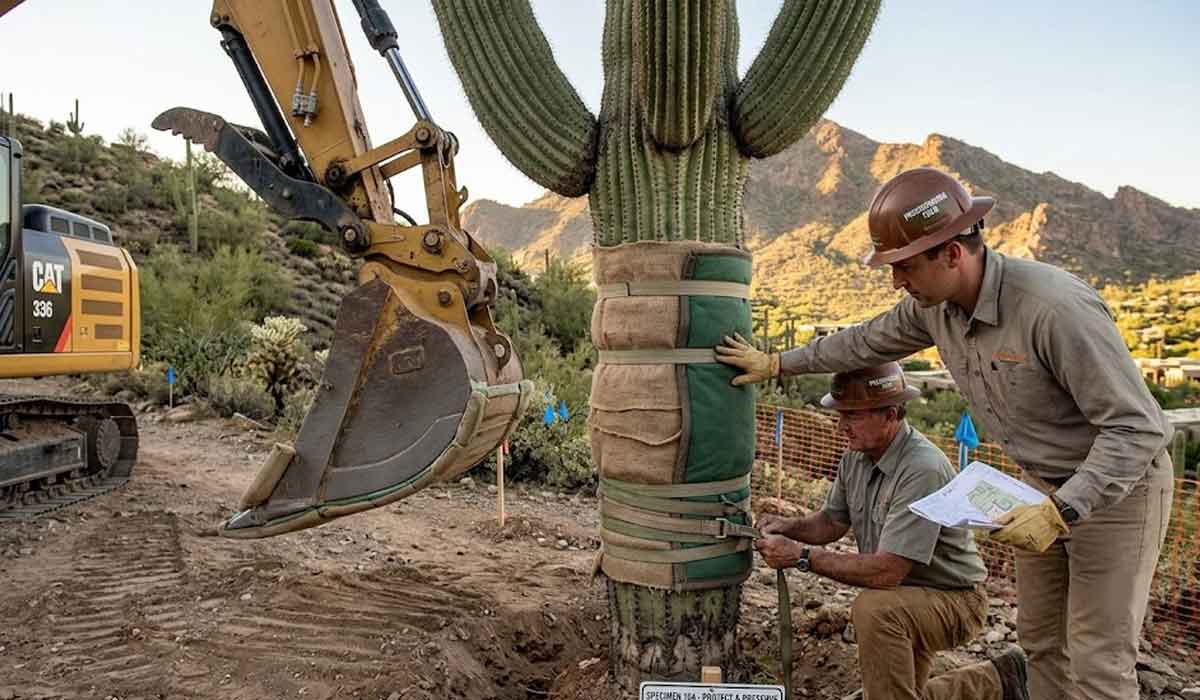
Here is the surprise that catches almost every new lot owner: you cannot just bulldoze a Paradise Valley lot clean. The Town protects its native desert plants, and the healthy ones have to be preserved, or carefully salvaged and relocated, not destroyed.
A protected plant may be removed and destroyed only if it is already dead, diseased, or too damaged to save, and even then, only after the Town approves a Native Plant Preservation Plan.
The protected list covers desert trees with a trunk caliper of four inches or larger, including White Thorn and Catclaw Acacia, Foothill and Blue Palo Verde, Ironwood, and Mesquite, plus cacti three feet or taller, including Saguaro, Barrel cactus, Ocotillo, and Desert Night-Blooming Cereus.
That plan is required whenever you pull a grading permit, a demolition permit, or build a new home valued at half a million or more, which, on a Paradise Valley estate, means basically every project.
The good news is that those plants are valuable, and we treat them as assets, not obstacles. Mature Saguaros and Ocotillos in particular are worth real money and real character. They get salvaged, held, and replanted, often reused to restore the lot and screen new grading so the property still feels like the desert.
One rule to remember: nothing gets moved or removed until the plan is approved and the permit is issued. Clearing early, even with good intentions, is a violation. At the end of the project, a Native Plant Certification document will document what was kept, what was relocated, and where anything went, and the Town wants that before the home is finished.
Soil, Washes, and Putting the Desert Back
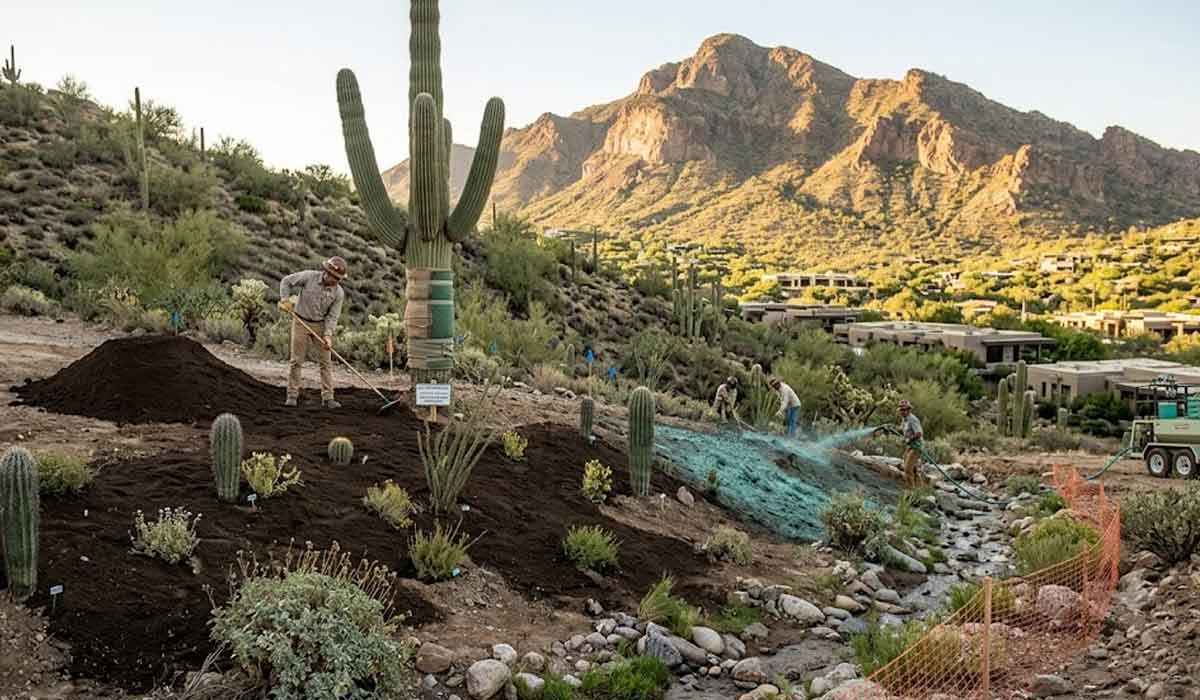
A couple more things a good friend would make sure you knew, because they are easy to get wrong and the Town takes them seriously.
First, the topsoil trick. Wherever we excavate, the Town wants the top four inches of native soil kept on site and reused because that layer carries the natural seed bank that helps the desert regenerate on its own. So a good crew strips and stockpiles the top layer, then later respreads it over the finished and restored areas. It is a small thing that tells you a contractor actually understands this land.
Second, leave the washes alone. The natural drainage washes that run across Paradise Valley lots are protected and must remain undisturbed unless the Town Engineer approves a specific change. On hillside lots, they are treated as significant natural features and closely monitored. We design the clearing and grading to work with your washes, not bulldoze through them.
Third, especially on hillside lots, putting the desert back is not optional. Cut-and-fill faces are restored with rock aging agents and native seed mixes so they blend in. The planting is desert species only, with no flammable grasses. The Town holds your financial assurance until the revegetation is established and inspected. We plan restoration into the job from the start rather than treating it as an afterthought.
The Permit and Site Rules That Apply to Every Lot
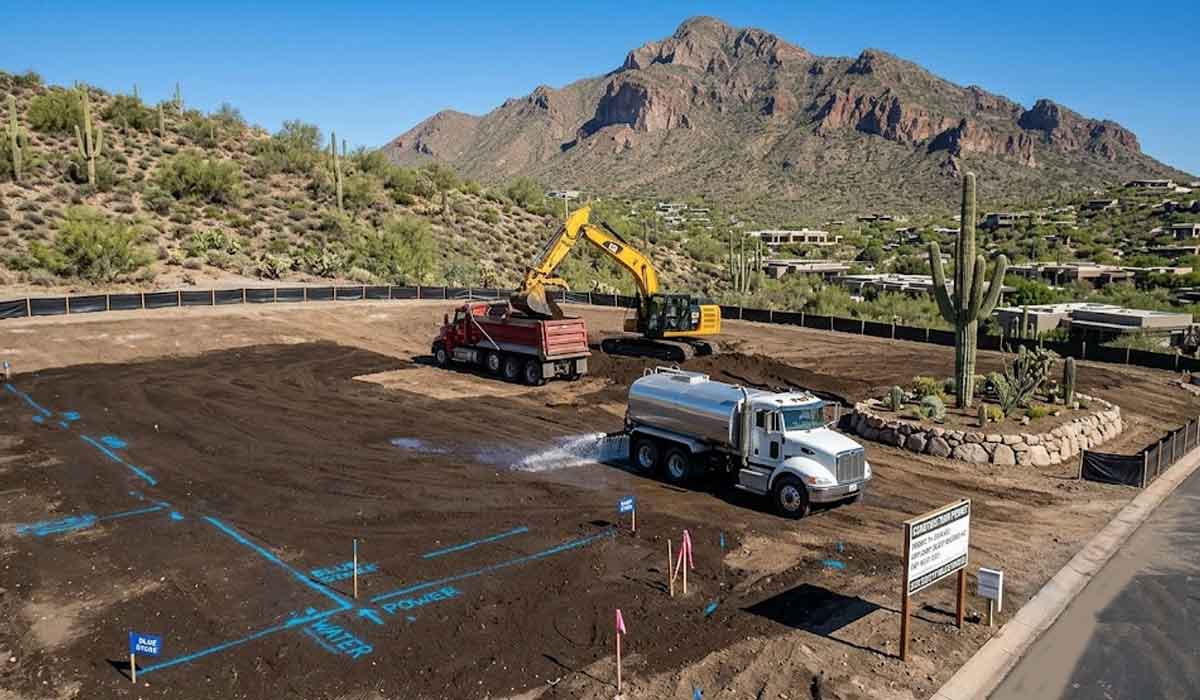
A clearing and prep job in Paradise Valley runs under the same core rules as our demolition and pad work, and we handle them for you. No land disturbance occurs without a Town grading permit and an engineer-sealed grading and drainage plan.
Any disturbance of a tenth of an acre or more triggers a Maricopa County dust control permit. If a cleared lot is going to sit idle, the Town requires you to keep the dust down within about two weeks, or it can suspend permits.
State law requires an Arizona 811 Blue Stake to be located at least two working days before any digging. And the material that leaves your lot, brush, debris, and spoils, gets routed to the right place, with the closest full-service landfill being Salt River Landfill on the Beeline Highway, and clean inert material and green waste are handled separately.
For the deeper detail on these shared requirements, see our Paradise Valley house demolition page and [house pad excavation page], since the same framework covers all three services.
What Affects the Cost
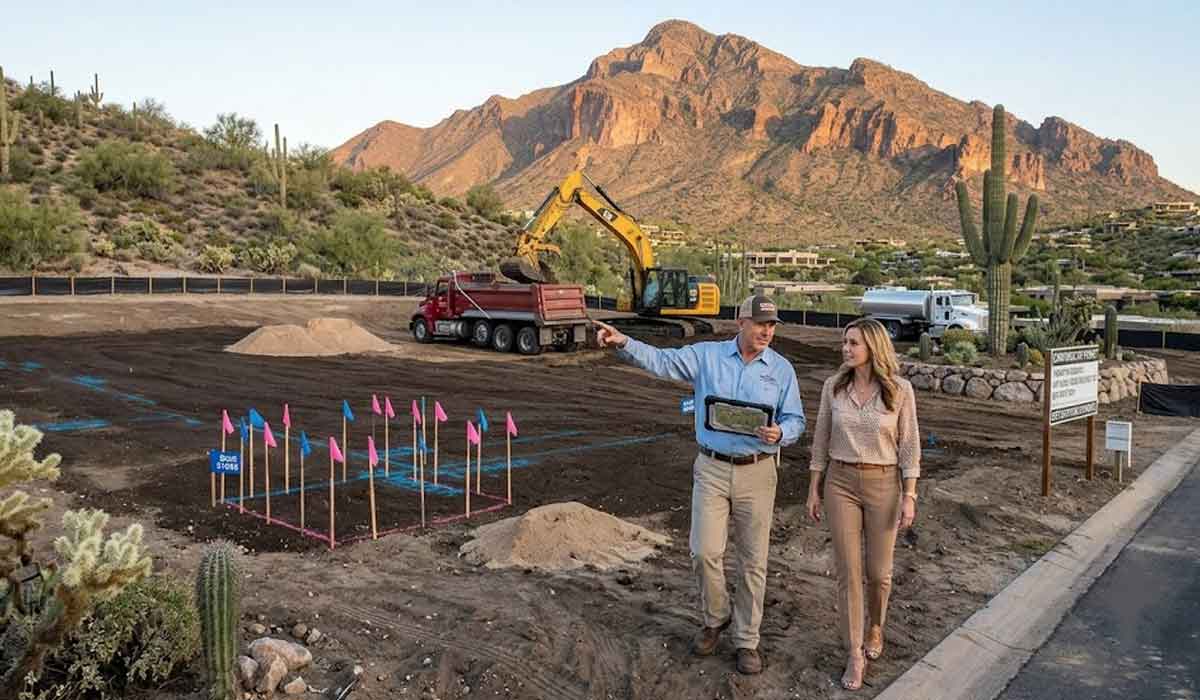
We do not publish flat prices, because no two Paradise Valley lots clear the same. The free on-site walk is where we put a real number on yours. Here is what moves it:
Permit and government fees. The Town grading permit and the county dust permit carry fees set by them, not by us, and the civil grading plan comes from your engineer.
Flat lot or hillside. A flat lot clears and grades simply. A hillside lot brings committee review, disturbance limits, rock, retaining, and restoration, all of which add scope.
How overgrown it is. Years of neglected vegetation, old landscaping, and buried debris take more time than a relatively clean lot.
What has to be protected and moved. Salvaging and relocating mature Saguaros, Ocotillos, and protected trees is careful work, and the count matters.
Rock and caliche. Near the mountains, rock and hardpan slow things down and call for bigger equipment.
Restoration and revegetation. Hillside lots require slope restoration, seeding, and native replanting that flat lots usually do not.
Access. Long estate driveways, tight gates, and steep approaches affect how equipment and trucks reach the work.
How We Work
#1. Free on-site walk. We meet you at the lot, look at the vegetation, the slope, the washes, and the access, and talk through what you want to build. You get a real scope and price, and on a hillside lot, an honest read on what the parcel will allow. This is the only promise we make up front.
#2. Plan and permit coordination. We work from your civil engineer’s grading and drainage plan, coordinate the grading permit, the Native Plant Preservation Plan, and the county dust permit, and file the Arizona 811 locate.
#3. Protect, then clear. We flag and salvage the protected plants first, save the top layer of native soil, then clear the brush, debris, and old material the right way.
#4. Shape the site. We rough-grade the lot, work with the washes and drainage, and establish the building envelope and access, while staying within the approved disturbance limits on hillside lots.
#5. Restore and hand off. We restore and revegetate as required, keep dust under control, and leave the lot clean, stable, and ready for the pad and the build.
Paradise Valley Neighborhoods We Serve
We provide land clearing and site prep throughout Paradise Valley, including Clearwater Hills, Lincoln Drive Estates, Finisterre, Paradise Valley Ranchos, Quail Run, Jokake Inn Estates, Indian Bend Estates, Doubletree Canyon, Smoke Tree, and Paradise Hills, as well as on hillside lots around Camelback Mountain and Mummy Mountain.
Let Us Walk Your Lot With You
Clearing and prepping a lot in Paradise Valley is part dirt work and part knowing the local rules cold, the protected plants, the disturbance limits, the washes, and the restoration the Town expects.
We handle both, in the right order, and leave your lot clean, stable, and ready to build, while keeping you square with the Town the whole way.
We always offer a free on-site walk, because every lot here is its own story, and yours deserves a real look before anyone talks numbers. If you are weighing a hillside lot and wondering whether your dream fits, that walk might be the best hour you spend before you buy.