Excavation Contractor Payson AZ

Complete Site Work
From Lot Clearing, Land Grading and Drainage to Final Grade

ROC: 358362 & 355605
Serving the Payson area since 2014

Why Payson Projects Require Local Expertise

Mountain terrain requires different equipment, different planning, and different experience than valley work.

Rocky soil, steep grades, pine root systems, and tight access roads are standard conditions up here, not exceptions.

Our crews work in these conditions regularly and bring the heavy equipment needed to handle them without cutting corners on your timeline or your property.

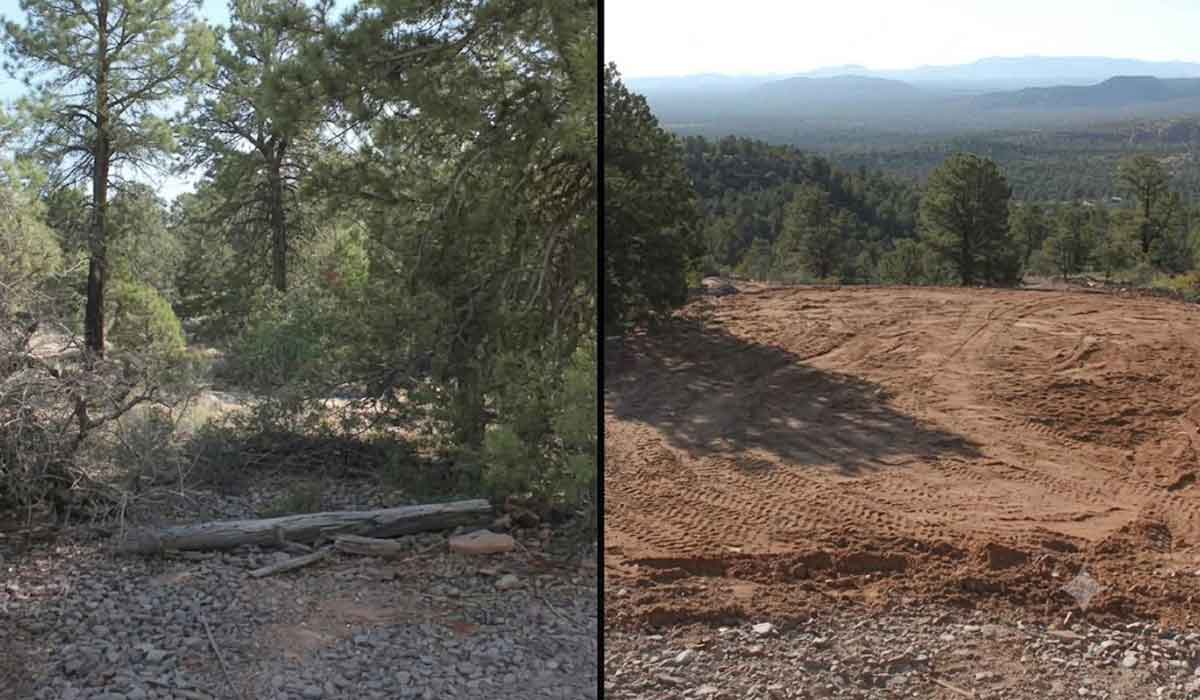
Lot Clearing Payson AZ

Side-by-side comparison showing a forested area with trees and rocks on the left, and a cleared, dirt-covered area with tire tracks on the right.

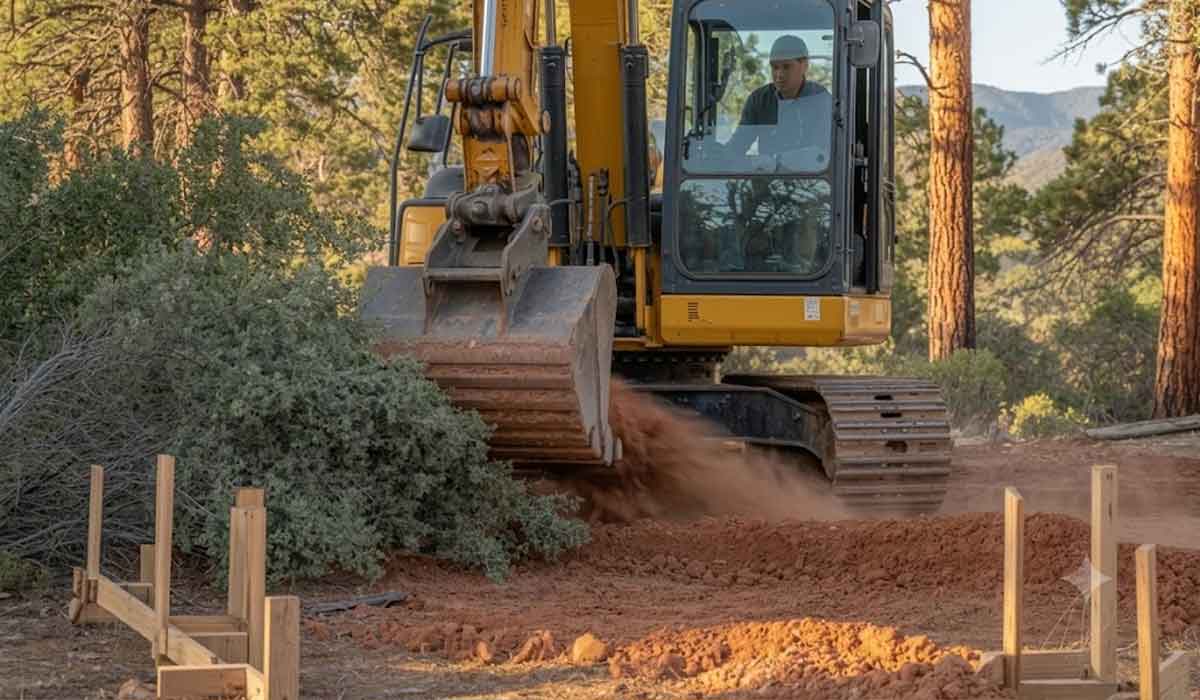
Site Preparation Payson AZ

A man operates a yellow excavator, moving dirt at a construction site surrounded by trees and wooden framework.

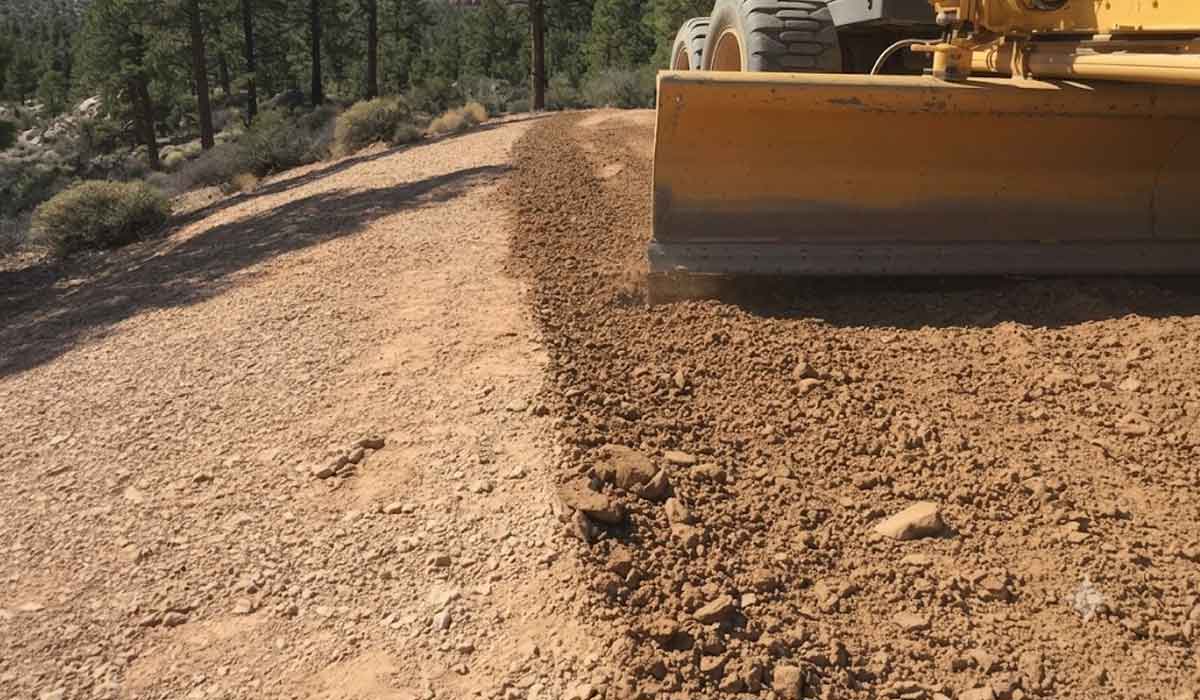
Lot Grading & Drainage Payson AZ

A road grader smooths and levels dirt and gravel on a rural road surrounded by trees and shrubs.

Firewise Defensible Space Clearing Payson AZ
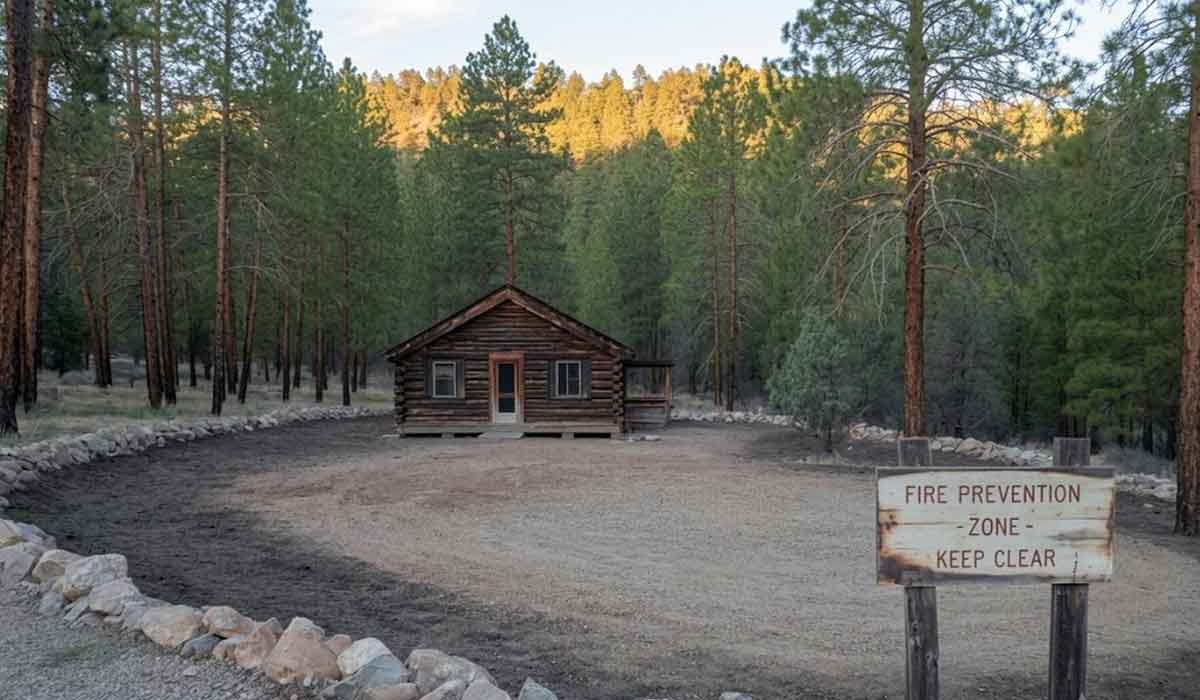
A small wooden cabin stands surrounded by trees in a forest clearing with a sign in front reading "Fire Prevention Zone - Keep Clear.

Firewise clearing removes the vegetation, debris, and ladder fuels that allow a ground fire to reach your structure.

The standard three-zone approach starts at your home and works outward:
Zone 1 (0–30 feet) is the highest-clearance zone where combustible materials are removed and non-combustible ground cover replaces them.

Zone 2 (30–100 feet) reduces fuel density by thinning trees and removing dead material.

Zone 3 (100–200 feet) focuses on reducing intensity if a fire reaches the outer perimeter.

Cabin and Structure Demolition Payson AZ
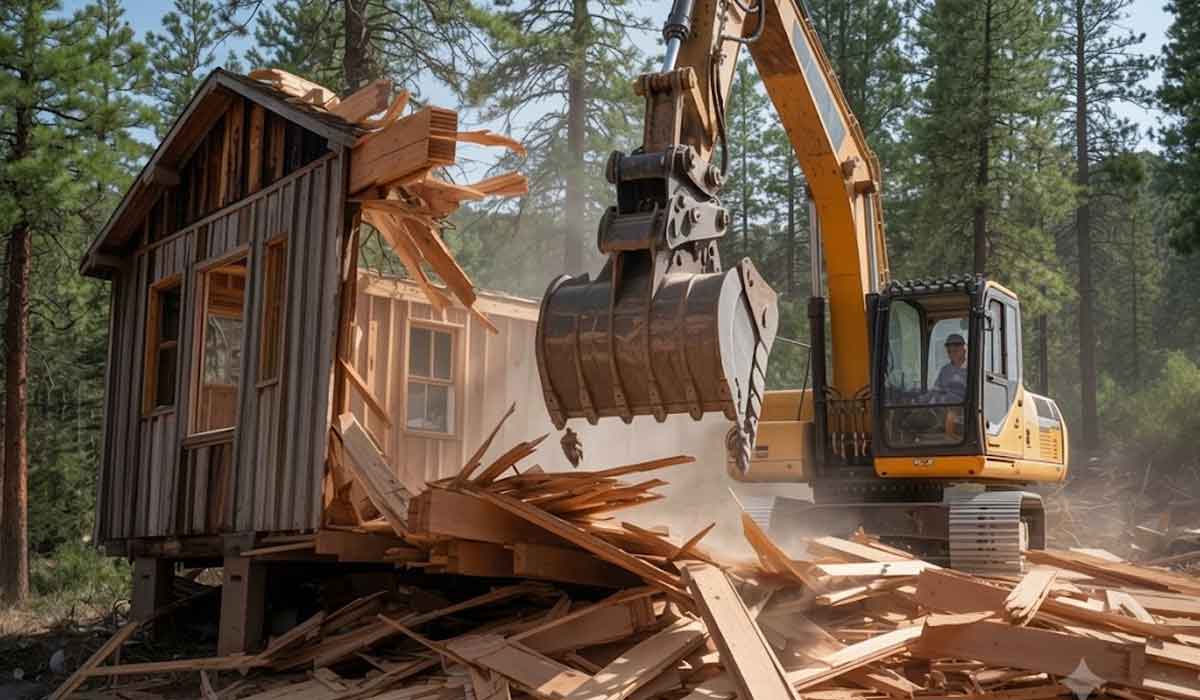
A yellow excavator demolishes a small wooden cabin in a forested area, with debris scattered around the site.

What to Expect Working With DirtFX in the Payson Area

Working on Rim Country properties requires planning that valley contractors sometimes underestimate.

Access roads may need temporary improvement before heavy equipment can reach the work area.

Gila County permit timelines differ from Maricopa County.

A rocky substrate can change the project scope onceground is broken.

We talk through all of this before you sign anything.

Here is how a typical project works with DirtFX:

Step 1: Free On-Site Estimate.

We come to the property, walk the terrain, and assess the actual conditions, not assumptions based on satellite images. Most Payson-area estimates are scheduled within a week.

Step 2:
Written Quote

You receive a line-item written quote covering equipment, labor, disposal, and permits. No lump sums that hide where your money is going.

Step 3:
Permit Coordination

We handle the Gila County permit application and keep you updated on approval status. For Firewise projects, we also prepare documentation for insurance submission.

Step 4: Scheduled Mobilization

We come to the property, walk the terrain, and assess the actual conditions, not assumptions based on satellite images. Most Payson-area estimates are scheduled within a week.

Step 5:
Work and Cleanup.

Project is completed to spec and the site is cleaned before we leave. We don’t leave debris or equipment staging issues for you to deal with.

Step 3:
Permit Coordination

We handle the Gila County permit application and keep you updated on approval status. For Firewise projects, we also prepare documentation for insurance submission.

Frequently Asked Questions
About Excavation and Land Clearing in Payson AZ

Lot clearing costs in the Payson area depend on several factors that can only be evaluated in person: lot size in acres, tree and brush density, species mix (pine and juniper root systems require full extraction, not just surface cutting), rock content in the soil, how far debris needs to be hauled, and whether existing access allows our equipment to reach the work area without road improvement first. A forested one-acre lot in Pine or Strawberry is a different scope than a brushy half-acre lot closer to Payson town limits — equipment requirements, hours, and disposal costs all vary. DirtFX provides free on-site estimates with written line-item quotes so you know exactly what you’re paying for before we start. Call (928) 492-5924 to schedule.

It depends on the scope of your project and whether your property is within Town of Payson limits or in unincorporated Gila County. For standalone earthwork projects in unincorporated Gila County, a Grading and Drainage permit through the Public Works Engineering Division is typically required. For properties within Payson town limits, a separate grading permit from the Town Engineer is required before any site grading begins — and if you’re clearing in preparation for new construction, that grading plan must be submitted alongside your building permit application.

The county recommends filing a Pre-Permit Determination application first, which clarifies exactly which permits apply to your specific project before you submit anything. DirtFX handles the permit application process for excavation, grading, and clearing projects in Gila County so you don’t have to navigate two departments on your own. The Gila County Public Works office serving the Payson area is located at 610 E. Highway 260 in Star Valley at 928-474-7118.

It depends on your carrier, but the short answer is that documented Firewise work can reduce your premium and in some cases is becoming necessary to keep coverage in high-risk Rim Country areas. Arizona has no state FAIR Plan as a last-resort insurer, which means homeowners in fire-prone zones like Pine and Strawberry rely entirely on the private market. Insurance companies are paying more attention to wildfire risk documentation than they were just a few years ago.

Specific programs currently available include AAA’s “My Home Hardening Discount” which offers up to 12.5% off for documented mitigation, State Farm offering 2-5% discounts in some cases, and USAA discounts for homes in recognized Firewise communities. The most important step is calling your insurer before the work begins and asking exactly what documentation format they accept — requirements differ between carriers. DirtFX provides dated contractor invoices documenting the scope of clearing work completed, which most carriers accept as proof of maintenance. We can also photograph each defensible space zone during the project for your records.

Several things drive costs higher in Rim Country compared to valley work. Rocky mountain substrate requires heavier equipment and more time than typical valley soil — what a standard excavator handles in an hour may take two hours through fractured rock. Pine and juniper root systems have to be fully extracted to prevent future settling under structures, which is more involved than clearing desert vegetation. Access roads on steeper or more remote properties sometimes need temporary improvement before heavy equipment can reach the work area at all, adding scope before the primary work even begins. Debris hauling distances are typically longer than in the Mesa area. And Gila County permit requirements, while reasonable, add a step that rural property owners sometimes don’t anticipate. All of this gets scoped during our free on-site estimate so there are no surprises once work begins.

For a typical cabin-sized footprint on a reasonably accessible lot, site preparation, grading, compaction, and drainage setup generally run three to seven days of active equipment time. The longer variable almost always permits approval. Town of Payson residential permit reviews run approximately ten working days after plan submission. Gila County timelines vary by project scope and which division is handling the permit. If you’re planning a spring or summer build start, the permit application process should begin in late fall or early winter to avoid delays. Monsoon season from July through September adds scheduling uncertainty, and heavy storms can interrupt grading work and require trench protection measures. The earlier you call us in the planning process, the better we can sequence everything around your build timeline.

Spring: March through May is the most reliable window. Soil conditions are workable, weather is predictable, and you avoid both the monsoon complications of summer and the frost challenges of winter. Payson sits at roughly 5,000 feet in elevation, which means ground frost is a real consideration from November through February for deeper work such as foundation excavation and utility trenching. Fall, September through November, is also a solid window once monsoon season wraps up. Summer work is doable, but July and August bring fast-moving storms that can interrupt grading schedules with little notice and create trench safety requirements. If your project has a fixed build start date, call us at least 60 to 90 days out so we can schedule around weather and permit timelines together.

We assess soil and rock conditions during the estimate visit, not after equipment is already on site. Payson-area properties vary significantly, some lots have workable decomposed granite and sandy loam, others hit fractured rock within a foot of the surface. Where mechanical trenching runs into hard rock, we use hydraulic breaker attachments rated for the material. Any significant change from what was estimated during the site visit gets communicated to you immediately, with options, before we proceed. We don’t add scope without a conversation first.

Yes, and early coordination saves everyone time. For utility trenching, we sequence our work around your plumber’s, electrician’s, and propane contractor’s rough-in schedules so backfill happens right after inspections rather than sitting open. For site preparation, we communicate directly with your general contractor or builder about grade elevations, stake locations, and inspection sequencing. If you’re an owner-builder, we walk you through what the building department will need to see at each inspection stage. The goal is that every trade following us shows up to a site that’s exactly where it needs to be.

Firewise is a national wildfire risk reduction program administered in Arizona by the Department of Forestry and Fire Management. It establishes three defensible space zones around structures: the Immediate Zone from zero to five feet where all dry grass, ladder fuels, and fire-prone plants like juniper are removed; the Intermediate Zone from five to thirty feet where trees and shrubs are spaced at least ten feet apart from edges; and the Extended Zone from thirty to one hundred feet where dead material is removed and fuel breaks are created. On sloped terrain those distances increase — a 20% slope requires at least 90 feet of defensible space on the uphill side.

Whether you need it depends on your property, your insurer, and in some HOA-governed Rim Country communities, your HOA rules. If your home is in a high-risk fire zone, which includes much of the Pine and Strawberry area, your insurance carrier may already require documented clearance or use it to determine coverage eligibility and premium. Arizona issued a mandatory wildfire data call for high-risk areas in 2025-2026, which signals increased regulatory attention ahead. Even if your carrier hasn’t asked yet, documented Firewise work protects your coverage options going forward. Call your insurer before the work begins and ask what documentation they accept.

DirtFX serves the full Rim Country corridor, including Payson, Pine, Strawberry, Star Valley, Starlight Pines, Tonto Basin, Christopher Creek, Young, and Kohl’s Ranch. For more remote properties, access and scope are assessed during the estimate visit, as some locations require temporary road improvements before equipment can reach the work area. If your property isn’t on this list, call us and describe the project. We assess remote work on a case-by-case basis.

It varies more than most people expect, and that variation is part of why an on-site estimate matters. Payson-area properties can have decomposed granite and sandy loam in some areas, fractured rock within inches of the surface in others, and clay pockets that hold moisture and create drainage challenges. Elevation matters too; properties closer to the Rim tend to have rockier substrate than lower-elevation lots near town. This is very different from the valley where caliche, a dense calcium carbonate layer, is the primary variable. Up here, the challenge is more often fractured rock and slope management than a single predictable soil type. We assess actual conditions during the estimate visit and scope accordingly.

Yes. For properties where the existing access road won’t support heavy equipment, temporary road improvement is sometimes the first line item on the project quote. This might mean widening a narrow track, adding compacted base material over soft spots, or clearing overhanging vegetation that limits equipment height. Remote property access gets evaluated during the estimate visit since the cost and scope depends entirely on your specific road conditions. Some properties need minimal work, others require a full day before primary operations begin. Either way it gets scoped and quoted transparently before we mobilize.

Standing water, erosion channels, and soft spots after monsoon storms are almost always a grading and drainage problem — meaning the land isn’t moving water away from where it’s collecting. The fix depends on what the water is doing and where it’s ending up. Surface regrading redirects sheet flow away from structures and toward natural drainage paths. Swales channel concentrated water across a property safely. French drains address areas where surface grading alone doesn’t solve persistent saturation. The right solution requires walking the property and tracing the water path, which is what we do during a site visit. If you’ve been dealing with flooding around a foundation, near a driveway, or across a usable part of your property, call us for an assessment before the next monsoon season starts. 928-492-5924

Yes, and doing both with one contractor saves you remobilization costs and scheduling coordination. The sequence works like this: we pull the required Gila County demolition permit, remove the structure down to slab or subgrade, depending on your rebuild plans, and transition directly into site preparation for the new foundation without moving equipment off-site. What the property owner needs to handle before demolition begins is utility disconnection, water, electric, propane, which we walk you through during the planning stage. If your rebuild requires a new foundation footprint or different grade elevation than the original structure, we factor that into the site prep scope from the start.

Yes. DirtFX handles permit applications for excavation, grading, and demolition projects in Gila County. For projects in unincorporated county areas, that means coordinating with the Public Works Engineering Division and, in some cases, the Building Safety Division, depending on project scope. For properties within the Payson town limits, permitting goes through the Town’s online Permit Center portal and may require a separate grading permit from the Town Engineer, in addition to a building permit, if construction is involved. What we need from you is the legal property description and parcel number, the Gila County Assessor’s site is the easiest place to pull that. We handle the application, plan submissions, and follow up on status.

It varies by season. Spring and early summer are our busiest booking windows for Rim Country work, so two to four weeks out is typical for estimate scheduling and four to eight weeks for project start in peak season. Fall projects often have more flexibility. Permit-required projects need to factor in approval time on top of our scheduling window; Gila County and Town of Payson review timelines vary, so the earlier you call us in your planning process, the better. For urgent situations, call us directly at (928) 492-5924, and we’ll tell you honestly what we can do.

Yes. DirtFX holds ROC license #358362 issued by the Arizona Registrar of Contractors. ROC licensing is the state’s contractor licensing authority — it requires passing a trade exam, maintaining active insurance, and staying current with Arizona contractor law. You can verify any Arizona contractor’s license at roc.az.gov by entering the license number or company name. We’d encourage you to verify any excavation contractor you’re considering, not just us. Unlicensed contractors working in Arizona face civil penalties and their work doesn’t carry the same legal protections for property owners that licensed contractor work does.

Arizona 811 is the state’s “call before you dig” notification system, and it applies statewide with no rural exemptions. Gila County properties are fully covered under Arizona Revised Statutes Title 40. The requirement is to contact Arizona 811 at least 2 full working days (48 hours) before any excavation, excluding weekends and state holidays. That covers grading, trenching, drilling, and scraping — not just digging with a shovel. Once you submit a ticket, utility operators are notified and must locate and mark their underground lines within that 48-hour window. You cannot begin work until every utility on your ticket has responded.

One important note for rural properties: 811 only locates public utility lines. Private utilities on your property, such as a private well line, irrigation pipe, orseptic system components, are not covered by 811 and require separate locating. DirtFX submits 811 tickets as standard practice before any ground is broken on a project. Violations carry civil penalties up to $5,000 per incident.