
Lot Grading and Drainage Payson AZ
We solve standing water, protect foundations on expansive soil, and build code-compliant swales and drains for Rim Country monsoons.
ROC: 358362 & 355605
Serving the Payson area since 2014
Drainage is a Structural Issue in the Rim Country,
Not Just Landscaping
On a Payson-area lot, where water goes during a monsoon is not a cosmetic question. The Rim Country sits on a mix of expansive clay, caliche, and decomposed granite, and each one reacts to water in a way that can damage your property.
Clay swells when it gets wet and shrinks when it dries, and that movement is the number one trigger for foundation cracks and settlement up here. Decomposed granite drains fast but channels and erodes, cutting rills and gullies across yards and driveways and undermining slabs and footings.
That is why the Town of Payson and Gila County regulate grading and drainage as a safety matter, with some of the strictest code in the state. Standing water near a foundation is not just annoying. It is a structural risk.
DirtFX designs and builds grading and drainage solutions across Payson, Pine, Strawberry, and the surrounding Rim Country, tuned to the specific soil on your lot and built to comply with local code. If you are seeing standing water, erosion, or soft spots after a storm, that is the signal to act.
ROC licensed #358362 and #355605. Serving the Payson area since 2014. Call (928) 492-5924.
Why Payson Soil Makes Standing Water Dangerous
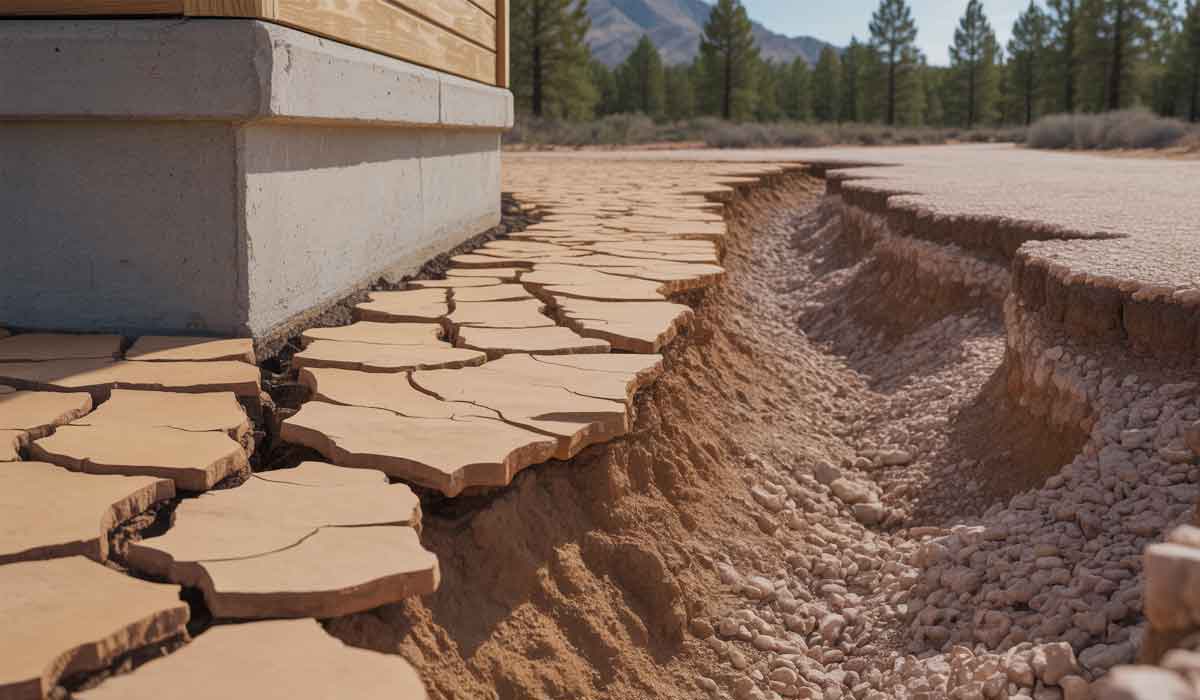
Understanding the soil is the key to understanding why drainage matters so much in the Payson area. Two different soil behaviors create two different problems, and many Rim Country lots have both.
Expansive clay damages foundations. Clay soils, common in old lake terraces and low swales around Payson, take on water and swell, then dry out and shrink. When surface water is allowed to pond or concentrate near footings, the soil beneath one part of the foundation moves while another part remains in place. That differential movement later shows up as slab cracks, misaligned doors, and distressed walls.
Arizona foundation studies consistently find that foundation performance is more closely tied to site drainage and water management than to footing size. In other words, keeping water away from the foundation is the single most important thing you can do.
Decomposed granite damages yards and surfaces. Decomposed granite drains quickly, but it moves. When monsoon runoff hits unprotected DG, it channels, scours, and washes away fine material, cutting erosive rills around patios, walls, and driveways and eventually undermining them. DG dumped flat without a compacted subgrade and a proper surface slope will not hold up to a Rim Country monsoon.
Here is the short version: clay destroys foundations when it gets wet, and decomposed granite destroys yards and driveways when water runs uncontrolled. A real drainage plan accounts for both moving water away from foundations and controlling it across erodible surfaces. This is why a low spot to “catch the water” near the house is exactly the wrong approach on this soil.
How Payson and Gila County Regulate Drainage
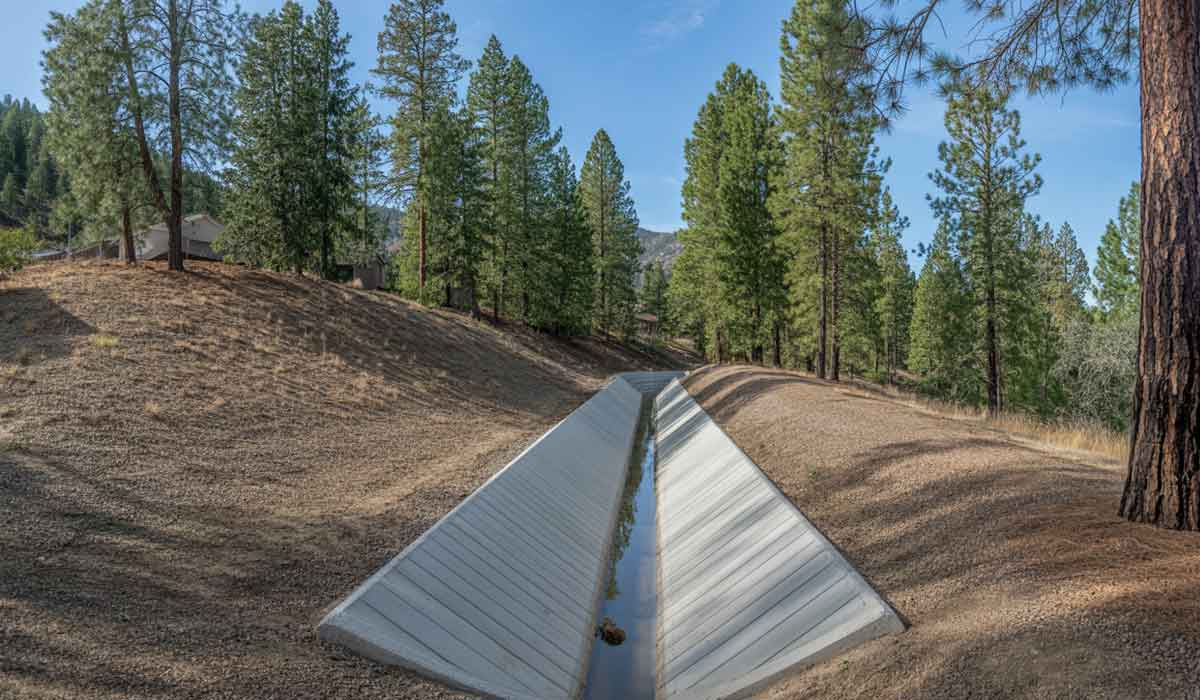
Payson and Gila County have some of the strictest grading and drainage rules in Arizona, and the reason is the soil. When you understand what the code requires, you understand why proper drainage is not optional here.
Inside town limits, the Town of Payson’s Chapter 152 grading and drainage code governs the work. In Gila County, the Grading and Drainage Ordinance and Floodplain Management rules apply. Both require engineered grading and drainage plans for sensitive and hillside lots, reviewed and approved by the Town Engineer or county engineering staff.
A few specifics show how seriously the code treats water:
You cannot concentrate roof or surface drainage and send it onto a neighbor’s property. Code requires that discharge either reach a natural drainage way or a constructed channel, or be spread into natural sheet flow and kept at least 20 feet from any property line. No jet of water out of a pipe at the fence line.
On slopes steeper than 3 to 1, the code requires terraces, reinforced concrete swales, and interceptor drains at the top of cuts to keep water moving off the slope rather than soaking into it and triggering failure.
Retention systems must empty within 36 hours. Water is not allowed to sit because prolonged saturation destabilizes clay soil.
Payson even prohibits mass grading in single-family subdivisions, because the soils and slopes are too sensitive to bulldoze flat.
DirtFX designs and builds to these standards, and coordinates with the Town Engineer and Gila County Floodplain staff when the project requires it, so your drainage is approved before concrete is poured.
Drainage Solutions That Work on Payson Soil
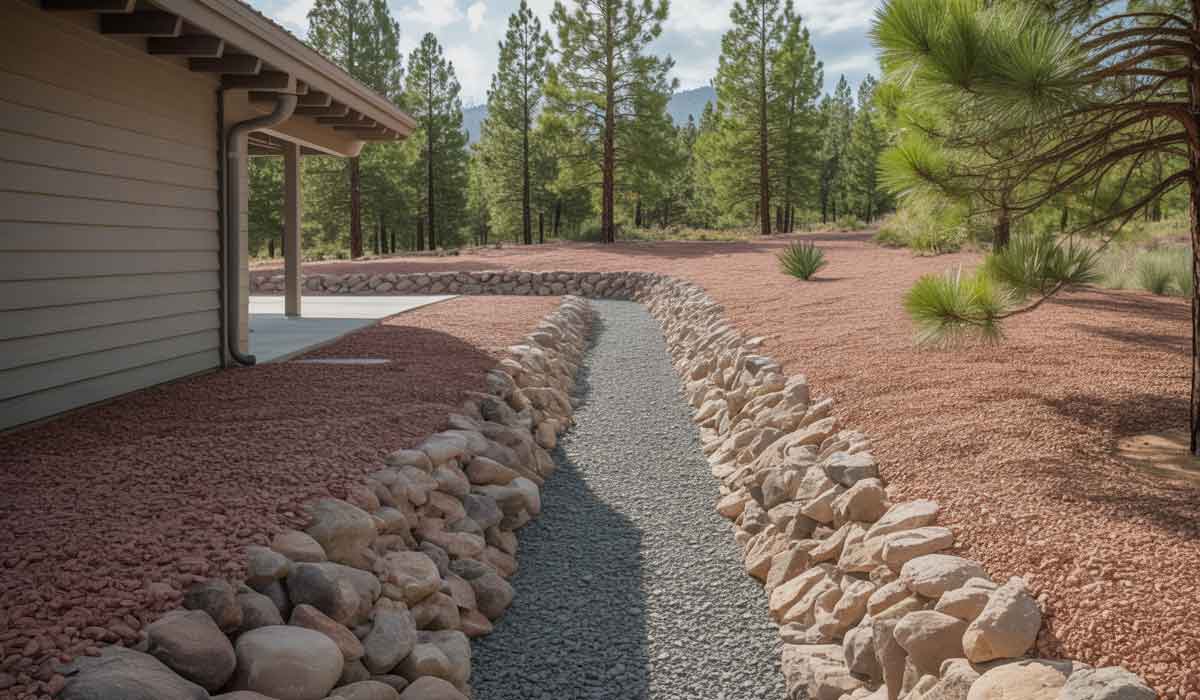
The right drainage solution depends on your lot’s soil, slope, and where the water is coming from and going to. On Rim Country properties, a complete system usually combines several of these.
Positive grading away from the foundation. The first line of defense is making sure the ground falls away from the house, so surface water never sits against the stem wall. This sounds simple, but on a lot with clay and slope it takes real grading discipline to get right.
Swales and berms. Shallow rock-lined or vegetated channels collect sheet flow and route it toward approved drainageways or retention areas before it ever reaches the foundation. Low berms on the downslope side redirect water into those swales instead of letting it pond against footings. On erodible decomposed granite, swale bottoms and outlets often need rock armor to keep the water from cutting them apart.
French drains and perimeter systems. Gravel-wrapped perforated pipe along the problem sides of a house captures surface and shallow subsurface water and carries it to a safe discharge point. At driveways and patios, trench drains intercept runoff before it overtops thresholds or scours the surface.
Retention, drywells, and infiltration. Where water needs somewhere to go that is not under the house, engineered retention basins, drywells, and infiltration galleries accept roof and yard runoff and release it safely, deeper into the DG layers and away from vulnerable clay zones. Code requires these to drain within 36 hours, which we design for.
Erosion-controlled outlets. Every discharge point gets rock energy dissipation or a concrete apron so the outflow does not blast soil away and undermine what it was meant to protect.
Monsoon and Foundation Protection
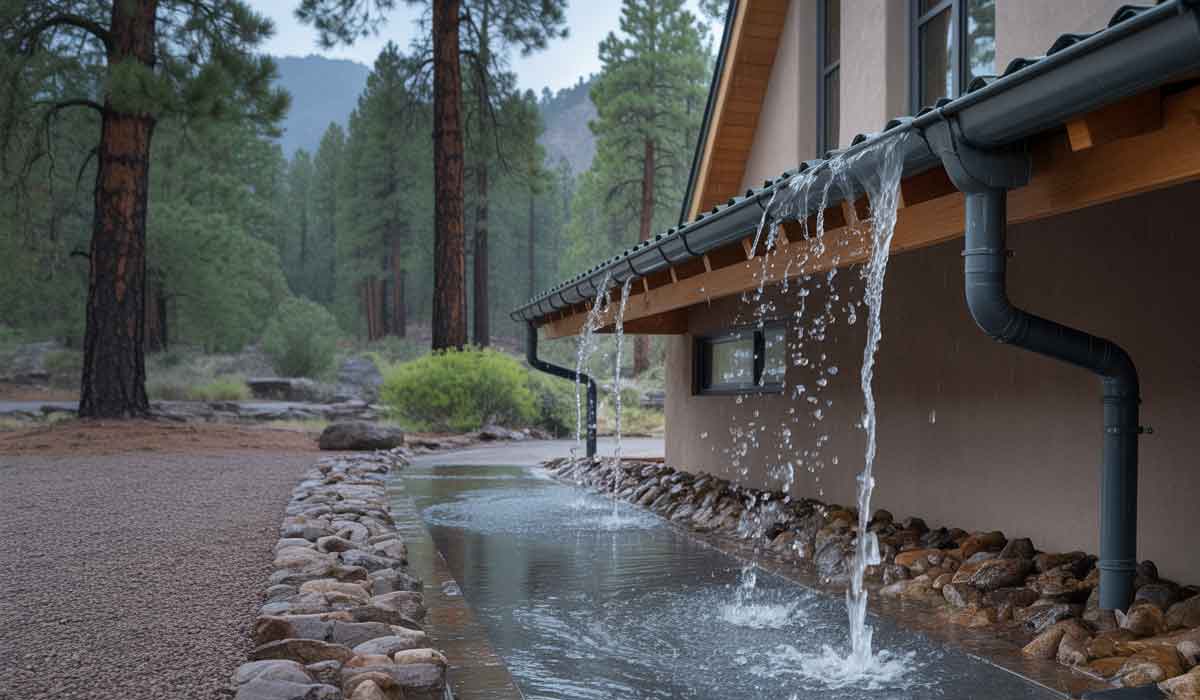
Monsoon season is when Rim Country drainage problems reveal themselves. Fast, heavy storms drop a lot of water in a short time onto soil that either swells or erodes, and a lot that drained fine in spring can flood in July.
Protecting a foundation through monsoon season comes down to water diversion. Roof water is one of the biggest culprits: gutters and downspouts that dump at the base of a wall send a concentrated load of water straight into the soil against the foundation. Extending those discharge points well away from the house, into swales or drains, removes one of the most common sources of foundation trouble.
Around the structure itself, the goal is to intercept and redirect water before it reaches the footings, using grading, perimeter drains, and properly compacted, correctly sloped backfill. On lots with clay heave risk, that perimeter water management is the difference between a foundation that lasts and one that moves.
DirtFX assesses how water actually behaves on your property during a storm, traces where it is collecting and why, and designs a system to move it to a safe destination. Every lot is different, which is why this work starts with walking the property, not guessing from a map.
How a Grading and Drainage Project Works With DirtFX

Step 1: Free on-site assessment. We come out, walk the property, and trace how water actually moves across it: where it collects, where it comes from, and what the soil is doing. Drainage cannot be diagnosed from a satellite image.
Step 2: Written line-item quote. You receive a quote that breaks down grading, swales, drains, retention, and erosion control. No lump sums hiding the scope.
Step 3: Plans and permits. Where the project requires an engineered grading and drainage plan, we coordinate it and handle the Town of Payson or Gila County permit application, working with the Town Engineer or Floodplain staff as needed. We submit Arizona 811 utility locates before any ground is broken.
Step 4: Build. Equipment arrives on the scheduled date. We grade, cut swales, install drains and retention features, and armor the outlets to code.
Step 5: Cleanup and handoff. The system is built to move water where it needs to go, the site is cleaned, and you have drainage that is ready for the next monsoon.
Frequently Asked Questions
About Grading and Drainage in Payson, AZ
Serving Payson, Pine, Strawberry, and the Rim Country
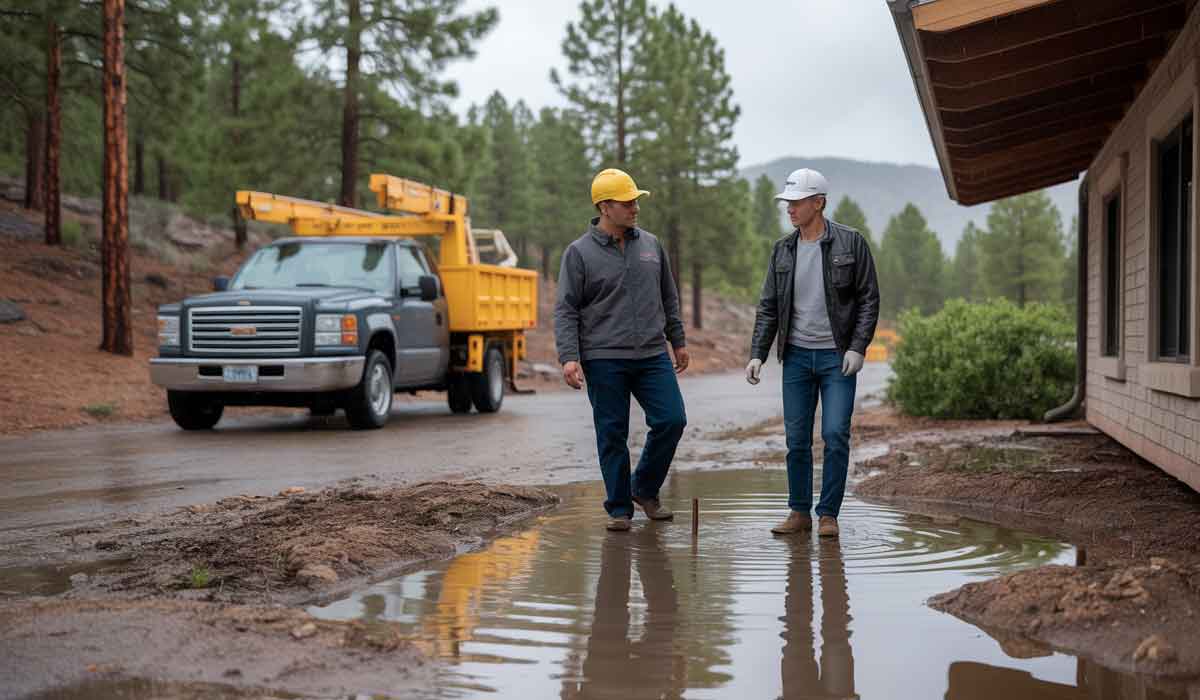
DirtFX provides grading and drainage throughout Gila County and the Rim Country, including Payson, Pine, Strawberry, Star Valley, Starlight Pines, Tonto Basin, Christopher Creek, and the surrounding areas. These are mountain communities where monsoon water, expansive clay, and erodible decomposed granite combine to make drainage a real and ongoing concern, not the predictable conditions of a flat valley lot.
We design and build according to the Town of Payson Chapter 152 and the Gila County Grading and Drainage Ordinance, with particular attention to expansive soils and hillside conditions. Whether you are protecting a foundation, stopping erosion, or fixing chronic standing water, the right first step is a free on-site assessment.
As an excavation contractor in Payson AZ, DirtFX handles the full scope from clearing through final grade, and can extend that work into Firewise defensible space clearing around your home.