New Construction Trenching Services Mesa AZ

Professional trenching contractor for new residential and commercial construction. We dig precision trenches… licensed trades install the utilities.

Professional Trenching for Builders & Contractors

Understanding the trenching-only contractor scope ensures smooth coordination and keeps your new construction project on schedule.

What We Do

  • Excavate trenches to exact specifications (depth, width, grade)
  • Coordinate Arizona 811 utility location (mandatory 2-day advance notice)
  • Cut through Mesa’s challenging caliche layers with specialized equipment
  • Prepare trench bottoms for proper bedding and utility installation
  • Maintain safe, stable trenches during utility contractor work
  • Backfill and compact trenches after utility installation complete
  • Coordinate inspections and documentation

What We Don’t Do

  • Install water pipes, sewer lines, or plumbing systems (licensed plumbers do this)
  • Install electrical conduit or pull wires (licensed electricians do this)
  • Install gas piping (licensed gas contractors do this)
  • Perform utility testing or system hookups (trade contractors handle this)

Comprehensive Trenching Services for Mesa New Construction

Professional excavation for all utility types with precision equipment and Mesa soil expertise.

Water Line Trenching

Residential water service line trenching from the property line to the foundation. Trenches excavated to proper depths: 12 inches minimum in protected areas, 30-36 inches under driveways and roadways.

Laser-level grading ensures a slight downward slope, preventing air pockets. Adequate width (12-18 inches) provides the plumber with proper clearance for bedding placement around pipes.

Coordinate with a licensed plumber for pipe installation and pressure testing before backfill.

Sewer Line Trenching

Gravity-fed sewer line trenches requiring precise slope (¼ inch per foot minimum) from foundation to main connection.

Depths typically 24-48 inches, allowing proper gravity flow. Laser-guided excavation maintains a consistent grade, no dips or high spots that cause settling or blockages.

Wider trenches (12-18 inches of clearance per side) accommodate larger-diameter pipes (4-6 inches in residential applications). Maintain a 5-foot minimum horizontal separation from water lines per code.

Electrical Conduit Trenching

Trenches for underground electrical service from transformer/meter to building. Code-required depths: 30 inches minimum for secondary cables (600V or less), 36 inches under roadways and driveways.

Proper width allows an electrician to work in the space for Schedule 40 PVC conduit installation. Maintain 36-inch separation from gas lines, 24-inch separation from communications.

Coordinate with a licensed electrician for conduit installation, wire pulling, and electrical inspections before backfill proceeds.

Gas Line Trenching

Natural gas service line trenches from the meter to building connections. Minimum depths: 18 inches for plastic HDPE lines, 12 inches for metal pipes. Maintain critical 36-inch horizontal separation from electrical lines.

Stable trench bottom supports the gas contractor’s pipe installation and sand bedding.

A gas company or a licensed contractor installs piping, tracer wire, and yellow warning tape, and performs pressure testing and safety-critical work requiring proper coordination and inspection before backfilling.

Irrigation & Drainage Trenching

Irrigation system trenches for sprinkler lines, drip systems, and main feeds (typically 12-24 inches deep). Drainage trenches for French drains, storm systems, and surface water management (18-24 inches typical).

A proper slope (1 in 100 to 1 in 200) redirects groundwater, preventing foundation issues. Coordinate with the landscaper or irrigation contractor for pipe installation.

Shallow trenches minimize disruption while protecting systems from damage and Arizona’s temperature extremes.

Joint Trench Installation

A single-wide trench accommodating multiple utilities reduces costs by 10-20% and minimizes site disruption. Standard joint trench: 42-48 inches wide, 42-48 inches deep.

Sequential utility placement: electrical/communications deepest (42-48″), sand bedding layer (10-12″), gas line above (32″ depth), with proper separation maintained throughout.

Requires precise coordination with all utility contractors for sequential installation timing. Each trade installs its system, then the next trade follows—efficient for subdivision and commercial projects.

Our 5-Step New Construction Trenching Process

Systematic approach ensuring code compliance, safety, and coordination from excavation through final inspection.

Pre-Construction Planning & Arizona 811 Coordination

Review construction plans, utility layouts, and soil reports.

  • Call Arizona 811 (mandatory 2 full working days before excavation).
  • Review construction plans and utility placement specifications
  • Arizona 811 mandatory coordination (2-day minimum advance notice)
  • Utility marking verification (red=electric, yellow=gas, blue=water, green=sewer)
  • Scheduling a meeting with the general contractor and all utility contractors
  • Mesa permit review and compliance verification
  • Caliche layer assessment from soil reports
  • Equipment mobilization planning
  • Safety planning for OSHA compliance

Precision Excavation & Trench Preparation

Mobilize professional trenching equipment designed to cut through Mesa’s caliche layers.

  • Professional trenching equipment mobilization
  • Cut through caliche layers with specialized equipment
  • Excavate to exact depth specifications (12-48 inches, depending on utility)
  • Maintain proper width (12-18 inches minimum clearance per side)
  • Laser-level grading for drainage slopes
  • Hand-dig within 24 inches of marked existing utilities
  • Create smooth, level trench bottoms free of large rocks/debris
  • Maintain safe trench walls and OSHA-compliant slopes

Coordination with Licensed Trade Contractors

After trench excavation and inspection approval, hand off to licensed utility contractors for installation.

  • Handoff to licensed plumbers for water/sewer pipe installation
  • Coordinate with electricians for conduit installation
  • Gas contractor coordination for gas line installation
  • Maintain safe trench conditions, including dewatering if needed
  • Each trade installs bedding, pipes, and warning tape
  • Rough utility inspections by Mesa Building Safety
  • Pressure testing and system verification by trade contractors
  • Final approval before backfill authorization

Backfill & Compaction to Code Standards

Only after ALL utilities are installed, tested, and approved.

  • Wait for all utility installations, testing, and approvals
  • Controlled 6-12 inch maximum loose lifts
  • Achieve code-required compaction: 95% under roadways/driveways
  • 90% compaction in right-of-way areas
  • 85% minimum compaction in private property
  • Maintain proper moisture content (±2% of optimum)
  • Use appropriate equipment: vibratory plate compactors for narrow trenches
  • Nuclear density gauge testing for compaction verification

Final Grading, Inspection & Documentation

Final walk-through inspection
  • Grade site to proper drainage contours, preventing water pooling
  • Final inspection with Mesa civil inspector
  • Verify proper compaction throughout all trenches
  • Confirm correct final elevations
  • Verify adequate drainage slopes
  • Ensure all utilities are properly covered and protected
  • Review compaction test documentation
  • Address any deficiency items on the inspector’s punch list
  • Provide complete project documentation to the general contractor
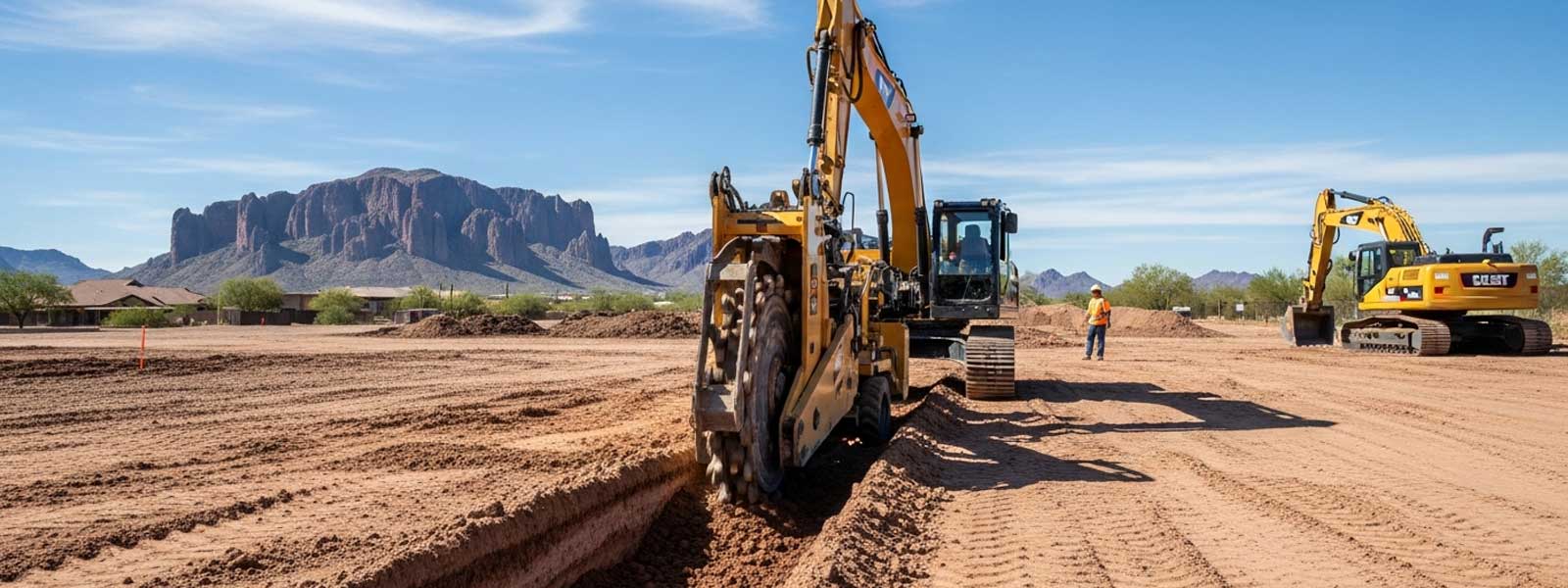
Excavators dig trenches in a sandy construction site with mountains and desert vegetation in the background under a clear sky.

What Makes New Construction Trenching in Mesa Unique?

  • Caliche Excavation Challenges Mesa’s 1-3 foot thick concrete-like caliche layer requires specialized trenching equipment with carbide-tipped cutting teeth, standard machines cannot penetrate Arizona’s hardened calcium carbonate formations.
  • Arizona 811 Coordination State law mandates calling 811 at least 2 full working days before any excavation to mark existing utilities, critical protection preventing catastrophic strikes to water, gas, electric, and communications infrastructure
  • Multi-Trade Sequential Coordination New construction trenching requires precise handoffs between excavation contractors, licensed plumbers, electricians, and gas contractors, each utility must install, test, and pass inspection before backfilling begins
  • Code-Required Separation Standards Arizona building codes mandate specific utility spacing: 5 feet minimum between water and sewer lines, 36 inches between gas and electrical, plus precise burial depths (12-48 inches depending on utility type and traffic exposure)
Get a Free Quote

Factors That Affect New Construction Trenching Costs in Mesa

New construction trenching costs vary significantly based on your Mesa property conditions and project requirements.

While DirtFX provides detailed written estimates after on-site assessment, understanding key cost factors helps builders and contractors plan project budgets effectively.

Every site is unique, and we believe in transparent communication about the factors that influence pricing.

Trench Specifications & Total Linear Footage

Total linear feet of trenching required (water lines, sewer, electrical, gas, irrigation). Trench depths significantly affect equipment time and difficulty—12-inch trenches cost less than 48-inch trenches.

Trench widths (standard 12-18 inches vs. wide joint trenches 42-48 inches). Number of different utility types requiring separate trenches vs. joint trench efficiency (10-20% cost savings).

Subdivision projects with multiple lots have economies of scale. Custom homes on large lots may require hundreds of feet of utility trenches.

Mesa Soil Conditions & Caliche Layers

Mesa’s notorious caliche layer—concrete-like calcium carbonate formation 1-3 feet thick—dramatically affects excavation time and equipment requirements.

Properties with minimal caliche cost significantly less than sites with extensive caliche throughout trench routes. Depth of caliche layer matters: shallow caliche (12-18 inches) requires a different approach than deep caliche (3+ feet down).

Soil composition affects equipment selection and timeline: loose sandy soils trench faster than dense clay or rock. Older Mesa neighborhoods often have more extensive caliche development than newer subdivisions.

Site Access & Working Conditions

Equipment access to property: wide-open sites allow efficient operation of large equipment, whereas tight access requires smaller machines or hand-digging sections.

Backyard utility trenches that require passage through 36-to 48-inch gates limit equipment options. Existing landscaping, hardscaping, or structures requiring protection increase the time needed for careful excavation.

Sloped terrain affects trenching difficulty and safety requirements. The distance from the street to the building location affects the total linear footage required. Active construction sites vs. bare lots affect staging and coordination complexity.

Arizona 811 Coordination & Permit Requirements

All projects require Arizona 811 coordination (minimum of 2 working days) before excavation—this is state law. Complex sites with numerous existing utilities require additional private locating services beyond 811.

Mesa/Maricopa County permit fees and processing times. Right-of-way work in streets or easements requires additional permits and traffic control measures. OSHA-compliant protective systems (shoring, sloping, trench boxes) for trenches 5+ feet deep increase safety compliance costs.

Engineering requirements for commercial projects add planning and documentation expenses.

Utility Contractor Coordination & Timeline

The number of different utility contractors requiring sequential trench access affects the overall project timeline.

Scheduling coordination with multiple trades (plumber, electrician, gas contractor, irrigator) can extend project duration.

Waiting for rough inspections between utility installations before backfilling. Delays due to utility contractor availability during busy construction seasons. Joint trench projects require precise timing—each trade must complete work before the next trade begins.

Builder/general contractor communication and decision-making speed affects efficiency.

Project Timeline & Scheduling

Standard scheduling vs. rush/expedited timeline requirements. Projects requiring work during specific construction phases to meet builder deadlines. Weather delays during the Arizona monsoon season (July-September) are affecting trench stability and compaction.

Winter projects generally proceed faster due to cooler temperatures and less monsoon risk.

Multiple-phase projects (rough trenching now, final utilities later) require remobilization, subdivision development staging where trenching occurs across multiple home sites over extended periods.

Equipment Mobilization & Specialty Machinery

The distance from our Mesa base to the project site affects mobilization costs. Type of equipment required: standard trenchers vs. heavy-duty excavators with hydraulic breakers for caliche.

Specialized laser-leveling equipment for precise grade control on sewer lines. Compaction equipment needed: vibratory plate compactors, jumping jacks, or larger walk-behind rollers.

Dewatering equipment if high groundwater table encountered.

Traffic control equipment and signage for right-of-way work. Equipment must match Mesa soil conditions and utility specifications exactly.

Backfill Material & Compaction Testing Requirements

Engineered fill material specifications vs. native soil reuse (when acceptable). Imported material costs for proper bedding around utilities.

Sand bedding requirements for water/sewer lines (6-12 inch base layer). Compaction testing frequency: residential projects (spot testing) vs. commercial projects (more extensive testing requirements).

Nuclear density gauge testing for Mesa Building Safety compliance.

Multiple test locations on larger projects. Certified lab testing and documentation for engineer-designed projects.

Mesa Code Compliance & Inspection Coordination

Mesa Building Safety inspection requirements and associated coordination time. Compaction testing documentation and reporting requirements.

Final grade certificates from civil engineers on commercial projects. Corrections or re-work if initial inspections identify deficiencies.

As-built documentation showing actual installed utility locations and depths. Stormwater management compliance for projects disturbing over 1 acre.

Dust control compliance measures (Maricopa County Rule 310) are required throughout excavation work.

Specialized Requirements & Site Challenges

Hand-digging requirements near existing structures or utilities (slower, more labor-intensive).

Protection of existing mature trees and root systems and working around underground obstacles (old foundations, abandoned utilities, large boulders).

The discovery of contaminated soil requires special handling and disposal, including dewatering for trenching below the water table.

Utility conflicts discovered during excavation require design modifications. HOA coordination and restrictions in established neighborhoods. Historical or cultural resource considerations on certain properties.

Transparent Pricing

DirtFX provides detailed written estimates after a thorough on-site assessment of your specific conditions. We evaluate all factors affecting your project and clearly explain our pricing.

Every Mesa property and construction project is unique.

Please get in touch with us at 480-571-1046 for accurate project-specific pricing.

New Construction Trenching Questions Mesa Contractors Ask

Comprehensive answers to common questions about trenching services, Mesa soil conditions, and utility coordination.

DirtFX is a specialized excavation/trenching contractor—we dig trenches to exact specifications but don’t install utilities. Licensed plumbers install water and sewer pipes, licensed electricians install conduit and pull wires, and licensed gas contractors install gas piping. This division of labor is standard in the construction industry. We excavate precise trenches, coordinate Arizona 811 utility locates, maintain safe trenches during utility contractor work, then return to backfill and compact trenches to code after licensed trades complete their installations and inspections. This specialization keeps projects efficient and ensures every trade focuses on what they’re licensed and insured to do.

Total timeline typically runs 9-20 days from excavation start to final approval. The breakdown: Pre-Construction Planning & Arizona 811 (3-5 days), Precision Excavation (2-5 days), Licensed Trade Contractor Installations by others (3-7 days), Backfill & Compaction (1-3 days), Final Grading & Inspection (1 day). The timeline varies based on project size, the number of utility types, Mesa soil conditions (caliche depth and extent), weather, and the utility contractor’s scheduling. Larger subdivision projects or commercial sites take longer. The Arizona monsoon season (July-September) can cause weather delays. Simple residential projects with straightforward access and minimal caliche can complete faster, while complex sites with extensive caliche, multiple utilities, and challenging access take longer.

Arizona 811 is the state’s mandatory underground utility notification system—call 811 or submit online at least 2 full working days before any excavation. When you notify 811, they contact all utility companies (electric, gas, water, sewer, communications) to mark their underground facilities with color-coded paint or flags: red (electric), yellow (gas), orange (communications/cable), blue (water), green (sewer), purple (reclaimed water), white (proposed excavation). This prevents utility strikes that can cause injuries, deaths, service outages, expensive repairs, and legal liability. It’s Arizona state law—excavating without proper 811 notification can result in fines, criminal charges, and full financial responsibility for any utility damage. DirtFX coordinates all Arizona 811 requirements and verifies proper marking before any excavation begins.

Mesa code-compliant trench depths vary by utility type: Water lines require a minimum of 12 inches in protected areas and 30-36 inches under driveways/roadways. Sewer lines typically run 24-48 inches deep to maintain a proper gravity-fed slope from the foundation to the main connection (minimum ¼ inch per foot). Electrical conduit requires a minimum of 30 inches for secondary cables (600V or less) and 36 inches under roadways/driveways. Gas lines need a minimum of 18 inches for HDPE plastic pipes and 12 inches for metal pipes. Irrigation/drainage trenches are typically 12-24 inches deep. Joint trenches accommodating multiple utilities run 42-48 inches deep. Actual depths depend on your specific building plans, utility entry points, and Mesa Building Safety requirements. DirtFX excavates to exact engineer-specified depths verified with laser-level equipment.

Caliche is a concrete-hard calcium carbonate layer that forms over thousands of years in Arizona desert soil, typically found 6 inches to 3 feet below the surface throughout Mesa. It’s extremely difficult to excavate—often harder than concrete—requiring specialized heavy equipment with hydraulic breakers or rock saws. Caliche dramatically affects trenching timeline and costs. Properties with minimal or shallow caliche excavate much faster than sites with thick, deep caliche layers. The caliche layer can be 1-3 feet thick and may extend the entire length of your trench. DirtFX has 10+ years of experience with Mesa caliche and owns specialized equipment designed specifically to cut through these challenging formations efficiently. We review soil reports during pre-construction planning to assess caliche conditions and provide accurate estimates.

Yes, trenching occurs year-round in Mesa with seasonal considerations. Winter (November-March) is ideal—cooler temperatures, minimal rainfall, stable soil conditions, and faster compaction work. Spring (April-June) and Fall (October-November) are excellent with predictable weather. Monsoon season (July-September) presents challenges: intense rainfall can flood open trenches, requiring dewatering; wet soil affects compaction quality and testing; lightning safety concerns pause work; and mud conditions slow equipment operation. However, monsoon work is manageable with proper planning: we monitor weather forecasts closely, have dewatering equipment ready, protect open trenches with berms or pumps, schedule utility contractor work during dry periods, and adjust compaction procedures for moisture content. Many Mesa construction projects proceed through the monsoon season successfully with experienced contractors like DirtFX managing weather-related challenges.

Compaction is the process of densifying backfill soil to prevent future settling that causes pavement cracks, foundation damage, and utility pipe breaks. Proper compaction requires: placing backfill in controlled 6-12 inch loose lifts (not all at once), mechanically compacting each lift with vibratory plate compactors or rollers before adding the next lift, maintaining proper moisture content (±2% of optimum—not too wet or dry), and achieving code-required density verified by testing. Mesa code requires different compaction levels: 95% Standard Proctor under roadways/driveways, 90% in right-of-way areas, 85% minimum in private property. Testing uses nuclear density gauges to compare the achieved density to the maximum laboratory density. Poor compaction causes trenches to settle 6-12 inches over time, cracking driveways and damaging utilities. DirtFX provides certified compaction testing and documentation proving Mesa Building Safety compliance.

Yes, joint trenching places multiple utilities in a single wide trench, reducing costs by 10-20% and minimizing site disruption compared to separate trenches. Standard joint trench dimensions: 42-48 inches wide, 42-48 inches deep. Utilities are installed sequentially from bottom to top, maintaining proper separation: electrical/communications conduits are deepest (42-48 inches), sand bedding layer (10-12 inches thick), gas line above at 32 inches, and water/sewer lines higher up, with required separations maintained. This requires precise coordination—each utility contractor must complete their installation before the next trade begins. Joint trenching works excellently for subdivision developments and commercial projects with multiple utility contractors working systematically. Each trade installs its piping, bedding, and warning tape, then steps aside for the next contractor. More planning is intensive but very cost-effective for new construction projects.

Utility strikes are prevented through mandatory Arizona 811 coordination before excavation—all existing utilities must be marked. However, suppose unmarked utilities are discovered or accidentally contacted. In that case, we immediately stop all work in that area, notify the utility owner and 811, secure the area to prevent public access, call emergency services if gas/electric poses an immediate danger, document the location and contact thoroughly, and wait for the utility company’s response and repair. Arizona law provides excavator protection if proper 811 notification was made and marked utilities were hand-dug within the required clearances (24 inches). Unmarked utilities or utilities marked incorrectly are the utility owner’s responsibility. Excavators working without proper 811 notification face full financial liability, potential criminal charges, and civil penalties. DirtFX strictly follows all Arizona 811 requirements, verifies all markings, and hand-digs around marked utilities to prevent strikes.

Yes, Mesa requires building permits for new construction utility installations. Your general contractor or builder typically obtains the overall building permit which covers utility rough-ins. Specific requirements: Mesa Building Safety permits for water, sewer, electrical, and gas installations (usually pulled by licensed trade contractors), right-of-way permits if trenching occurs in streets or public easements, dust control compliance with Maricopa County Rule 310 for all excavation work, traffic control permits if work affects public streets, and engineering approval for commercial projects or complex drainage systems. The permit process involves: reviewing construction plans, coordinating Arizona 811 utility locates, rough utility inspections after installation before backfill, compaction testing and documentation, and final inspections verifying code compliance. DirtFX coordinates with Mesa Building Safety throughout the project and provides all required compaction testing documentation for permit compliance and final approvals.

Yes, but it requires careful planning and the property owner’s understanding of the impacts. Trenching through existing landscaping: mature trees may need root pruning (arborist consultation recommended), irrigation systems in trench path must be relocated or will be damaged, grass/sod is removed and typically not salvageable (re-sodding needed), and existing plants/shrubs in trench route must be removed or transplanted. Trenching through hardscaping: concrete driveways, walkways, or patios require saw-cutting and removal along the trench path (reinstallation needed after backfill); pavers or decorative stone are removed, stacked, and can often be reinstalled; and asphalt must be saw-cut and patched after backfill and compaction. Most new-construction trenching is done on bare lots before landscaping is installed, avoiding these complications. Retrofit utility work or additions to existing homes require coordination with the landscaper for plant protection/removal and with the hardscape contractor for concrete/paving work. DirtFX provides careful excavation, protecting areas outside the trench path, and coordinates timing with restoration contractors.

Trench width depends on utility pipe diameter, bedding requirements, and working space for installers. Minimum widths: Water lines (typically ¾-1 inch in diameter residential) require 12-18 inch-wide trenches, allowing the plumber 6-12 inches of clearance on each side of the pipe for bedding placement and connections. Sewer lines (4-6 inch diameter residential) need 12-18 inch clearance per side = 28-42 inch total width for larger pipes. Electrical conduit (2-4 inch PVC) requires adequate width for the electrician’s working space and proper bedding. Gas lines (similar to water lines) need a 12-18-inch width. Joint trenches accommodating multiple utilities are 42-48 inches wide, providing room for sequential utility installation by different contractors. Deeper trenches require wider wall slopes to meet OSHA requirements—trenches over 5 feet deep require protective systems (sloping, shoring, trench boxes). DirtFX excavates trenches to specifications, ensuring adequate working width while minimizing unnecessary excavation that increases backfill costs and compaction requirements.

Still have questions about your demolition project?

Why Mesa Property Owners & Contractors Choose DirtFX Excavation

Professional trenching & excavation backed by experience, expertise, and local knowledge

10+ Years Mesa-Specific Experience

Decade of demolition expertise serving Mesa, Gilbert, and East Valley property owners. We understand local codes, soil conditions, and permit requirements.

Fully Licensed & Insured

ROC licensed contractor with comprehensive general liability and workers compensation insurance protecting your property and our crews.

Specialized Caliche Equipment

Heavy-duty hydraulic breakers designed specifically for Arizona’s hard caliche foundations. We have the right tools for Mesa’s unique geology.

Complete Permit Handling

We manage all Mesa Building Safety permits, HOA approvals, and inspection requirements. No paperwork hassles for you.

Transparent Communication

No surprises, no hidden fees. Detailed written estimates with all costs itemized, regular project updates with photos, and direct access to project managers.

OSHA-Trained Crews

Safety-certified operators with extensive demolition training. Every crew member follows strict OSHA safety protocols on every project.

Reliable Timeline Delivery

We provide realistic timelines and stick to them. No surprise delays or extended projects. Most residential demos are completed in one week.

Environmentally Responsible

We recycle metal, concrete, and wood whenever possible. Proper disposal at licensed facilities with documentation provided.

Local Mesa Company

Based in Mesa at 7303 S. Hawes Road. We’re your neighbors, invested in our community and reputation throughout the East Valley.
A wide dirt road lined with desert vegetation, including cacti and shrubs, under a partly cloudy sky with mountains in the background.

The DirtFX Difference

  • Transparent pricing with detailed written estimates
  • No hidden fees or surprise charges
  • Direct communication with project managers
  • Before/after photos and documentation
  • Professional cleanup leaving site ready

Serving Mesa, all East Valley Communities & North to Payson.

DirtFX proudly provides demolition services throughout Mesa, Gilbert, Chandler, Tempe, Queen Creek, and surrounding East Valley communities.
Our Mesa location offers quick response times and deep familiarity with local neighborhoods, building codes, and permitting requirements.

Mesa

Gilbert

Chandler

Tempe

Queen Creek

Maricopa County