
Pool Demolition and Removal
Paradise Valley AZ
We handle partial and full removals, permits, legal water draining, and compaction the right way.
ROC: 358362 & 355605
Serving the Paradise Valley area since 2014
Removing a Swimming Pool in Paradise Valley, Made Simple
Let us walk through what it really takes to remove a swimming pool in Paradise Valley, the way a friend who does this work would explain it to you. Because there are a couple of decisions and a few rules here that most homeowners never see coming, knowing them ahead of time saves you money and protects the value of your home.
Maybe the pool came with an estate you are rebuilding. Maybe you are tired of paying to maintain a pool nobody swims in. Maybe you want the yard back for a bigger patio, a sport court, a garden, or a future addition. Whatever the reason, pool removal in Paradise Valley is straightforward when it is done right, and a headache when it is not.
DirtFX handles pool demolition and removal across Paradise Valley, from flat valley-floor lots in the Ranchos to steep rock lots on the flanks of Camelback Mountain and Mummy Mountain.
We always offer a free on-site walk first, because every pool and every yard is a little different, and the honest way to scope yours is to come see it.
The Big Decision: Partial or Full Removal
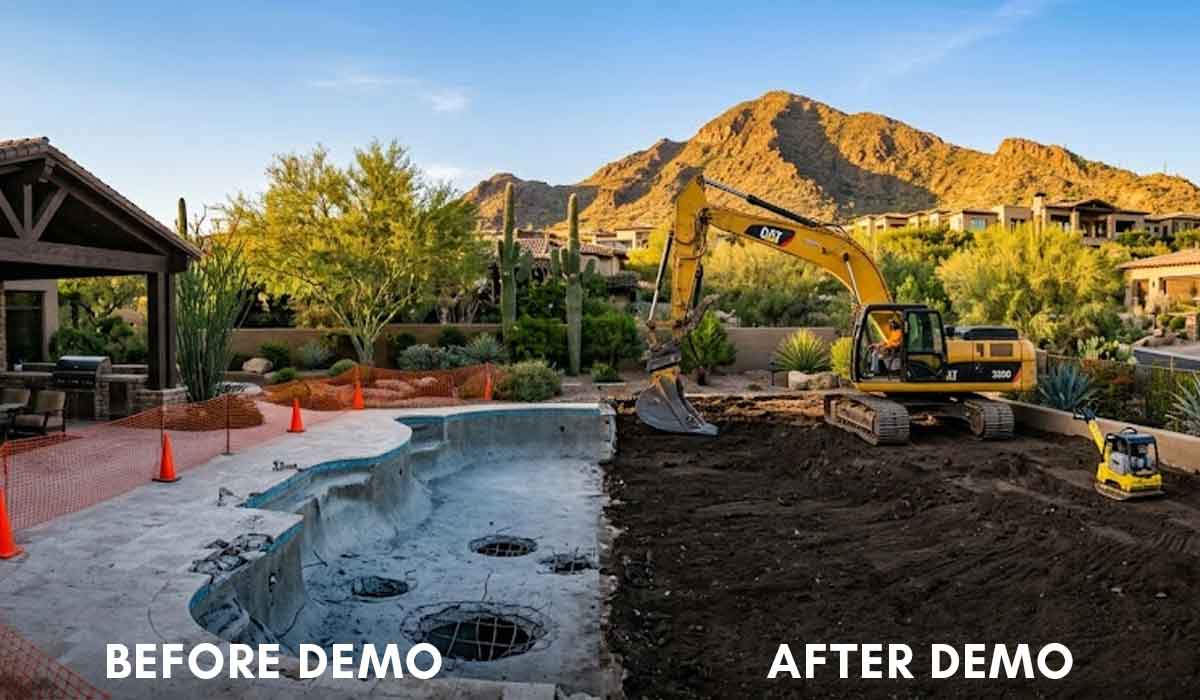
This is the choice that shapes everything else, and most homeowners do not know it exists until someone explains it. There are two ways to remove a pool, and they are not the same.
Partial removal, also called a fill-in or abandonment. The crew breaks up the top of the pool shell and removes it below ground level, cuts openings in the bottom so water can drain down through the old basin instead of pooling, then breaks up and backfills the space with soil placed in compacted layers. The lower part of the shell stays in the ground. This is the faster, less expensive option.
Full removal. The entire pool comes out: all the concrete and gunite, the rebar, the plumbing, and the equipment, hauled off to an approved facility. The hole is then backfilled with clean or engineered fill, compacted in layers. This costs more and takes longer, but the ground behaves like normal soil again when it is done.
So which one is right for you?
It comes down to one question more than any other: what do you want to do with that spot later? If you ever plan to build over where the pool was, an addition, a casita, a guest house, even a heavy structure, you almost certainly want full removal, because the Town and your engineer will not want a foundation sitting on top of a buried shell and questionable fill.
If the area is becoming a yard, patio, or landscaping, a properly done partial fill-in can be a sensible, cost-effective choice. We talk this through with you at the walk, so you pick with your eyes open.
What It Means When You Sell, and What You Build Later
Here is the part a good contractor warns you about before you choose the cheap option, because it is real money.
In Arizona, a removed or filled-in pool is a material fact you have to disclose when you sell. The standard Arizona seller disclosure form asks directly whether a pool was removed, capped, or filled in, and the guidance for sellers is simple: when in doubt, disclose.
A partially filled pool that gets discovered later, during a buyer’s inspection or a future excavation, can turn into a real dispute if it was hidden. We are not real estate attorneys, and this is a conversation to have with your agent, but the takeaway is that honesty protects you, and good records make it easy.
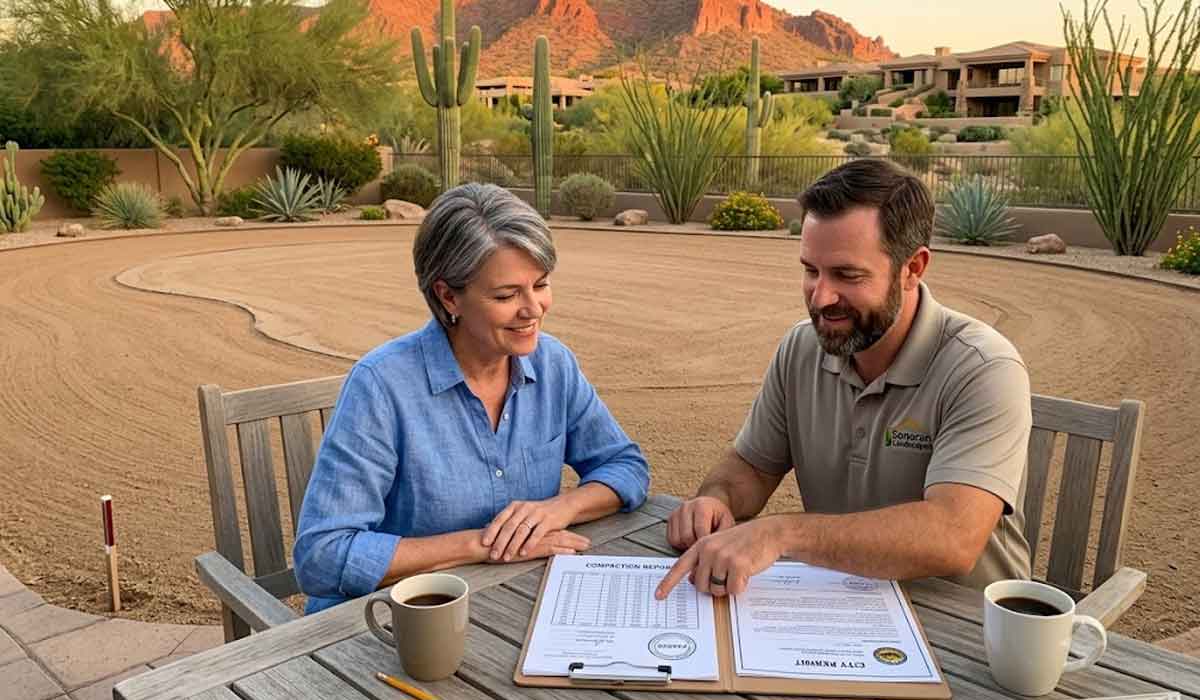
That is why we keep clean documentation on every job: the permits, the method, and the compaction results. If you did a full removal with engineered, certified fill, you can show a future buyer or the Town that the ground is solid. If you did a partial fill-in, you have the paperwork showing it was done under permit and to code.
The other thing to know is what a filled pool area means for future building. A filled-in pool, even one compacted well, does not behave exactly like undisturbed native soil, so the Town’s grading review treats it carefully.
If a future owner wants to build over that spot, they will likely need a geotechnical engineer to evaluate it, and may need to fully remove whatever shell remains and replace it with engineered fill. Plan for the future you actually want, and the choice gets easy.
Draining the Water the Legal Way
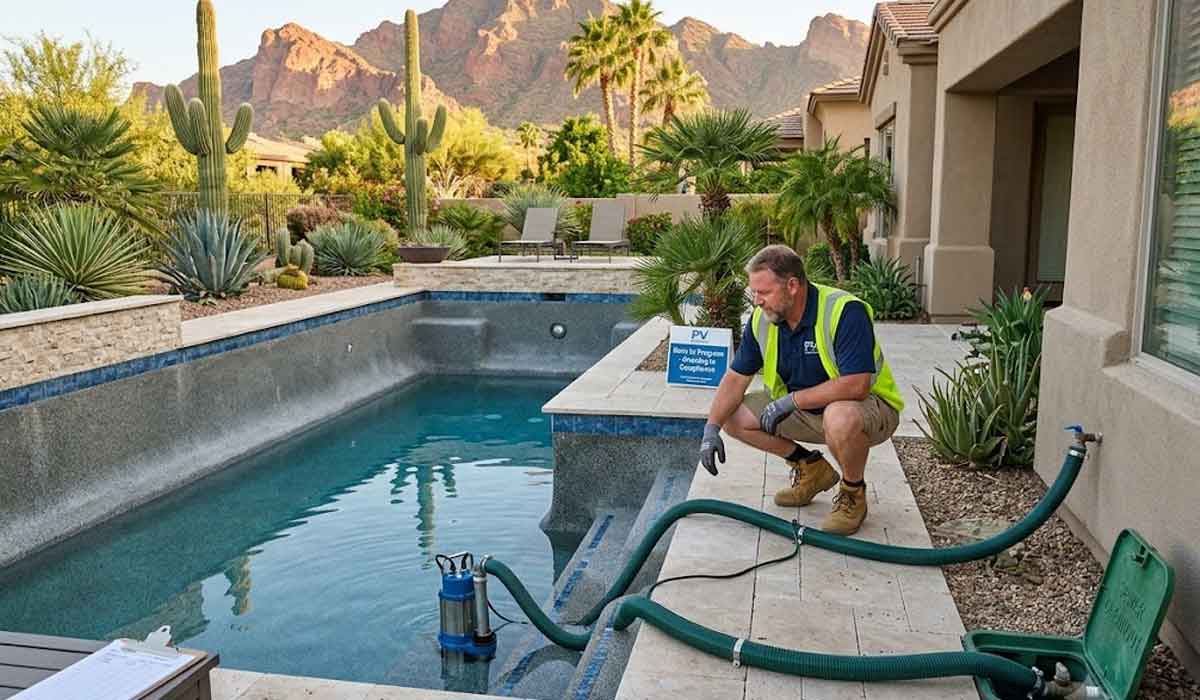
Here is one almost nobody expects: you cannot just drain a pool into the street. A typical Paradise Valley pool holds tens of thousands of gallons of chlorinated or salt water, and where that water is allowed to go is regulated, for good reason. Pool chemicals harm wildlife and waterways, and the storm drains here discharge directly into washes and rivers without treatment.
In Paradise Valley, chlorinated pool water can never be sent to the street, a storm drain, a natural wash, or your neighbor’s property. Doing so is treated as an illegal discharge under local, state, and federal stormwater rules. What is allowed is more limited than people assume:
- Draining into the sanitary sewer through your property’s sewer cleanout, using a temporary hose at a controlled rate. This only works if your home is on the sewer, not a septic system, since pool water can overwhelm a septic tank.
- Draining slowly onto your own property, into landscaping or a retention area, so that every drop stays on your lot and none reaches the street, a storm drain, or a wash.
- Pumping the water into a hauling truck for off-site disposal.
Good practice is to stop adding chlorine several days before draining so the levels fall close to zero, and to avoid draining right after a shock treatment.
Saltwater pools are usually routed to the sewer rather than onto landscaping because the salt can damage plants. We handle draining as part of the job and do it to code, so the very first step of your pool removal does not result in a violation.
Disconnecting the Equipment Safely
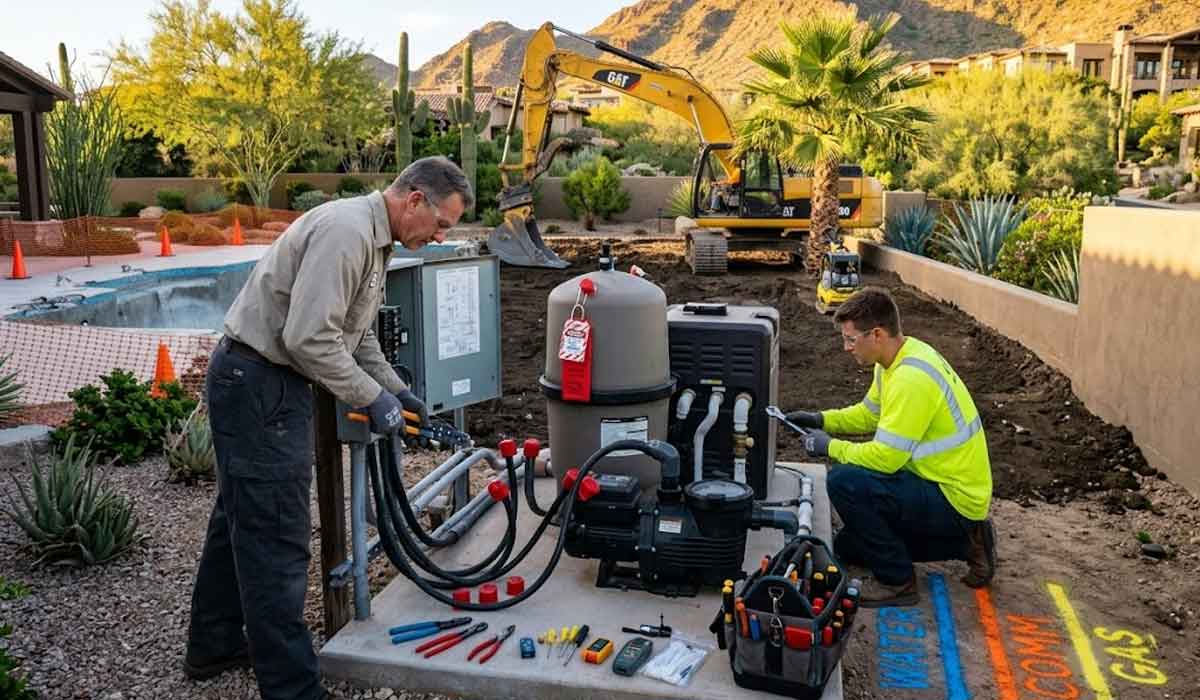
Before any breaking or digging starts, the pool’s utilities must be shut down and made safe, and this work is handled by licensed trades, which we coordinate.
The electrical service to the pump, lights, and heater is disconnected at the panel, and the circuits are capped or removed properly. The gas line to a pool heater gets shut off and capped or removed to code.
Because those electrical runs and gas branches often cross the area we are about to excavate, we map them first, then file an Arizona 811 Blue Stake locate at least two working days before digging, so every underground line, water, sewer, gas, electric, and communications, gets marked. Near marked lines, we dig carefully by hand or with care so nothing gets hit.
It is the unglamorous part of the job, and it is exactly the part that keeps a pool removal safe and uneventful.
Permits, Backfill, and Compaction in Paradise Valley
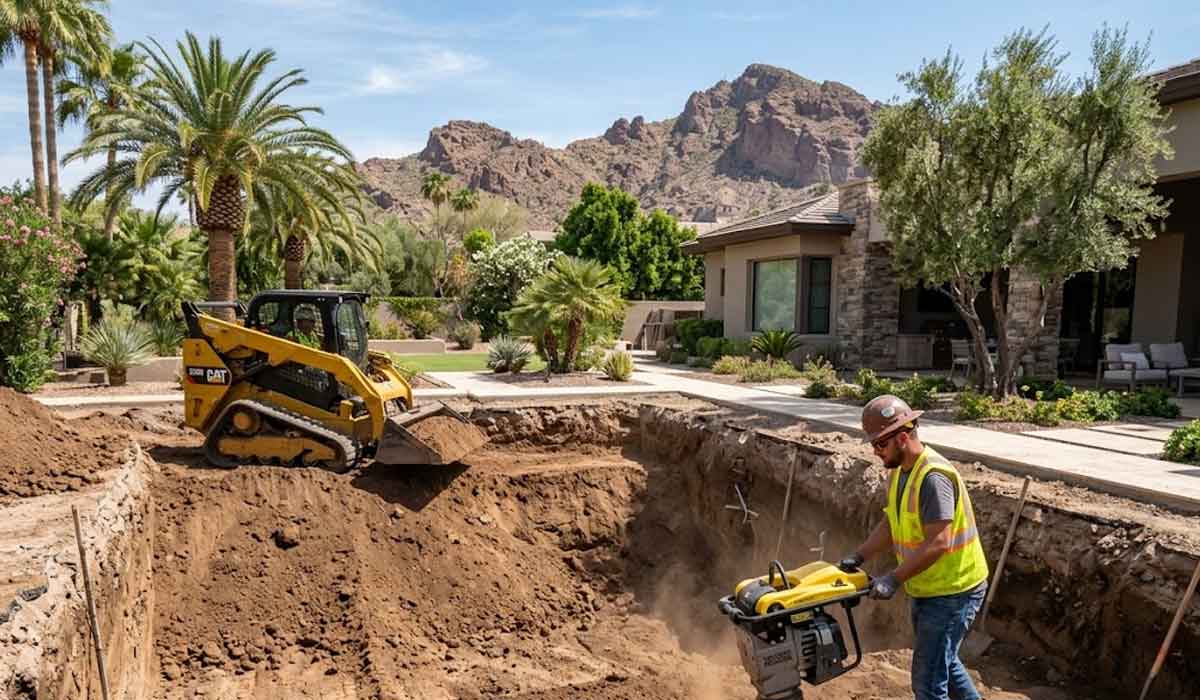
Pool removal in Paradise Valley runs through the Town’s permit process, and we handle the coordination. Removing a pool shell is enough demolition to require a Town demolition permit, and because backfilling changes the ground and drainage, a grading permit with an engineer-prepared plan is generally required as well.
Even a partial fill-in counts as land disturbance, so you should assume the grading side applies, especially if you might build over the area later.
How the hole gets filled matters as much as the permit. The backfill should be clean, non-expansive soil or engineered fill, with no construction debris or organic material mixed in, placed in layers and compacted to the density specified by your engineer, typically around 90 to 95 percent.
On a full removal where the area may be built on, the Town will want documented compaction, often with density tests filed before the final inspection. This is the step that separates a pool removal that stays solid for decades from a fill-in that slumps into a soft, sinking spot in the yard a few years later. We compact properly and keep the records.
The Town inspects along the way, typically checking dust and erosion control at the start, the backfill and grading as it goes, and site stabilization at the end to close the permit. We schedule and meet those inspections so the job closes clean.
Hillside and Estate Pools
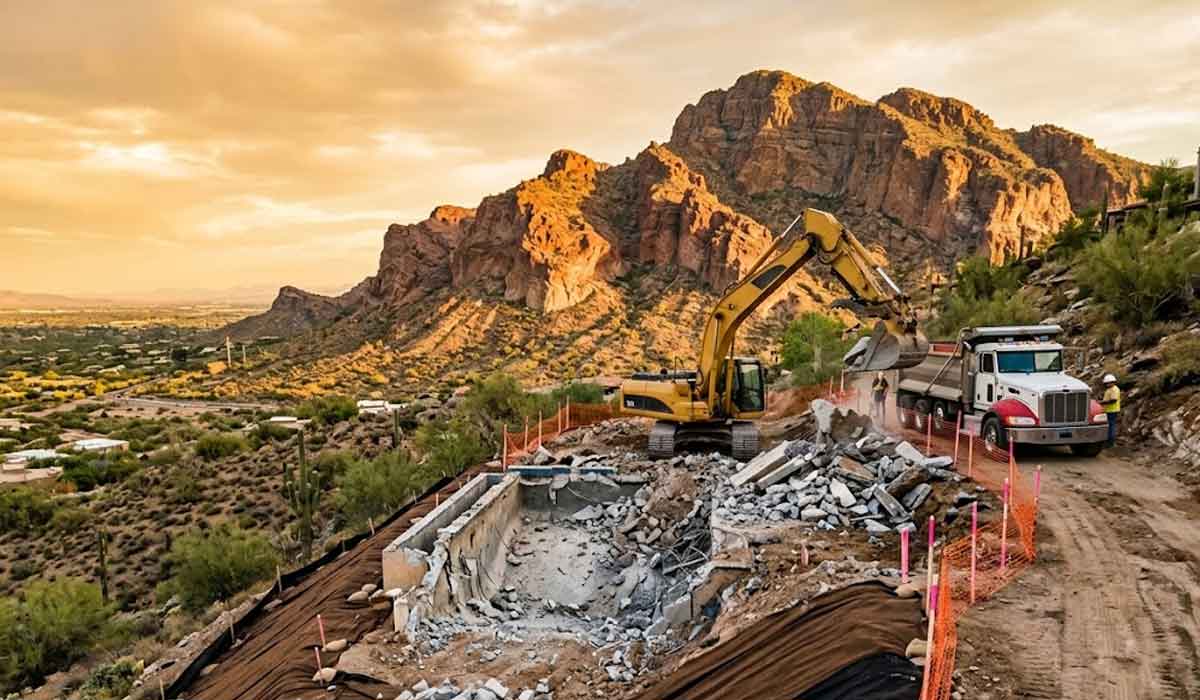
If your pool sits on a sloped lot near Camelback or Mummy Mountain, or it is part of a larger estate rebuild, a few more things come into play.
Hillside lots carry the Town’s hillside review, with staking of the work limits, tighter grading and drainage control, and erosion protection, all of which we handle the same way we do on hillside demolition and pad work.
And for a full estate teardown, the pool removal is usually folded into the larger demolition and clearing scope as a single continuous job rather than a separate visit. If that is your situation, we’ll coordinate everything together.
Where the Material Goes
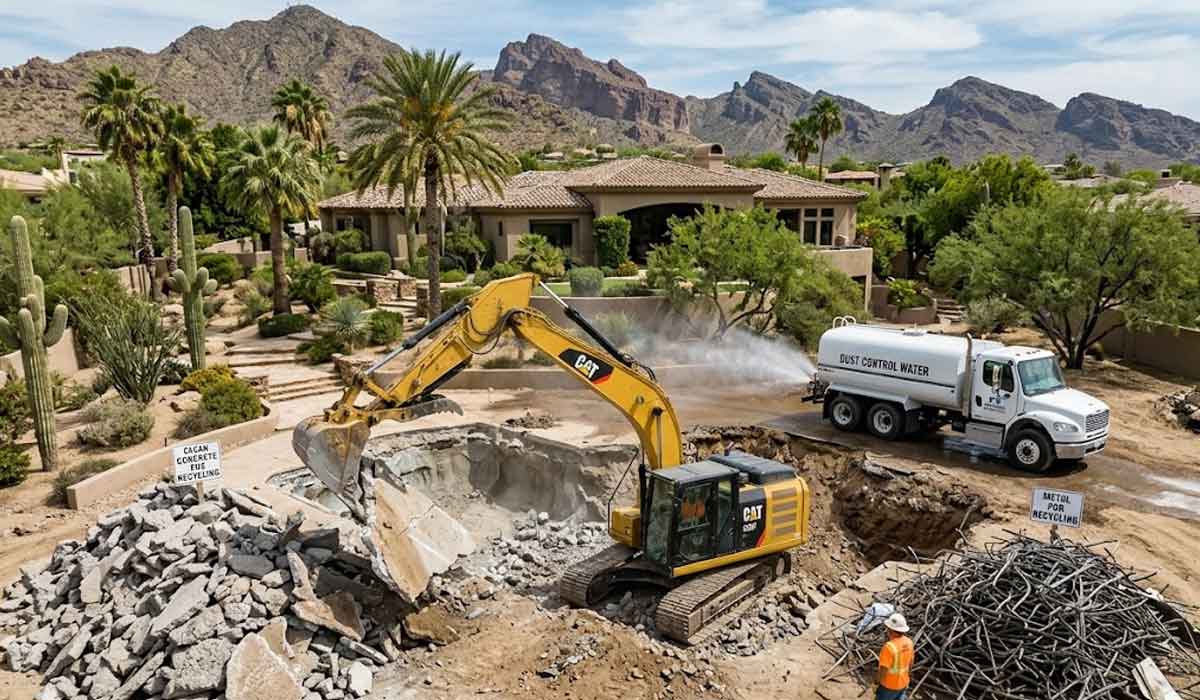
A demolished pool produces a lot of broken concrete and steel, and handling it responsibly keeps costs down and material out of the landfill.
General debris goes to a landfill, with Salt River Landfill on the Beeline Highway being the closest full-service option to Paradise Valley. We sort on site, route each material to the right place, and keep dust controlled throughout with water and proper site practices.
What Affects the Cost
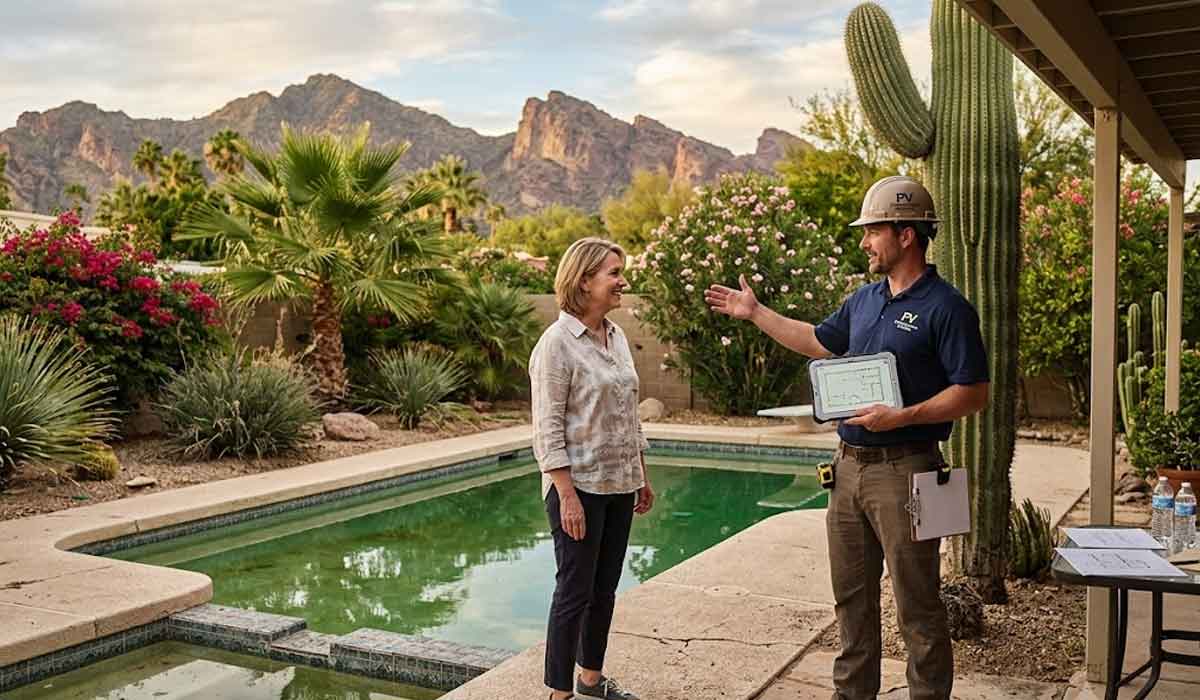
We do not publish flat prices, because no two pool removals are the same. The free on-site walk is where we give you a real number. Here is what moves it:
Partial fill-in or full removal. Full removal hauls out everything and costs more than a properly done fill-in. This is usually the biggest single factor.
Pool size and construction. A large gunite pool with a spa and water features is more work than a small simple pool.
Access. Backyard pools behind narrow gates, tight side yards, or long estate driveways take more effort to reach with equipment and trucks.
Where the water can go. Sewer access versus on-site containment versus hauling affects the draining step.
What you want afterward. Building over the area later means full removal and documented engineered fill, which is more involved than filling for landscaping.
Hillside conditions. A sloped or estate lot brings hillside review and added grading and erosion work.
Permit and government fees. The Town demolition and grading permits carry fees set by the Town, and the grading plan comes from your engineer.
How We Work
#1. Free on-site walk. We come look at the pool, the yard, the access, and where the water can go, and we talk through what you want the space to become. You get a real scope and price, and a clear recommendation on partial versus full removal.
#2. Permits and planning. We coordinate the Town demolition and grading permits and the engineer’s plan, and we map the utilities and file the Arizona 811 locate.
#3. Drain and disconnect. We drain the pool to code, and we coordinate the licensed trades to safely disconnect and cap the electrical and gas.
#4. Demolish and remove. We break out the shell, hauling everything off for a full removal or breaking down and perforating it for a fill-in, and we route the concrete and steel to recycling.
#5. Backfill, compact, and finish. We backfill in compacted layers to the specified density, meet the Town inspections, keep your documentation, and leave the area graded and ready for whatever comes next.
Paradise Valley Neighborhoods We Serve
We provide pool demolition and removal throughout Paradise Valley, including Clearwater Hills, Lincoln Drive Estates, Finisterre, Paradise Valley Ranchos, Quail Run, Jokake Inn Estates, Indian Bend Estates, Doubletree Canyon, Smoke Tree, and Paradise Hills, as well as on hillside lots around Camelback Mountain and Mummy Mountain.
Let Us Take a Look
Removing a pool in Paradise Valley is part dirt work and part knowing the local rules cold, the permits, the legal way to drain it, and the right way to backfill so the ground stays solid.
We handle both, in the right order, and leave your yard clean, stable, and ready for whatever you have in mind, while keeping you square with the Town the whole way.
We always offer a free on-site walk, because every lot here is its own story, and yours deserves a real look before anyone talks numbers.
Whether you want the pool gone for good or you are planning something new in its place, we are glad to come see it.