
House Demolition Paradise Valley AZ
We handle Town permits, native plant plans, asbestos coordination, hillside review, and full site cleanup.
ROC: 358362 & 355605
Serving the Paradise Valley area since 2014
Estate House Demolition in Paradise Valley, Arizona
Paradise Valley is a teardown-and-rebuild market. Most demolition here is not about clearing a vacant lot; it is about carefully taking down an older estate so a new custom home can rise in its place. That work sits atop a permit and review process that is stricter than in almost anywhere else in the Valley, and it gets stricter still on the hillside lots around Camelback Mountain and Mummy Mountain.
DirtFX handles residential demolition across Paradise Valley, from flat estate lots in the Ranchos to sloped parcels in Clearwater Hills. Based in Mesa and serving the Valley since 2014, we coordinate the Town permits, the county dust and asbestos requirements, the utility disconnections, and the septic and well abandonments involved in a real estate teardown, and we leave the site graded, compacted, and ready for your builder.
Every project is different, so we start with a free on-site assessment and review the full scope before anything begins. Every Paradise Valley property is different, and the only honest way to scope a demolition here is to walk the lot, look at the structure, check the slope, and find out what is underground. We go over all of it at the estimate.
What a Paradise Valley Teardown Actually Involves
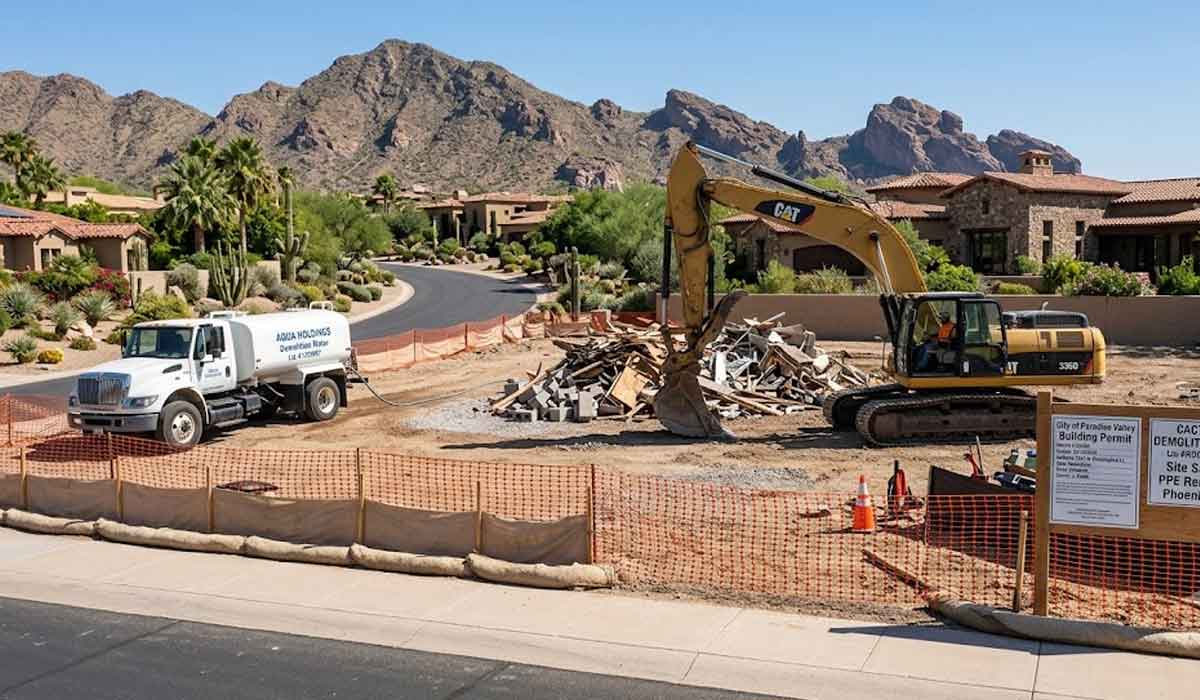
A house demolition in Paradise Valley is a permitted, inspected, multi-step operation, not a quick knockdown. Before any equipment moves, the structure has to be cleared of asbestos concerns, every utility has to be disconnected and documented, and the Town has to issue the permits.
After the structure is down, the lot has to be cleared of all debris, filled areas compacted, and protected native plants accounted for before the Town signs off.
The reason it works this way is that the Town of Paradise Valley keeps tight control over land disturbance, drainage, dust, and the desert landscape. A demolition touches all four. Understanding that process is most of the job, and it is the part that separates a contractor who knows Paradise Valley from one who treats it like any other suburb.
We manage the sequence so you do not have to chase it. We coordinate the permit submittals, line up the licensed trades for utility and septic work, schedule the inspections, and keep the approved plans and permit on site as the Town requires. You get a single point of contact instead of a handoff chain.
The Paradise Valley Permit Stack
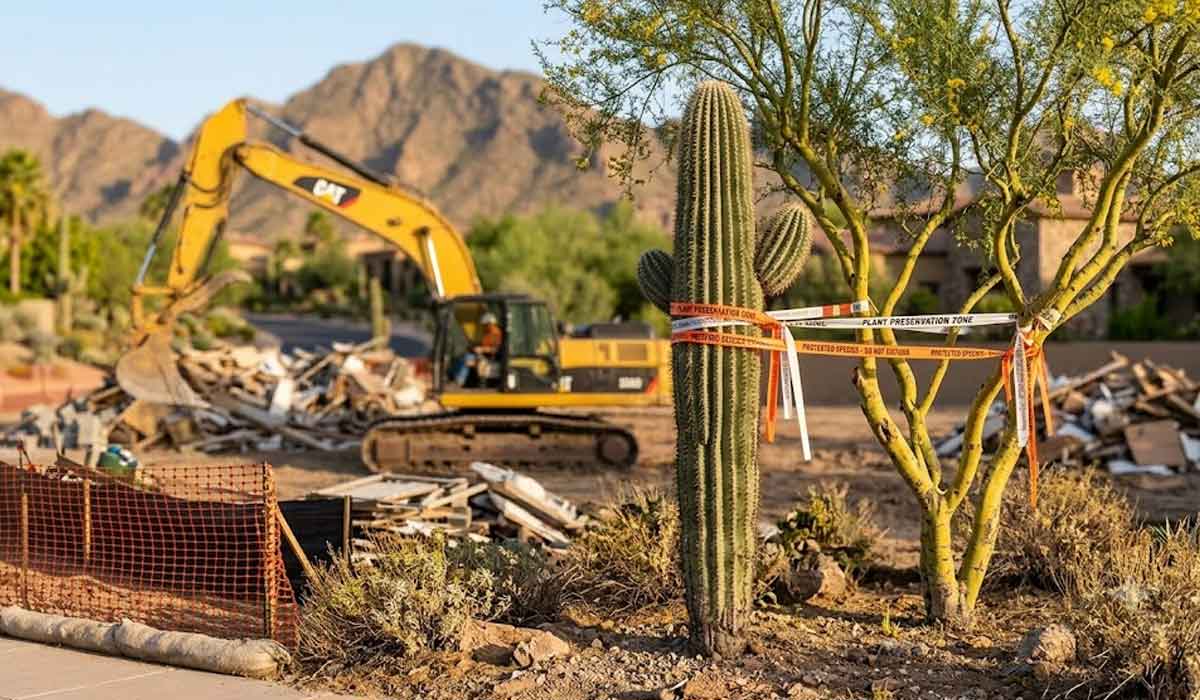
Most full house demolitions in Paradise Valley involve four overlapping approvals. We handle the coordination, the Town and county issue the permits.
The Town demolition permit. Paradise Valley requires a demolition permit to remove more than 12 linear feet of wall or fence, or more than 12 square feet of roof or structure, which a full house easily exceeds. The demolition permit must be issued before any building permit for the new home. Applications go through the Town’s Citizen Portal. Plan review can take up to 15 business days per round, and the permit then takes a few more business days to be released.
The demolition haul permit. Hauling demolition debris off the lot requires its own Town haul permit, priced by the cubic yard of material removed.
The grading permit. Under the Town’s grading ordinance, no land disturbance may occur on a lot without a grading permit from the Town Engineer. Because a teardown changes the site grade and is almost always followed by new construction, a grading permit is part of the package. It requires a grading and drainage plan signed and sealed by an Arizona Registered Civil Engineer, a stormwater pollution prevention plan, and on-site retention sized to the 100-year, 2-hour storm. Starting earthwork before the grading permit is issued incurs a penalty equal to double the permit fee.
The Native Plant Preservation Plan. This is the requirement that catches people off guard. Paradise Valley requires a Native Plant Preservation Plan on every demolition permit, with no exceptions. The plan identifies every protected native plant in the work area by species, size, and condition, with a salvage or relocation plan. Protected plants include Saguaro trees three feet and taller, Palo Verdes, Mesquites, Ironwood, and Barrel cacti. A Native Plant Certification must be submitted before the final inspection to document how each plant was handled.
On top of those four, any disturbed area of a tenth of an acre or more, or any building demolition on its own, triggers a Maricopa County dust control permit. For a real house teardown, that county dust permit is effectively automatic.
Asbestos and Older Paradise Valley Estates
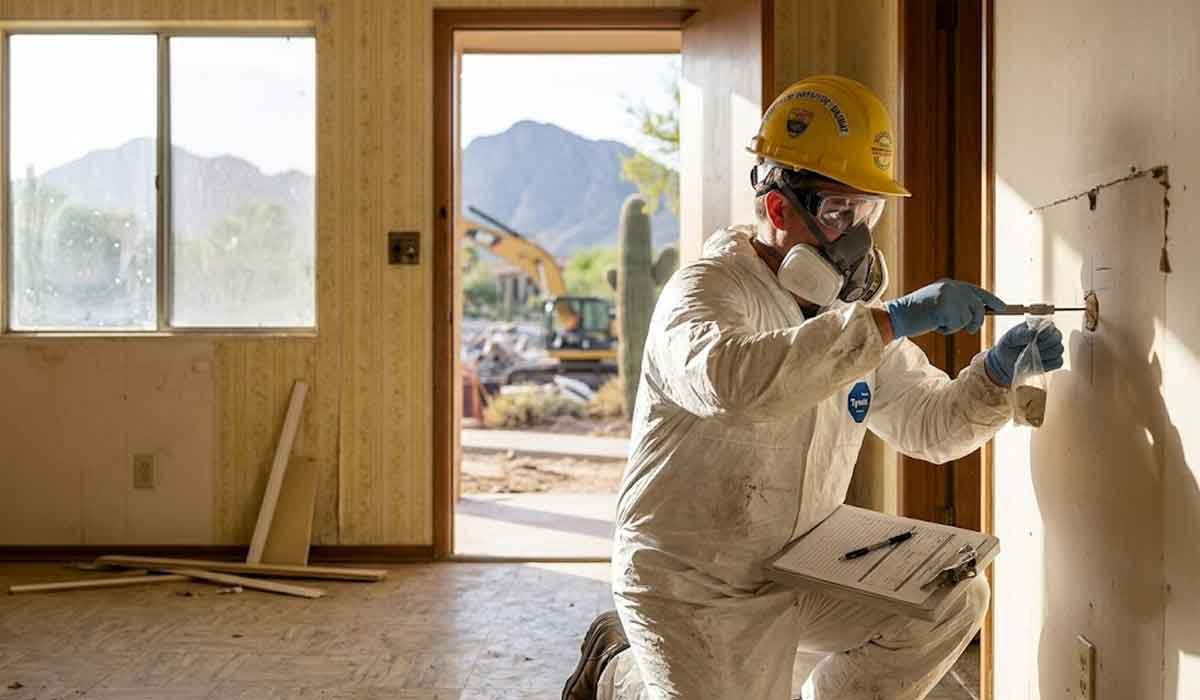
Many original Paradise Valley estates date to the 1950s through the 1970s, the decades when asbestos was common in floor tiles and adhesives, acoustic ceiling texture, joint compound, pipe and boiler insulation, and roofing felt. That history matters before you demolish.
For a typical owner-occupied single-family home on its own parcel, federal asbestos NESHAP rules do not require a formal survey or notification, because a single home is not classified as a regulated facility.
Even so, Maricopa County and the EPA strongly recommend an inspection by an AHERA-certified inspector before demolition, especially on older homes, because the only way to know whether a material contains asbestos is to test it, and worker protection rules apply regardless.
Here is the part specific to Paradise Valley estates. The single-family exemption disappears the moment two or more structures come down as one project. Estates here often have a main house plus a guest house, casita, or pool house. If two or more of those are demolished together, the property becomes a regulated facility, and full NESHAP requirements apply: an AHERA inspection, a notification filed at least 10 business days before demolition, and a notification fee. The exemption also drops away if the home was ever used commercially or is part of a larger project.
We sort out which situation applies during the free estimate, and we coordinate the inspection and any abatement with licensed specialists. We do not guess on asbestos, and we do not cut corners on it.
Underground Utilities, Septic, and Wells
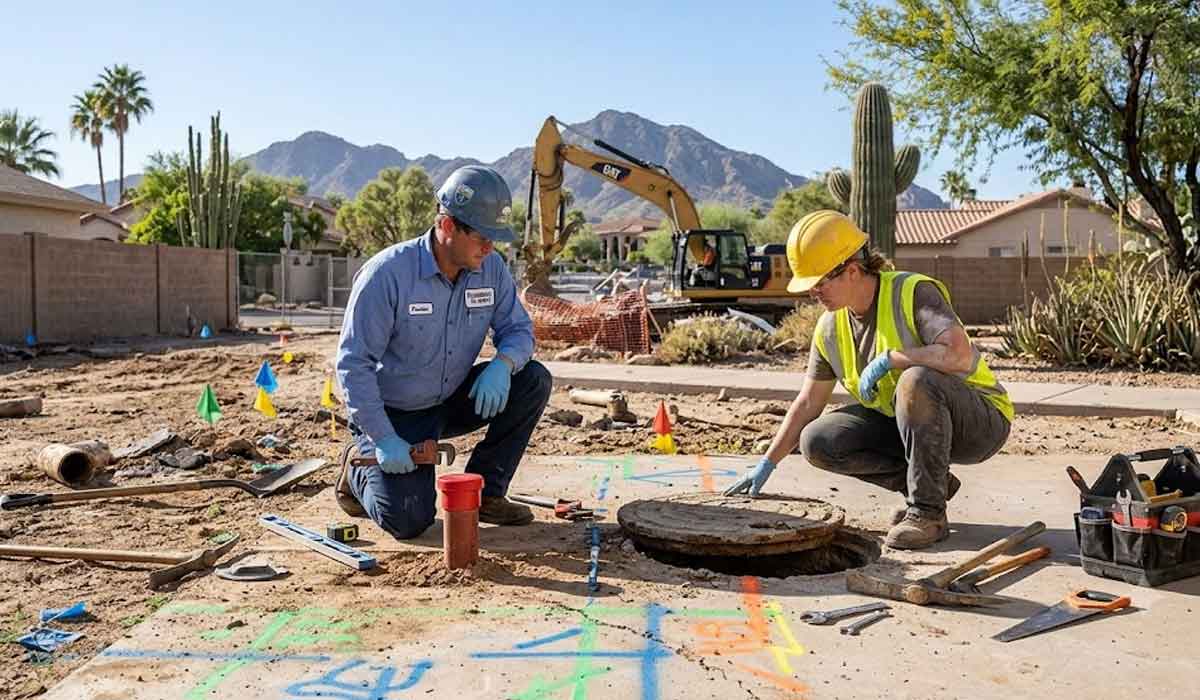
What is underground decides a lot about a Paradise Valley demolition timeline, and older estates often have more under the surface than the owner realizes.
Utility disconnection. Before the Town will allow demolition to proceed, every utility must be disconnected and documented. Electric service through APS or SRP must be de-energized, and the meter removed. Natural gas service through Southwest Gas requires a permanent cut and cap. Water through EPCOR, the City of Phoenix, or Berneil Water has to be shut off, and the meter handled. Sewer or septic lines have to be properly capped. We coordinate the licensed trades for this work and gather the written confirmations that the Town requires at the pre-demolition inspection.
Arizona 811 before any digging. State law requires anyone disturbing soil to contact Arizona 811, also called Blue Stake, at least two working days before excavation. The member utilities then mark underground electric, gas, communication, water, and sewer lines. Crews have to respect the marked tolerance zone and expose lines carefully by hand or vacuum where needed. We file the 811 ticket and keep it in the job file.
Septic abandonment. Estates not on Town sewer may have a septic system, and abandoning one is its own permitted process through Maricopa County Environmental Services. It requires an approved closure application with the existing septic record numbers and a scaled site plan, then the field work: pumping and lawfully disposing of all sewage through a licensed pumper, removing electrical and mechanical components, collapsing or removing the tank, and backfilling the void with clean fill to prevent later sinking, and abandoning the distribution lines. A Certification of Closure, with pumper receipts and photos, is returned to the county, which may inspect it. Realistically, this adds two to four weeks to a project.
Well abandonment. Some older Paradise Valley estates have a private well, and a well cannot simply be filled in. Under Arizona Department of Water Resources rules, only a licensed well drilling contractor may abandon a well. The owner files a Notice of Intent to Abandon, the state issues a Well Abandonment Authorization Card to the licensed driller, and the well is then sealed with cement grout to prevent water from moving between layers underground. A completion report is filed within 30 days. This commonly adds another two to six weeks.
For an estate with both a septic system and a well, plan on a month or more of preparation before heavy demolition even starts. We flag all of this at the estimate so the timeline is realistic from day one, not a surprise halfway through.
Hillside and Mountainside Demolition
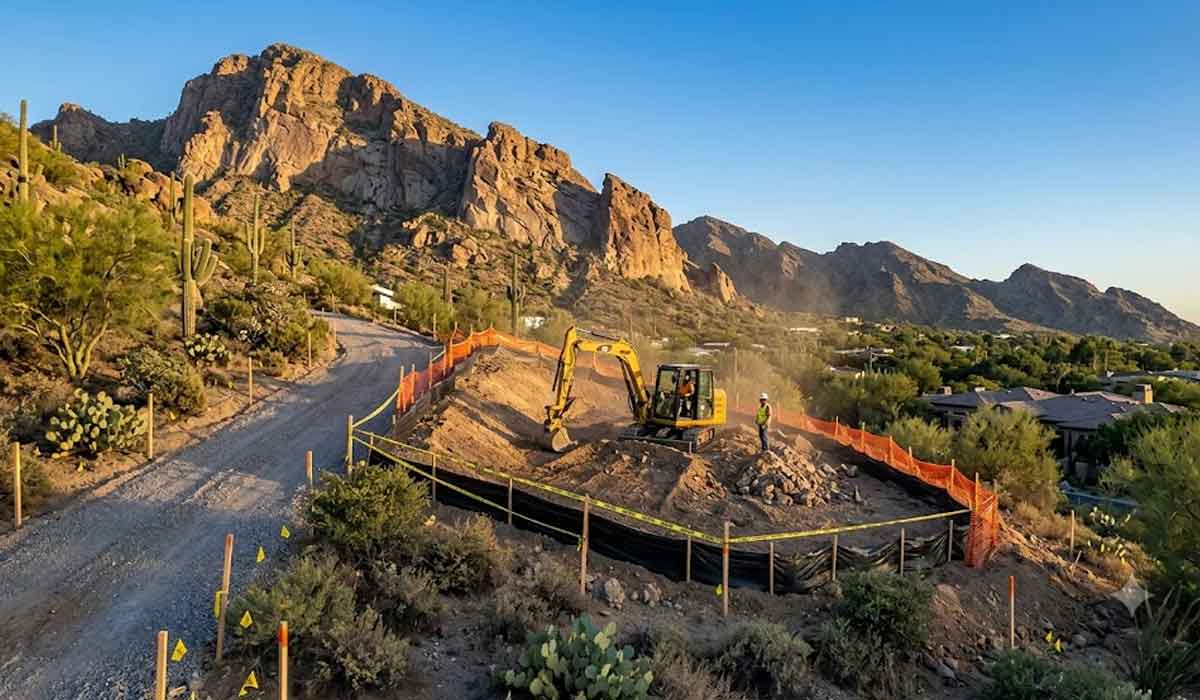
A demolition on a sloped lot around Camelback Mountain or Mummy Mountain is a different undertaking than a flat-lot teardown, and the Town treats it that way.
Paradise Valley’s Hillside Development Regulations apply to lots inside the mapped Hillside Development Area and to any lot where the natural slope under the building pad is 10 percent or more. For those properties, the Hillside Building Committee reviews land disturbance, cuts and fills, height, and grading and drainage before the Town issues a demolition, grading, or building permit.
The submittals are detailed: existing and proposed contours; total cubic yards of cut and fill; methods for concealing cuts and fills; disturbance calculations; site cross-sections; and, unless waived, a seismic refraction survey for proposed cuts, with geotechnical reports where rock stability is in question.
There is also a financial commitment. Before a hillside demolition or grading permit is issued, the applicant must post financial assurance, generally 35 times the grading permit fee, and the Town may increase that amount when demolition, loose fill, washes, steep terrain, or difficult access make restoration more difficult.
If hillside work is abandoned for more than six months, the permits are revoked, the assurance is forfeited, and the Town may use those funds to restore the cuts and fills and revegetate the slope. Revegetation is not optional on a hillside lot, and the Town holds the assurance until it passes inspection.
This is a project where a budget operator would be a liability. A hillside estate teardown near Camelback or Mummy is a committee-reviewed, engineered, and bonded operation, and it requires a contractor who understands the review process and works within the marked disturbance limits. We do, and we walk all of it with you at the estimate.
Where the Demolition Debris Goes
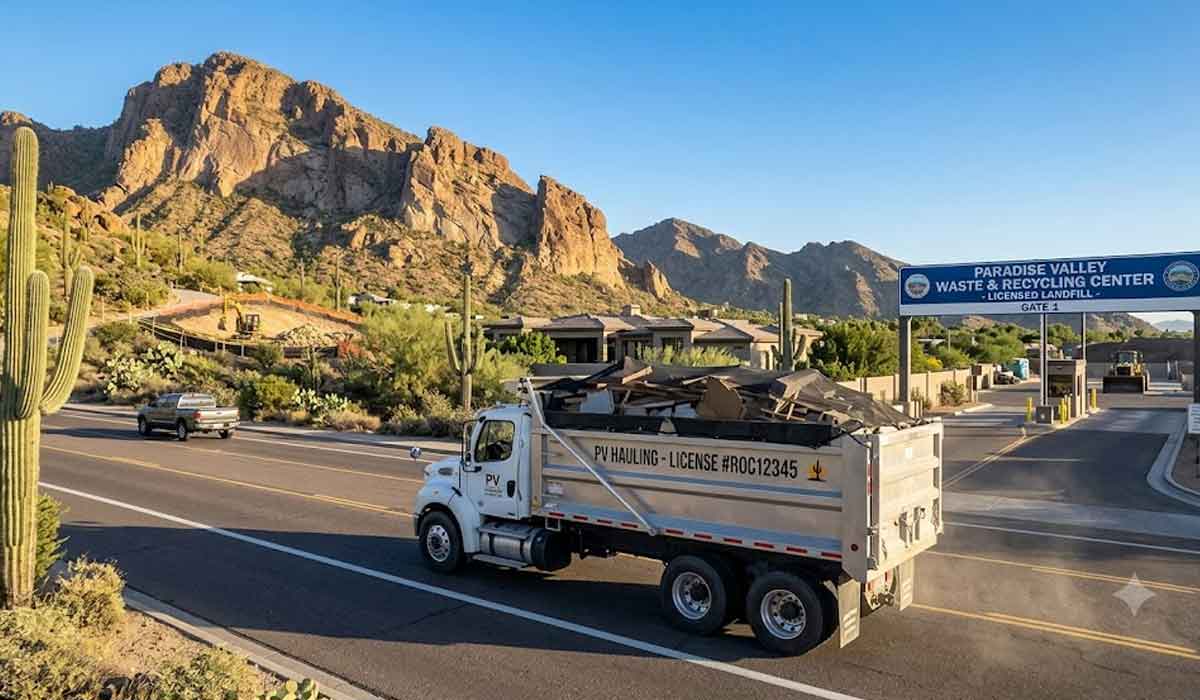
Handling demolition debris responsibly is part of the job, and separating materials keeps disposal costs down while diverting usable material from the landfill.
The closest full-service landfill to Paradise Valley is Salt River Landfill on the Beeline Highway in Scottsdale, roughly 15 to 20 minutes from central Paradise Valley, and it accepts mixed construction and demolition debris.
Clean fill and inert material can go to an inert landfill such as Buffalo Ridge rather than paying full landfill rates. Scrap metal from the structure, steel, copper, and aluminum, goes to scrap yards that pay for sorted loads.
Dust control runs throughout, with water applied before, during, and after the work, visible dust kept under the county opacity limit and off the neighbors, and trackout cleaned from the public road.
Cost Factors for Paradise Valley House Demolition
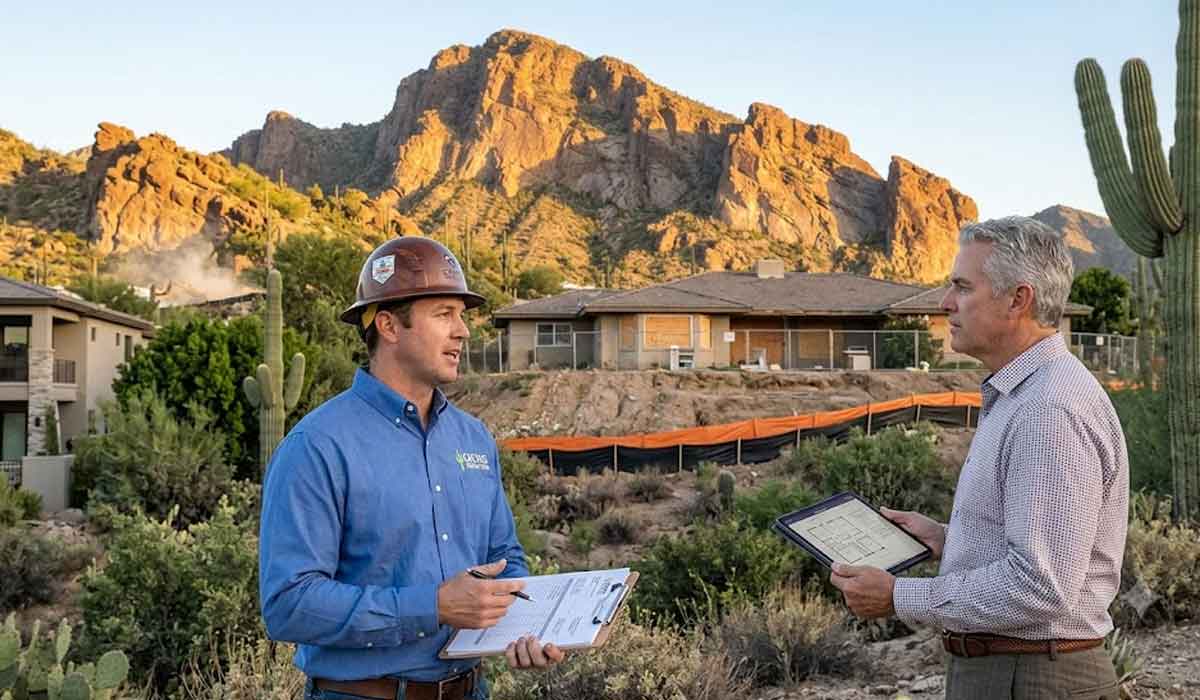
We do not publish flat prices, because no two Paradise Valley teardowns are the same. The free on-site estimate is where we put a real number on your project.
These are the factors that move it:
Debris volume and disposal. More structure means more hauling, and the mix of concrete, wood, and metal affects disposal and recycling.
Structure size and construction. Square footage, number of stories, foundation type, and how the home was built all affect the time and equipment required.
Number of structures. A main house alone is one scope. A main house plus a guest house, casita, or pool house is another, and it can change the asbestos requirements as noted above.
Hillside versus flat lot. A sloped lot in the Hillside Development Area carries committee review, engineered submittals, and the financial assurance, all of which add to the project.
What is underground. A septic system, a private well, or both add permitted abandonment steps and weeks of lead time.
Asbestos. An older estate may need inspection and, if asbestos is present, professional abatement before demolition.
Access and lot conditions. Estate lots can have long driveways, mature landscaping to protect, and tight access that affects how equipment and trucks reach the work.
Permit and government fees. The Town charges demolition, haul, and grading permit fees, and the county charges for the dust permit and, where it applies, the asbestos notification. These are set by the Town and county, not by us.
Paradise Valley Neighborhoods We Serve
We provide house demolition throughout Paradise Valley, including Clearwater Hills, Lincoln Drive Estates, Finisterre, Paradise Valley Ranchos, Quail Run, Jokake Inn Estates, Indian Bend Estates, Doubletree Canyon, Smoke Tree, and Paradise Hills, as well as on hillside lots around Camelback Mountain and Mummy Mountain.