
Cabin and Structure Demolition Payson AZ
We coordinate permits, asbestos due diligence, septic and well closure, and debris hauling for Rim Country tear-downs.
ROC: 358362 & 355605
Serving the Payson area since 2014
Tearing Down a Cabin or Structure in the Rim Country
Older cabins and outbuildings throughout Gila County reach a point where renovation no longer makes financial sense. Pre-1990 structures in the Rim Country often carry deferred maintenance, compromised foundations, and building materials that need careful handling during removal.
Tearing one down is more involved than it looks, especially on a rural property, where the building is only part of the job.
DirtFX handles full structure demolition for cabins, homes, outbuildings, garages, and accessory structures across Payson, Pine, Strawberry, and the surrounding Rim Country. We demo the structure, haul the debris, and leave the site clean and ready for whatever comes next. On rural lots we also coordinate the parts most people do not think about: asbestos due diligence, permits, utility disconnection, and the proper closure of septic systems and wells.
We are not the permit authority, and we do not pretend to be. We are the contractor that keeps your project compliant and moving, coordinating with the Town of Payson, Gila County, and the licensed specialists certain steps require.
Every project is different, so we start with a free on-site assessment and go over the whole scope before anything begins.
What a Demolition Project Actually Involves
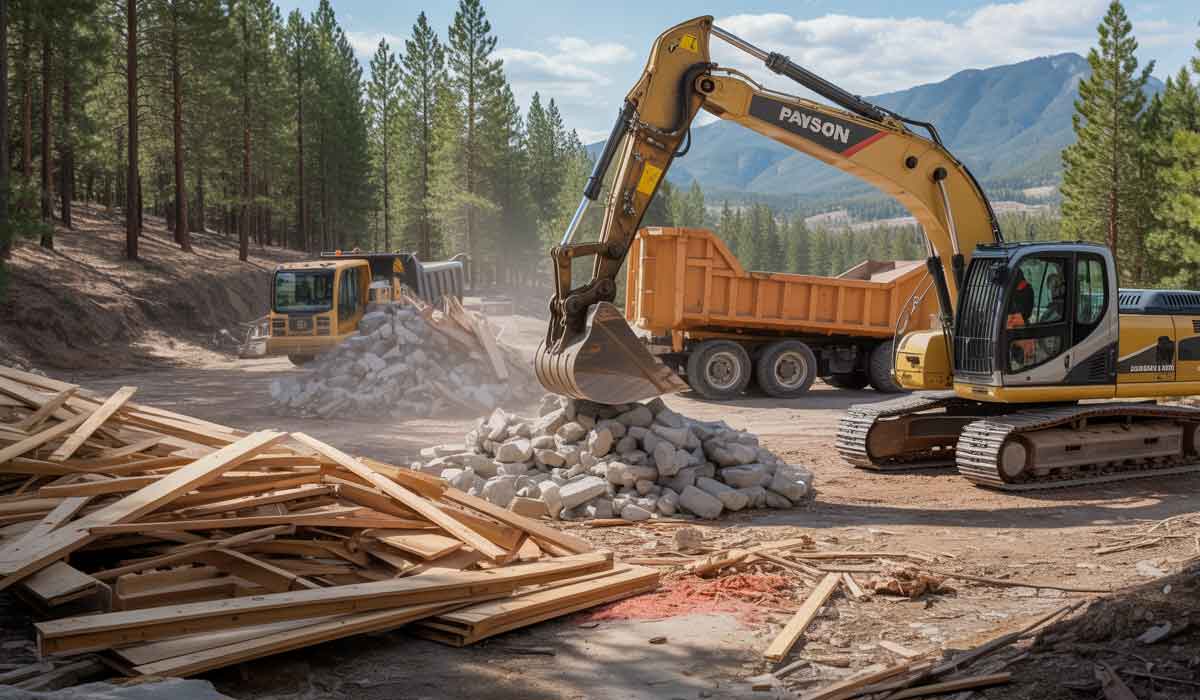
Demolition done right is a sequence, not just knocking a building down. Skipping steps is how people end up with code violations, surprise costs, or a property that cannot pass inspection.
The work generally runs in this order. First comes due diligence: evaluating the structure for asbestos and other materials that require special handling, and confirming what permits the project needs.
Next is preparation: making sure every utility is disconnected and signed off, and on rural lots, planning for septic and well closure. Then the permits get pulled, since several have tight time limits, and you do not want them running while you are still getting ready.
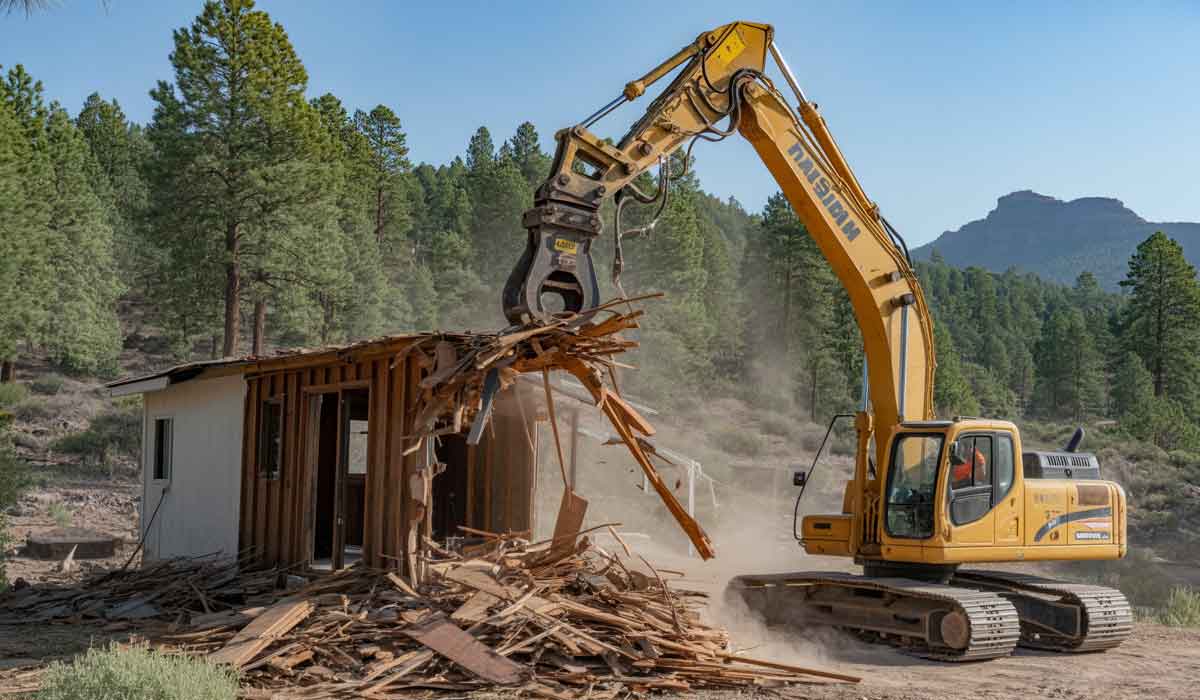
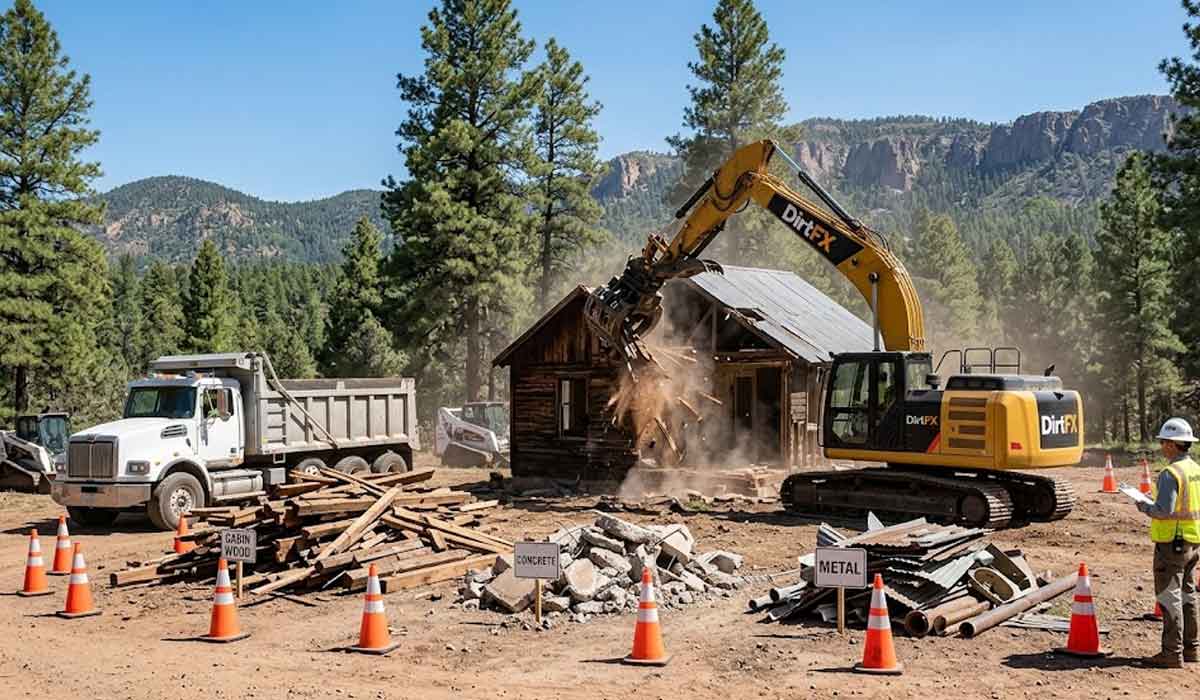
Only then does the structure come down. The building is demolished to the slab or subgrade, depending on your plans, and the debris is separated as it comes apart so that wood, concrete, metal, and any green waste go to the right place at the right rate. Finally, the debris is hauled off, the site is cleaned, and the lot is left graded and ready.
If the goal is to rebuild on the same spot, demolition flows directly into site preparation and foundation work without bringing equipment back out, which saves real money.
A note before the regulatory sections below: this page is educational, not legal advice. Requirements change and every property is different, so we confirm the specifics for your project during the estimate.
Asbestos Due Diligence Before Demolition
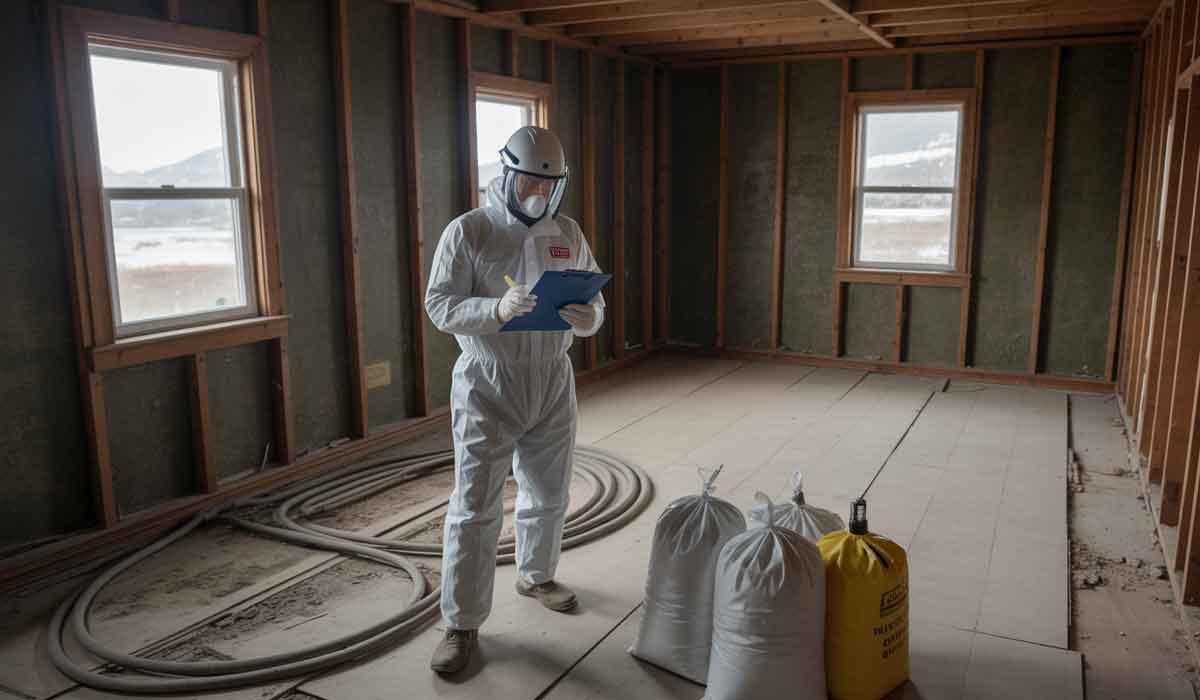
This is the step most homeowners do not know about, and it is the one that carries the greatest risk if skipped. Older cabins and homes are exactly the structures most likely to contain asbestos in flooring, mastics, siding, roofing, texture coatings, insulation, and pipe wrap. Disturbing those materials during demolition without proper handling is both a health hazard and a regulatory problem.
Here is the honest, accurate picture, because there is a lot of bad information out there.
Under federal asbestos rules, a true single-family home, defined as a residential structure with four or fewer dwelling units, is often exempt from the federal NESHAP facility requirements. That exemption is real. But it does not automatically eliminate state, county, landfill, or worker-safety requirements, nor does it apply in every situation.
The exemption can disappear if the demolition is part of a larger redevelopment, a government project, or the removal of multiple buildings. In those cases, federal rules may require a thorough asbestos inspection before demolition and a notification submitted at least 10 working days in advance, even if no asbestos is found.
The safe approach, and the one we recommend, is simple: do not assume “house equals exempt.” An older Rim Country cabin should be evaluated to determine whether it qualifies for the single-family exemption or requires a certified asbestos inspection and notification before any material is disturbed.
DirtFX helps you determine which path your project falls under and coordinates the certified inspection when needed, so you are not guessing about the one part of demolition that genuinely carries liability.
Demolition Permits in Payson and Gila County
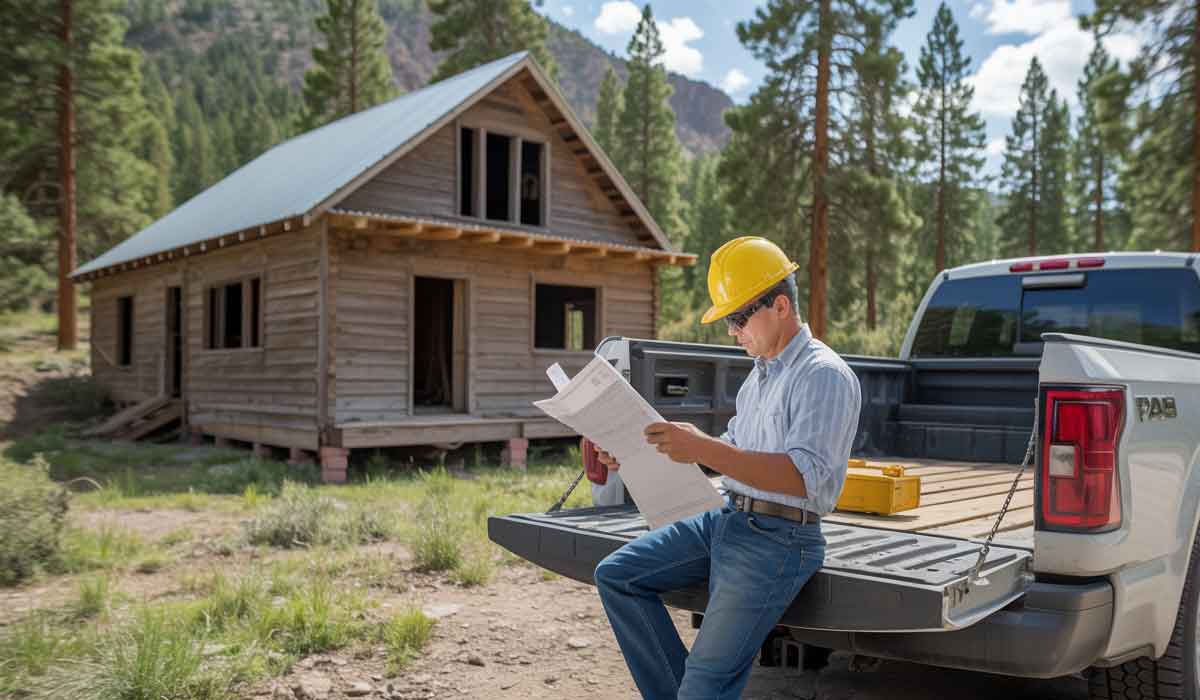
Where your property sits determines who issues the demolition permit, and both jurisdictions have specifics worth knowing before you start.
Inside the Town of Payson limits. The Town’s Community Development Building Division issues a demolition permit that is valid for only 30 days from the date of issuance. That short window is the reason all the readiness work, asbestos evaluation, utility shutoffs, and any septic or well decisions need to be done before the permit is pulled, not after.
Payson runs permits through an online portal where plans are uploaded, and inspections are scheduled. If the demolition also involves significant grading, driveway, or utility work, it may require additional permits beyond the demo permit itself.
In unincorporated Gila County. Gila County Building Safety regulates the demolition of buildings in unincorporated areas and inspects the work in accordance with county-adopted codes. County permits remain valid for 180 days, and work and inspections must continue for the permit to remain active. Rural cabin tear-downs often involve parallel permits: building demolition, along with septic, grading, and floodplain permits, handled through Community Development.
DirtFX coordinates with the applicable jurisdiction, lines up inspections, and sequences the work so the permit does not expire mid-project. We handle the coordination so you are not navigating two departments and a 30-day clock on your own.
Again, we are the contractor keeping your project compliant, not the permitting authority. The authority issues the permit. We make sure your project earns it and passes inspection.
Septic and Well Closure on Rural Tear-Downs
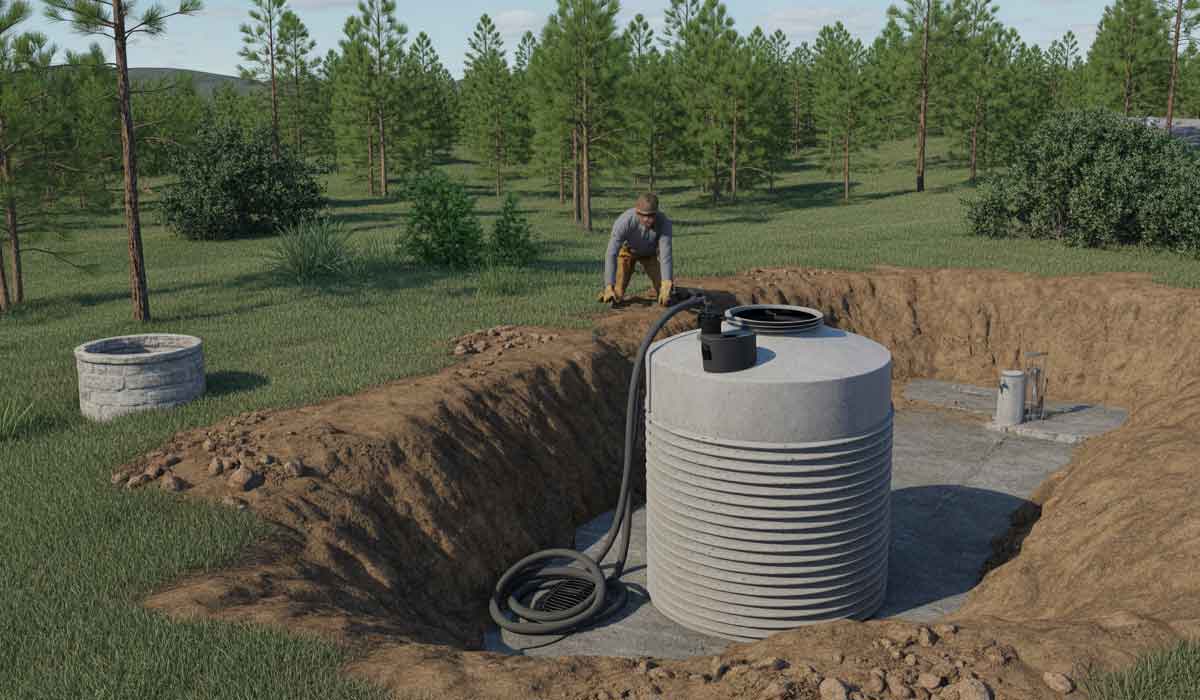
On a rural property, tearing down the building is only half the job. The septic system and any water well are regulated environmental systems and must be properly closed out as part of the demolition, not buried and forgotten.
This is one of the biggest differences between a town teardown and a rural cabin teardown, and it is where doing it right protects you long after the project is done.
Septic abandonment. Before a rural cabin is taken down, Gila County Wastewater needs to be involved to locate the existing tank and leach field and to check the records. Abandonment follows ADEQ’s onsite wastewater standard, which generally requires that the tank be pumped and cleaned, the inlet and outlet piping be turned off, the tank be crushed in place or removed, and the void be filled with suitable clean material to prevent collapse later.
We can’t guarantee a single method for every tank, as the right approach depends on the system and the county’s inspection requirements. We coordinate with Gila County Wastewater and licensed septic contractors to make sure abandonment passes inspection.
Well closure. Arizona law is strict here, and it matters that we are straight with you about it. Well abandonment must be performed by a licensed well drilling contractor under a state-issued abandonment authorization.
The driller files a Notice of Intent before the work, seals the well with cement grout and approved materials to prevent it from acting as a conduit between aquifers, and files a Completion Report with the state within 30 days, officially closing the well in the records.
DirtFX does not abandon wells ourselves. We coordinate with the licensed well driller and schedule that work into the demolition so the whole property is left in compliance.
Utility Disconnection Before We Start
No structure comes down until every utility serving it is disconnected and confirmed safe. This protects the crew, the property, and everyone around the site, and inspectors expect it to be complete before they arrive.
Before demolition begins, electrical, gas, water, and telecom service all need to be properly disconnected, and the utilities need to sign off on it. Inside Payson, water service disconnection runs through the Town’s Water Division. Each utility has its own process, and some take time to schedule, which is why this is planned early rather than the day before demolition.
Coordinating utility disconnection is shared work. The property owner initiates the disconnections with their providers, and DirtFX helps coordinate the timing and confirms that everything is signed off before we put equipment on site. We will walk you through exactly what needs to happen and who to call during the estimate, so nothing is a surprise and nothing holds up the schedule.
A live utility on a demolition site is the kind of mistake that cannot be undone, so we do not start until this is done right.
Where the Demolition Debris Goes
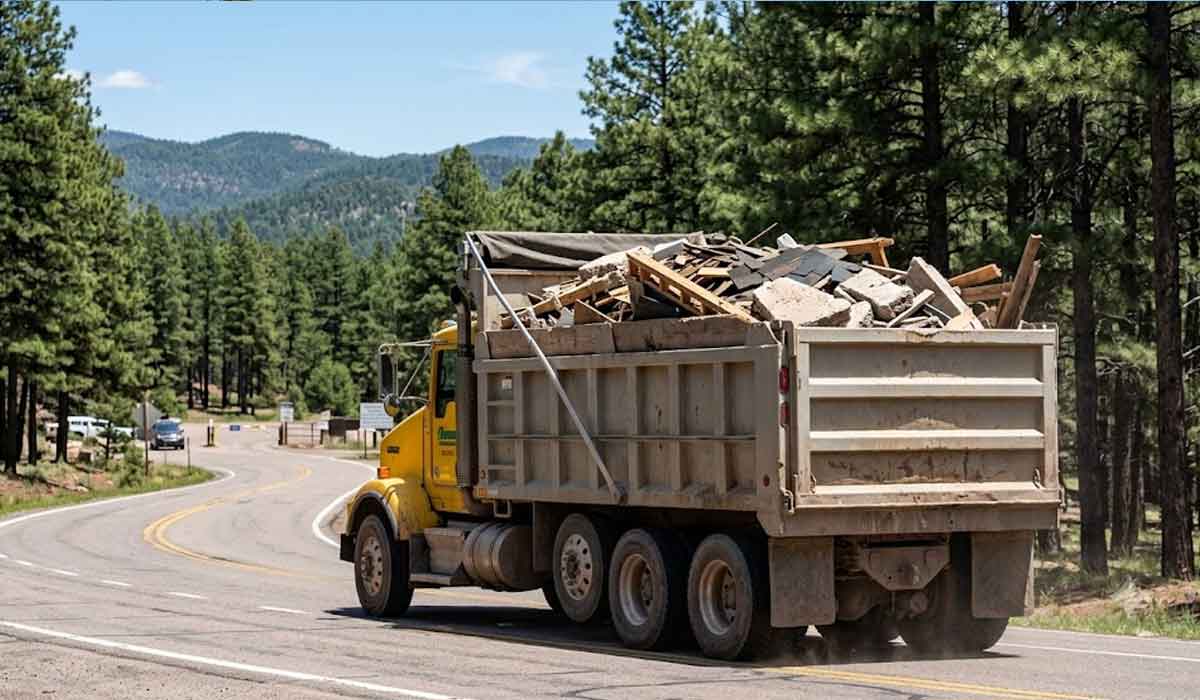
Demolition produces a lot of material, and where it goes affects both compliance and cost. In the Payson area, demolition debris goes to the Buckhead Mesa Landfill, north of town, which is open Monday through Saturday. The key thing to understand is that demolition debris is a different waste stream than the green waste from lot clearing, and it is billed differently.
Construction and demolition debris, broken concrete, framing lumber, roofing, masonry, and mixed building materials are billed at the landfill’s standard construction and mixed-load rate, not the lower green-waste rate reserved for clean yard trimmings. This is exactly why separating the material as the building comes apart matters. Clean green waste kept separate from construction debris goes at the cheaper rate, while contaminated or mixed loads do not.
One detail worth knowing: the landfill offers a once-a-month resident discount day for small loads, but that is a resident benefit for DIY loads. Contractor-hauled demolition loads are billed at the normal commercial rate, so your disposal cost reflects commercial tipping fees plus hauling. We are upfront about that in the quote.
Hazardous materials, friable asbestos, and certain banned items cannot go in the general waste stream and have to be handled separately. This is another reason the asbestos evaluation up front matters, because it determines how the material is handled and disposed of.
DirtFX separates the debris streams, coordinates with Buckhead Mesa on the load contents, and keeps hazardous materials out of the general waste stream, so your project meets Gila County disposal rules.
Demolition to Rebuild, Handled in One Move
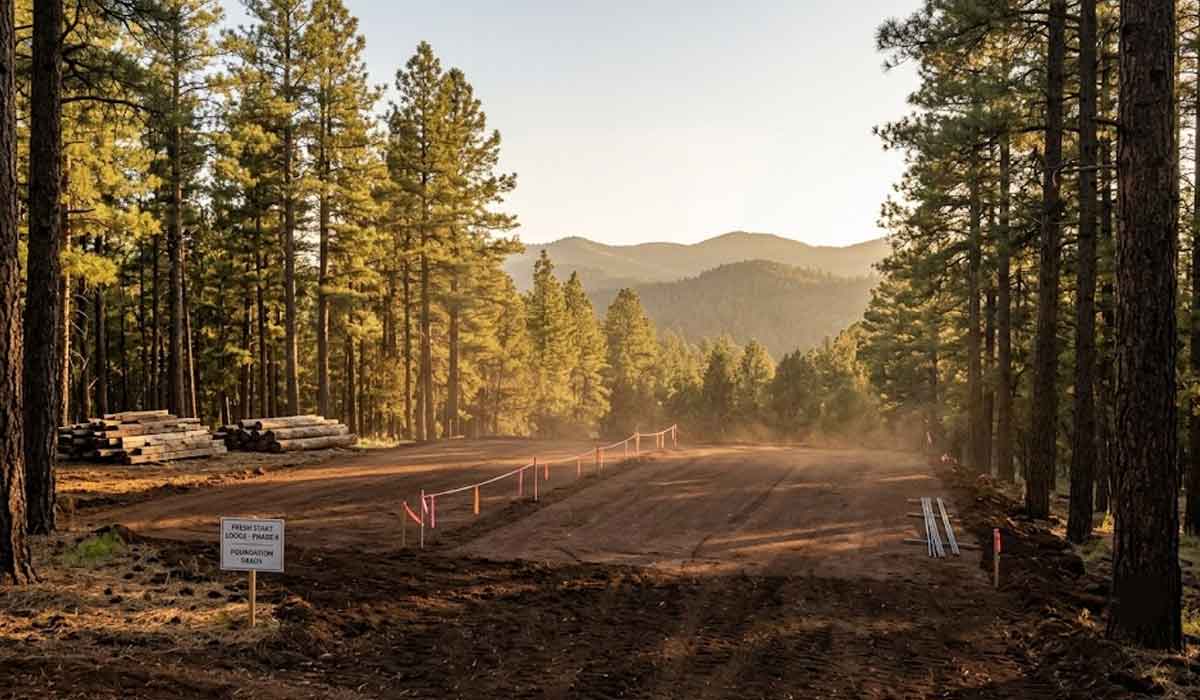
For a lot of Rim Country owners, demolition is not the end goal. It is the first step toward building something new on a property they love. When that is the case, handling demolition and the rebuild prep with one contractor saves real money and time.
Because DirtFX handles both demolition and excavation, we can take a project from tear-down straight into site preparation without demobilizing and bringing equipment back out. The structure comes down, the slab is removed if your plans call for it, the septic and well are properly closed, and the work flows directly into building the new pad: cut and fill, compaction, and drainage for the new foundation.
That continuity matters on a mountain lot, where mobilizing equipment to a remote or sloped property is a cost in itself. Doing it once instead of twice is one of the clearest ways to keep a build budget under control.
If a rebuild is your plan, tell us during the estimate and we will scope the whole arc together.
How a Demolition Project Works With DirtFX
Step 1: Free on-site assessment. We come out, look at the structure, the property, and the rural systems, and identify what the project involves: asbestos evaluation, permits, utilities, septic, and well. We do not quote demolition blind.
Step 2: Written line-item quote. You receive a quote that breaks down demolition, debris hauling and disposal, and the coordination of permits and specialist work. No lump sums hiding the scope.
Step 3: Due diligence and readiness. Asbestos evaluation, utility disconnection, and septic and well planning get handled before the permit clock starts, so a 30-day Payson permit does not run out from under us.
Step 4: Permits and demolition. We coordinate the permit, then demolish to slab or subgrade, separating debris as we go.
Step 5: Disposal, closure, and cleanup. Debris is hauled to the correct disposal stream, septic and well closure is completed and documented through the proper channels, and the site is left clean and graded.
Frequently Asked Questions
About Cabin and Structure Demolition in Payson, AZ
Serving Payson, Pine, Strawberry, and the Rim Country
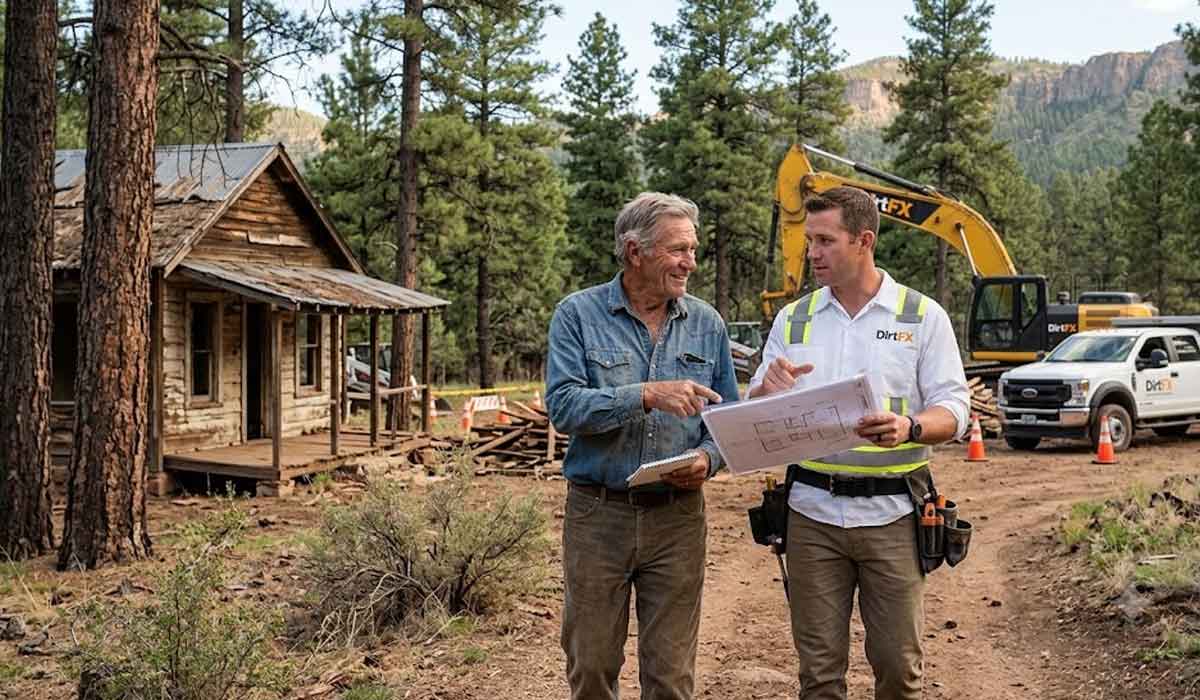
DirtFX provides cabin and structure demolition throughout Gila County and the Rim Country, including Payson, Pine, Strawberry, Star Valley, Starlight Pines, Tonto Basin, Christopher Creek, and the surrounding areas. These are rural mountain communities where tearing down an old cabin often means dealing with septic systems, water wells, asbestos in older materials, and the coordination that valley demolitions rarely involve.
We bring the demolition equipment and the experience to keep the project compliant, from permits through environmental system closure. Whether you are clearing an old structure to rebuild or simply removing one that has reached the end of its life, the right first step is a free on-site assessment.
As an excavation contractor in Payson AZ, DirtFX handles the full scope from clearing through final grade, and can extend that work into Firewise defensible space clearing around your home.