
Site Preparation Payson AZ
We build structural pads on Rim Country slopes, balance cut and fill, and compact to engineered density.
ROC: 358362 & 355605
Serving the Payson area since 2014
Engineering-Grade Site Preparation for Rim Country Lots
Site preparation turns a raw piece of mountain land into a buildable pad. On a Payson-area lot that means a lot more than scraping the ground flat.
The Rim Country sits on a mix of decomposed granite and alluvium over fractured rock, with pockets of moisture-sensitive clay. Get the pad wrong, and you build in differential settlement, slab cracks, and foundation problems that are expensive to fix later.
Get it right, and every trade that follows works faster and cleaner.
DirtFX prepares residential and cabin building sites throughout Payson, Pine, Strawberry, and the surrounding Rim Country.
We cut and fill to establish a level pad, build structural fill in controlled lifts, manage drainage, and grade to the elevations on your engineered plans. We work to the soils report and the building department’s requirements, not to a guess.
Every site is different. Slope, soil profile, rock depth, and how your home sits on the lot all change the scope. That is why we start with a free on-site estimate, walk the property with you, and go over the full plan before anything begins.
ROC licensed #358362 and #355605. Serving the Payson area since 2014. Call (928) 492-5924.
What Site Preparation in the Payson Area Involves
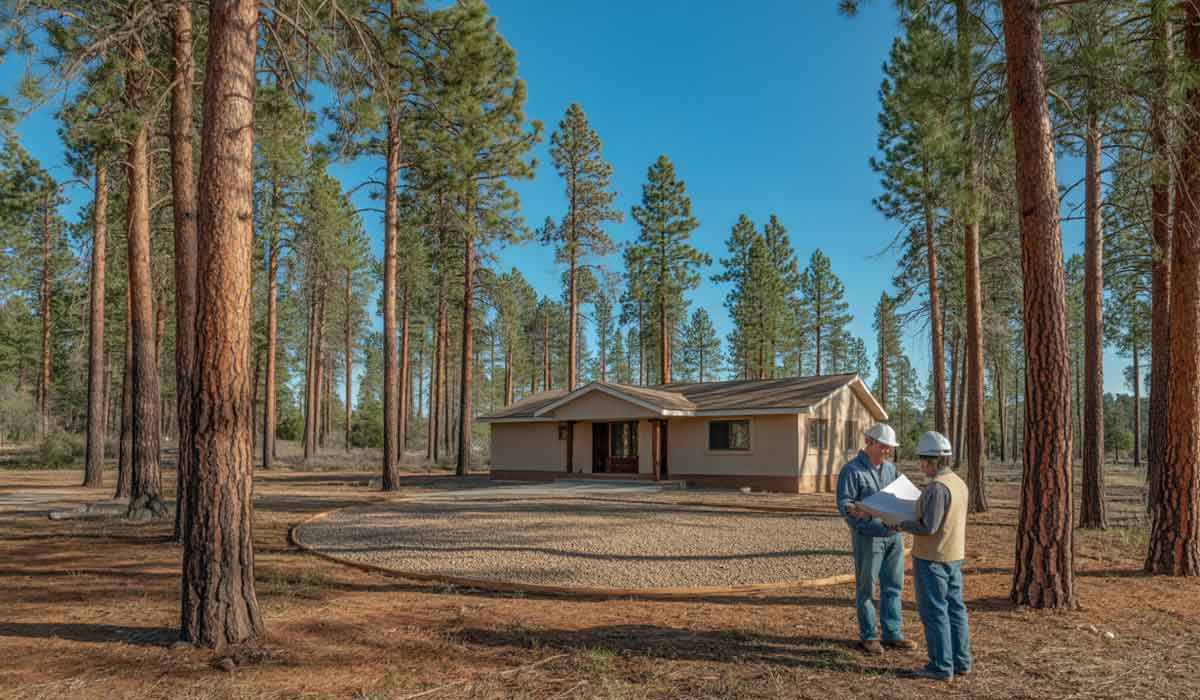
Site preparation is the bridge between raw land and a foundation. For most Payson-area properties it breaks down into a sequence of steps, each one setting up the next.
It starts with layout: staking the house footprint and the finished floor elevation against the slope, the property lines, and the access. This is where the decision gets made about how much to cut into the hill and how much to build up. From there the pad area is cleared and stripped of organic topsoil, because organics left under a foundation decay and settle.
Then comes the real work: cutting into the uphill side, building up the downhill side with engineered fill, and compacting everything to a uniform, solid base. Drainage gets built into the pad so water flows away from the structure, not toward it. Footings are excavated into firm native soil or sound rock. The pad finishes ready for the foundation crew.
DirtFX handles this full scope for custom homes, cabins, and accessory structures on Gila County properties. We coordinate directly with your general contractor, builder, or geotechnical engineer so the site is ready and inspectable when they need it.
If your lot still has trees and brush on it, that work flows naturally from lot clearing in Payson AZ into site prep, often in a single mobilization that saves you the cost of bringing equipment out twice.
Payson Soil Conditions and Why They Matter for Your Pad
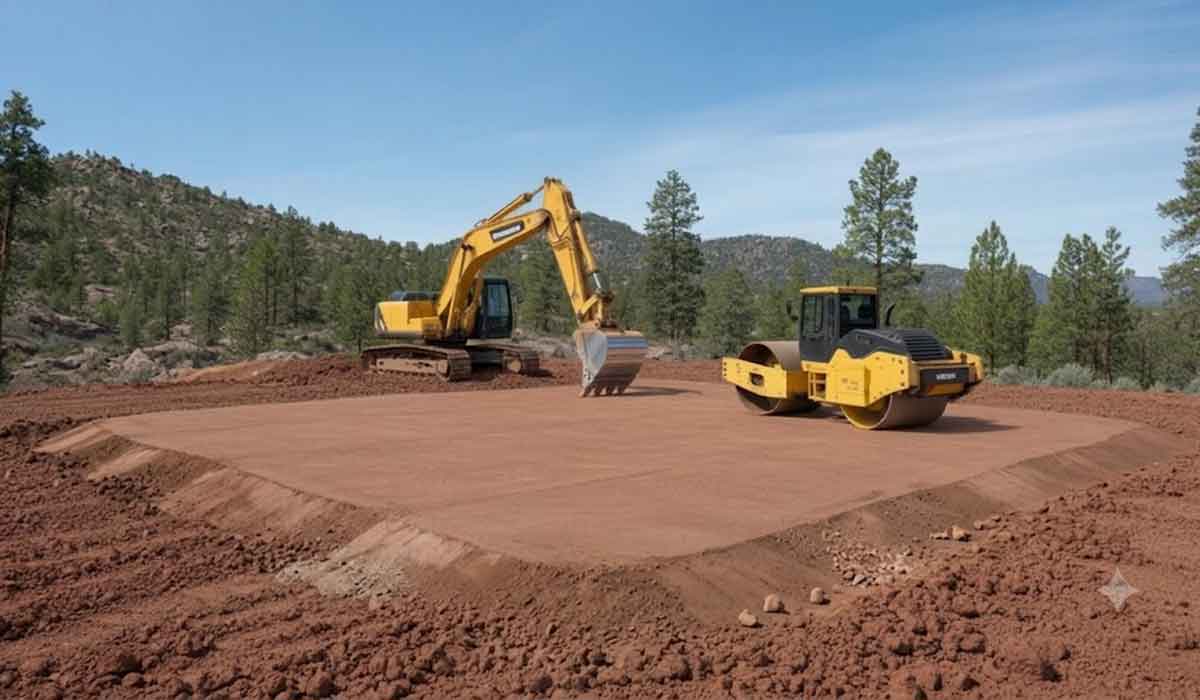
The reason site prep matters so much up here is the ground itself. Rim Country soil is not uniform, and that is exactly what makes a disciplined pad important.
Close to the Mogollon Rim, you tend to find rocky, clay-heavy soil with poor drainage. In lower pockets around Payson, the ground tends toward sandier decomposed granite that drains well but can be loose or collapsible if not properly compacted.
A typical lot has a layered profile: a foot or two of loose topsoil, then native sandy silts or clayey sands, then weathered or fractured rock at depths of roughly three to eight feet, depending on where you sit relative to the Rim.
Two conditions drive the whole approach. The first is moisture-sensitive clay. Clay pockets in old lake terraces and swales swell when they take on water and shrink when they dry, and that movement is what cracks slabs and distresses foundations.
The fix is to over-excavate those clay zones where the soils report calls for it, recondition the subgrade to a controlled moisture level, and replace with compacted structural fill.
The second is shallow fractured rock. Along the Rim and on many Payson hillsides, footings can bear partly on rock and partly on softer soil within a short distance, which creates uneven stiffness under the building. Proper prep trims the high rock so footings bear uniformly rather than perching part of the foundation on rock and part on loose material.
This is why a real soils report and a disciplined contractor matter more here than on a flat valley subdivision lot.
Building a Foundation on a Slope in Payson
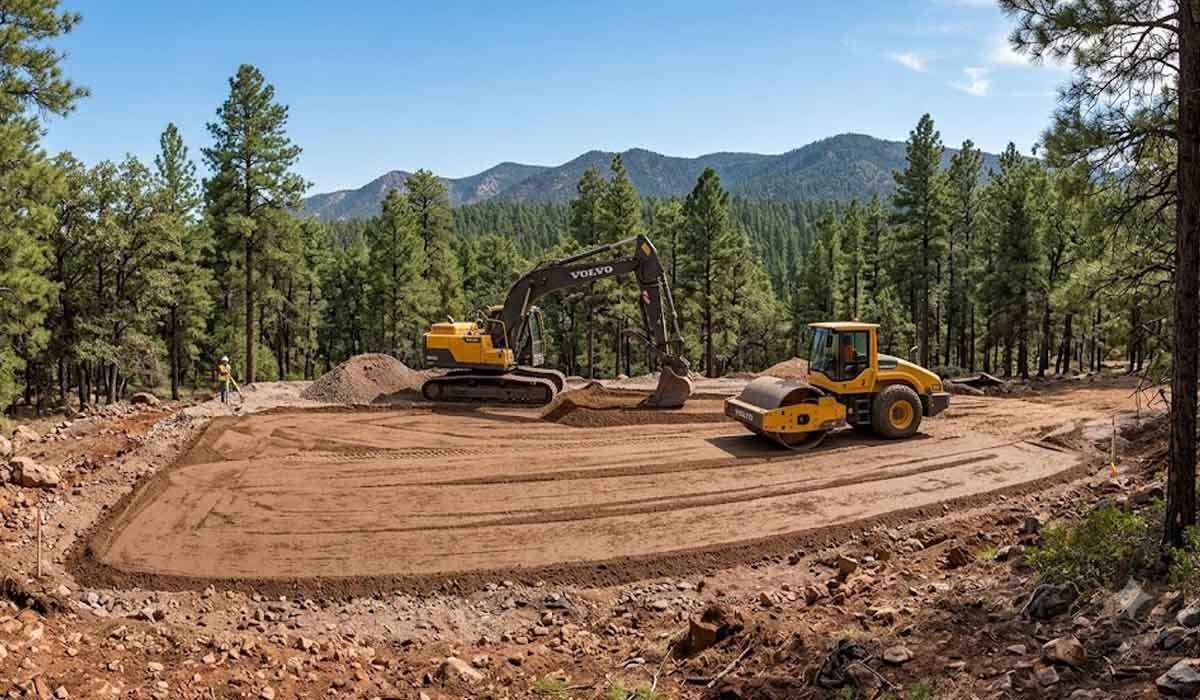
On a sloped Rim Country lot, you are not making the ground flat. You are carving a stable bench out of the hillside and tying the foundation into it. This is the part homeowners building on acreage care about most, and it is where the difference between a real excavation contractor and a guy with a skid steer shows up.
If you simply scrape and pour on a grade, part of the house ends up on shallow native soil and part on deep fill. That guarantees the two sides settle differently, and differential settlement is what wrecks foundations.
The goal, instead, is a level structural bench that cuts into the uphill side and builds up the downhill side, keeping the bearing depth and soil stiffness as uniform as possible across the entire footprint.
Good practice keeps cut and fill volumes roughly balanced so you are not over-steepening slopes or hauling massive volumes off the mountain. The uphill cut slope gets trimmed back to a stable angle and set back from the structure. The downhill fill slope is built in compacted layers and kept at a stable grade, set back from the property line so you do not create sliding or erosion at the boundary.
Drainage is designed into the bench from the start, not added later. On a freshly cut slope facing Rim Country monsoons, swales and subdrains along the uphill side intercept runoff and move it to a safe discharge point, keeping water off the fill and out from under your foundation.
The Pad Preparation Sequence, Step by Step
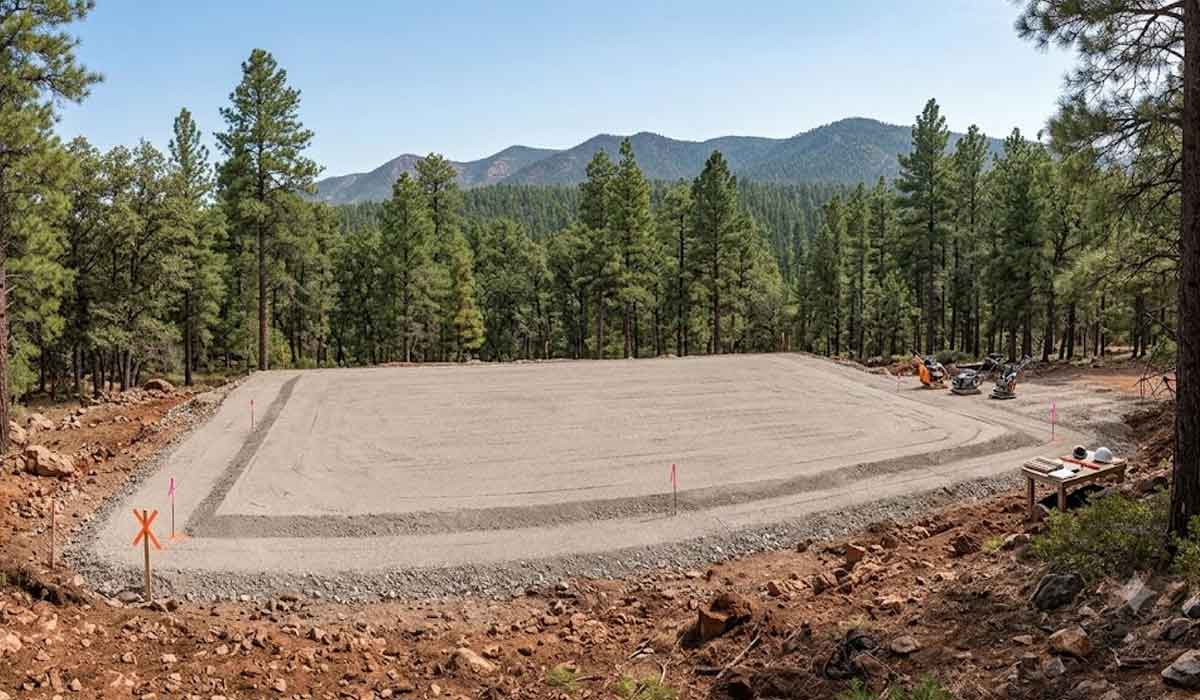
With the caveat that the specifics always follow the geotechnical report and the engineered plans, here is how proper pad preparation works on a Payson-area lot.
Layout and stripping. The footprint and finished floor elevation are staked against the slope and setbacks. Trees, roots, brush, and organic topsoil are stripped from the pad and any fill areas.
Cut and fill balancing. The excavator cuts the uphill side to form the back of the bench and uses that material to build the downhill side up to the same elevation, trading dirt from the high side to the low side rather than importing or exporting large volumes.
Subgrade preparation. Before any structural fill goes down, the native soil or rock under the bench is scarified, moisture-conditioned, and compacted so the fill sits on a solid, uniform base. Soft pockets and clayey lenses flagged in the soils report are over-excavated and replaced.
Engineered fill. Clean structural fill is placed in thin lifts, commonly four to eight inches, each one moisture-conditioned to a target range and compacted to the specified density before the next lift goes down. This is what makes fill engineered rather than just dumped.
Slope shaping and drainage. Cut and fill slopes are trimmed to stable angles and set back from structures and property lines, and drainage is built into the pad so water rolls away from the building envelope.
Footing excavation. Footings are trimmed into firm native soil or sound rock, with loose fragments cleaned out before rebar and concrete. On taller downhill sections, foundation walls step down with the grade and tie into the compacted fill at each step.
Compaction Testing and Building Department Requirements
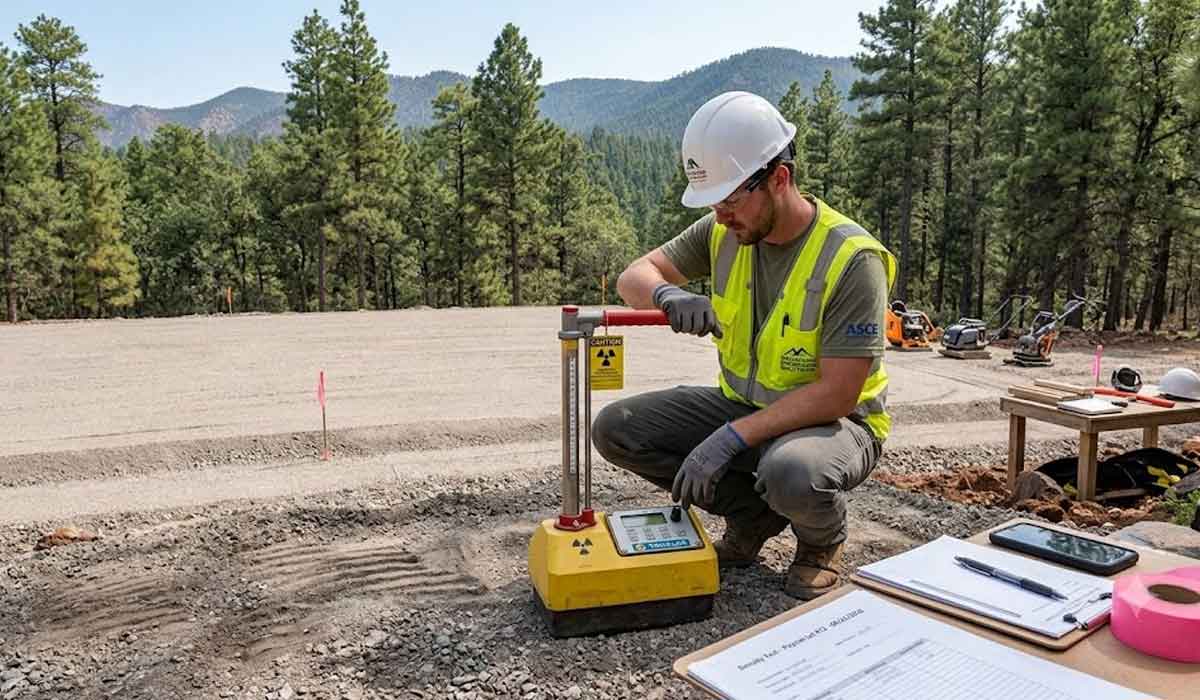
This is where a disciplined site prep contractor separates from someone who tells you the pad is “tight” and moves on.
The Town of Payson follows the International Residential Code and requires a grading and drainage plan for residential permits, showing pad elevations, slopes, and drainage patterns. When a soils report is part of the permit package, the building inspector may request compaction test results confirming that the engineer’s recommendations were met.
In Arizona residential practice on variable or expansive soils, geotechnical engineers commonly specify structural fill compacted to a minimum of 95 percent of maximum dry density by the modified Proctor method, with native subgrade compacted to 90 to 95 percent depending on use.
Those numbers get verified in the field, often with a nuclear density gauge, at the footing subgrade and the pad surface.
DirtFX builds to the engineered plans and the soils report on every site prep project. Where the engineer calls for density testing, third-party results are documented and available for the design engineer and the building inspector, so your pad has a complete, inspectable paper trail rather than a verbal assurance.
That documentation protects you, your builder, and the value of the home going on top of it.
We coordinate the grading plan, the compaction, and the inspection sequence so the building department sees one complete story.
How a Site Prep Project Works With DirtFX
Step 1: Free on-site estimate. We come out, walk the lot, and look at the real conditions: slope, soil, rock, access, and how your home sits on the site. We do not quote site prep from a satellite image.
Step 2: Written line-item quote. You receive a quote that breaks down clearing, cut and fill, structural fill, compaction, drainage, and footing excavation. No lump sums hiding where your money goes.
Step 3: Permits and coordination. We handle the Gila County or Town of Payson grading permit application and coordinate the grading and drainage plan with your engineer. We submit Arizona 811 utility locates before any ground is broken.
Step 4: Pad construction. Equipment arrives on the scheduled date. We cut, fill, compact, and grade to the engineered plans, with density testing where the engineer requires it.
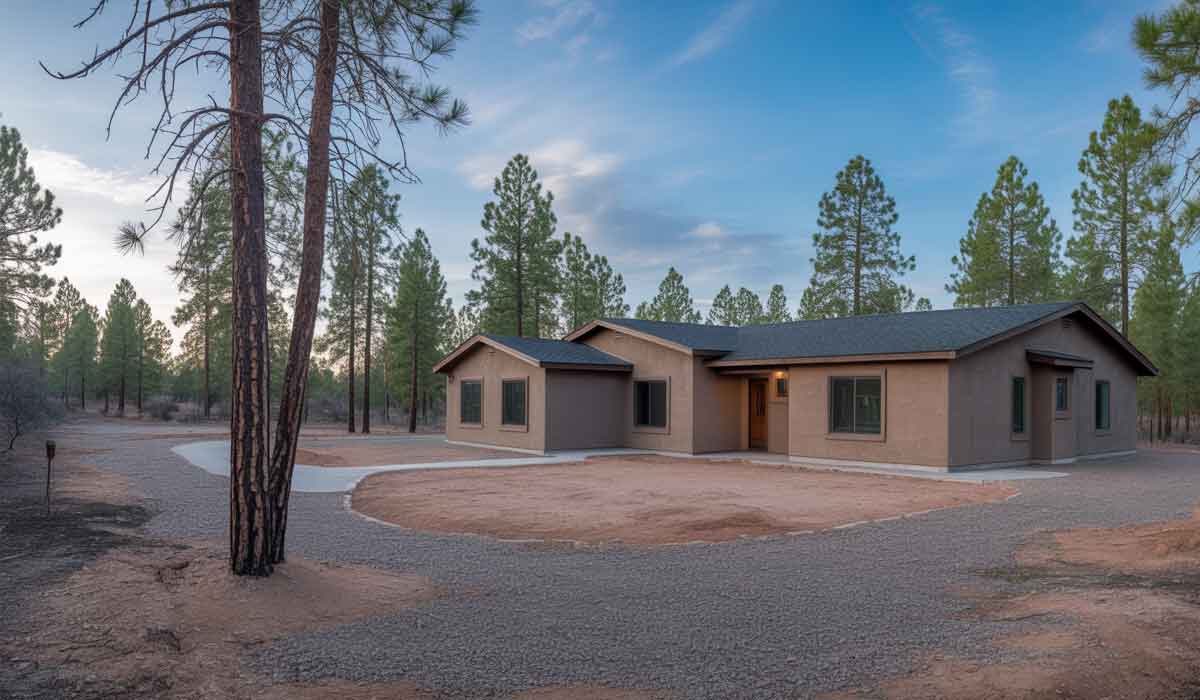
Step 5: Inspection-ready handoff. The pad is delivered to the elevation and spec on the plans, with documentation in order, ready for your foundation crew and the building inspector.
Frequently Asked Questions
About Site Preparation in Payson, AZ
Serving Payson, Pine, Strawberry, and the Rim Country
DirtFX provides site preparation throughout Gila County and the Rim Country, including Payson, Pine, Strawberry, Star Valley, Starlight Pines, Tonto Basin, Christopher Creek, and the surrounding areas. These are forested mountain communities where building means dealing with real slope, variable soil, and shallow rock, not the uniform conditions of a valley subdivision.
We bring excavation-grade equipment and a disciplined, engineering-driven approach to every pad, which is what a foundation on Rim Country terrain actually requires. Whether you are building a custom home on acreage or a cabin on a sloped lot, the right first step is a free on-site assessment.
As an excavation contractor in Payson AZ, DirtFX handles the full scope from clearing through final grade, and can extend that work into Firewise defensible space clearing around your home.